
Lieferung heute & morgen

Qualitätsgarantie

Willkommens-Angebote freischalten: KOSTENLOSE Lieferung | Bis zu 80 % RABATT | Kostenlose 30-Tage-JoyPlus-Testphase
App herunterladen
An LED light bar can illuminate dark worktops, cupboard compartments or shelves precisely, without taking up much space. However, brightness is not the only deciding factor when buying one. Choosing the wrong length, an unsuitable power supply or an adhesive strip that is not strong enough can often lead to unnecessary additional costs.
This guide explains which technical details matter, which design is best suited to each area of use and what households in the UK should consider before placing an order.
An LED light bar measuring 20 cm is suitable for small compartments, while a 60 cm model can cover considerably more space. If the bar is too short, dark areas will remain. If it is too long, many models cannot be adjusted sensibly.
Before buying, measure:
For narrow cupboard compartments, an LED light bar 20 cm long may be sufficient. An LED light bar 30 cm long will often fit beneath smaller wall-mounted cupboards. For mirrors, wardrobes or longer work areas, 42 cm or 60 cm models are often more practical.
A cordless LED light bar will generally have an integrated rechargeable battery. This eliminates the need for permanent wiring, but the battery must be charged regularly. Battery capacity, the charging port and the stated operating time are all important considerations.
With a USB-rechargeable LED light bar, you should also check whether a charging cable is included and which type of USB connection is required. A USB light bar can, for example, be charged via a mains adapter, laptop or power bank. This makes it flexible, but it is not a substitute for a permanent power supply if it is used for long periods every day.
A motion sensor is useful inside a wardrobe or in a hallway, but it is not necessary in every room. With an LED light bar with motion sensor, you should consider the detection range, activation time and sensor position. If the sensor only detects movement from a short distance, the mounting height must be adjusted accordingly.
An LED strip with remote control or an RGBIC LED strip is not automatically intended for functional lighting either. Multicolour effects are better suited to living rooms, gaming areas or indirect accent lighting. For kitchen worktops, light colour and even illumination are usually more important.
The bar should sit as evenly as possible above the area to be illuminated. Magnetic holders make it easier to remove the bar for charging. Adhesive mounting is quick and easy, but requires a clean, dry and smooth surface.
An LED light bar for a wardrobe should be positioned so that clothing does not permanently block the motion sensor. For an LED light bar for the kitchen, grease-free mounting surfaces and sufficient distance from the sink or hob are important.
Colour temperature is measured in Kelvin:
A kitchen under-cabinet LED light does not necessarily have to be cool white. The key consideration is whether you want practical task lighting or a more welcoming ambience.
Lumens describe luminous flux. A model with approximately 150 lumens can provide additional lighting for a mirror, cupboard or shelf. For a larger work surface, the mounting height, beam angle and length are just as important as the lumen rating itself.
For mains-powered LED strips, power consumption and operating time should be taken into account. A 5-metre strip with a power consumption of 24 W uses a calculated 0.24 kWh per day when operated for ten hours daily. The actual electricity cost depends on your individual tariff.
Many decorative LED strips are designed exclusively for indoor use. The IP20 rating does not provide protection against water. Such products should therefore not be used in areas directly exposed to splashing water. In a bathroom, a light should only be used if the manufacturer’s specifications cover the specific installation location. Electrical connections must remain dry and safely accessible.

Why this product suits this profile: Two compact 20 cm lights are suitable for smaller cupboards, shelves and hallways. According to the product description, they can be mounted with adhesive strips without drilling.
The short design reduces the risk of buying a bar that is too long for a small compartment. The PIR sensor switches the light on and off when movement is detected.
2-pack, three stated colour-temperature ranges and an integrated 800-mAh battery with USB charging.
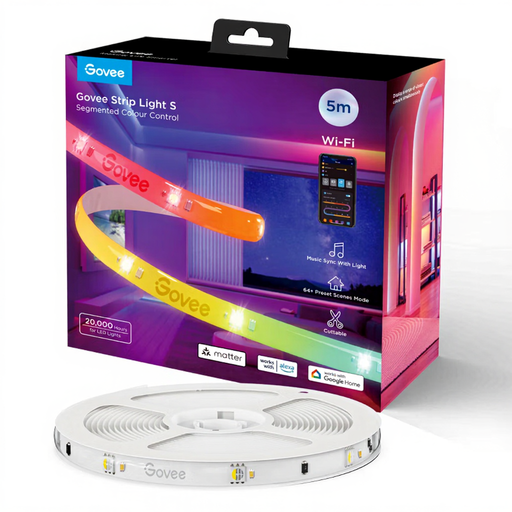
Why this product suits this profile: The 5-metre strip is aimed at users looking for segmented colour effects and smart home connectivity for living rooms, media areas or gaming spaces.
The specifications explicitly mention Matter, 2.4 GHz Wi-Fi and Bluetooth. This allows you to check in advance whether the product is compatible with your existing smart home setup.
RGBIC segment control, app operation, voice control and 24 W power consumption according to the product specifications.
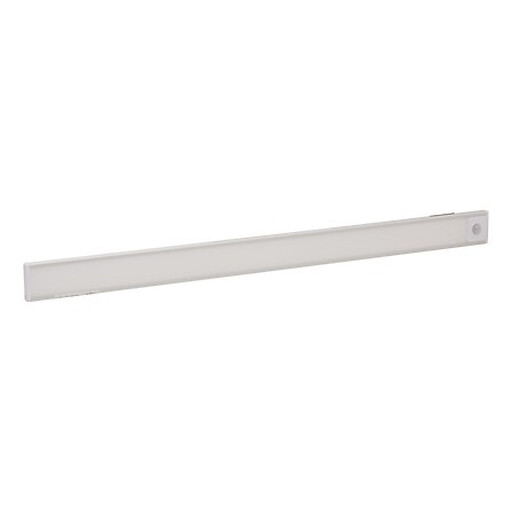
Why this product suits this profile: The 60 cm bar is designed for larger wardrobes, shelves, work areas and dressing rooms where automatic lighting is desired.
The motion sensor and automatic switch-off prevent unnecessary continuous operation. The stated range of approximately 2 metres and activation time of around 30 seconds should be considered before installation.
57 cm light body, 6000 K cool white light, 2200-mAh battery and magnetic holder with 3M adhesive tape.
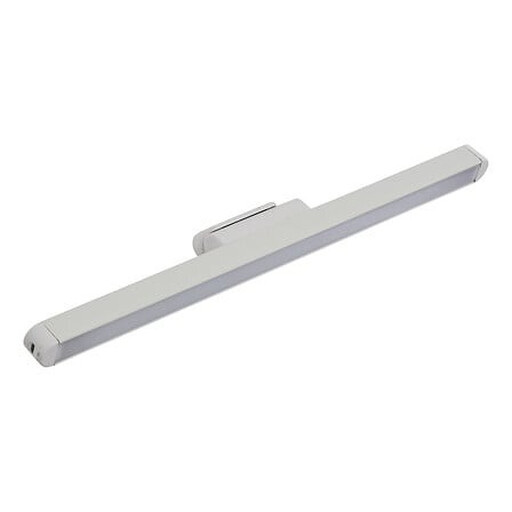
Why this product suits this profile: The 42 cm version combines a moderate size with neutral white light, making it suitable for mirrors, cupboards, shelves or additional indoor lighting.
The product specifications state 4000 K and approximately 150 lumens. This makes it easy to distinguish the bar from very cool or purely decorative lighting.
Integrated 2000-mAh lithium battery, USB charging, detachable bar and adjustable light direction.
We have put together a complete, regularly updated list of products that fully meet these strict selection criteria and the safety regulations applicable in the EU.
Depending on the model, it can be mounted using adhesive strips, magnets, brackets or screws. Before sticking it in place, the surface should be dry, clean and free from grease. For detachable lights, a magnetic holder is useful if the battery needs to be charged regularly.
The actual service life depends on the LED components, battery, heat dissipation, operating time and installation. For battery-powered models, it is not just the LED lifespan that matters, but also the battery’s ability to hold a charge. A light should not be covered or operated permanently in a damp environment unless it is designed for such conditions.
The cost depends on power consumption, operating time and your electricity tariff. The simple calculation is: Power in watts ÷ 1,000 × operating hours × price per kilowatt-hour. Battery-powered light bars also incur charging losses, although these are generally small in everyday use. For kitchen or task lighting that is used frequently, the wattage is therefore a useful comparison figure.