
Lieferung heute & morgen

Qualitätsgarantie

Willkommens-Angebote freischalten: KOSTENLOSE Lieferung | Bis zu 80 % RABATT | Kostenlose 30-Tage-JoyPlus-Testphase
App herunterladen
Leftovers, chopped vegetables, dry ingredients and prepared meals require different storage solutions in British households. LocknLock food storage containers are often sought after for their stackable shapes and locking systems. However, the brand name alone is not the deciding factor. What matters is whether the size, material and temperature ratings suit the intended use.
As a Joybuy Product Recommendation Officer, I filter the relevant information according to practical criteria and also highlight common purchasing pitfalls.
A container can have an airtight seal and still not be approved for use in the microwave or freezer. With microwave-safe food storage containers in particular, you should check whether the lid needs to be removed or opened. When storing frozen food, you should also leave enough room for expansion.
A food storage container set may seem attractive in terms of price at first glance. However, if the individual sizes do not fit together, they can take up more space. For small fridge compartments, modular rectangular or square containers are generally more practical than containers in different shapes.
Leak-proof food storage containers require a correctly closed lid and an undamaged seal. A click or four-sided locking system can be useful in everyday use, but it does not replace checking the container before transporting it. Cracks, deformation or hardened silicone rings can impair the seal.
For snacks, side dishes and individual ingredients, 330 to 600 ml is often sufficient. Portions for the office or meal-prep components can often be stored in containers with a capacity of 450 to 910 ml. For family meals, flour, muesli or larger quantities, 1.5 to 4 litres are more suitable.
Rectangular stackable food storage containers generally make efficient use of space in fridges and cupboards. Transparent plastic food storage containers make it easier to check the contents without opening the lid.
For BPA-free food storage containers, this should be stated explicitly in the product information. Depending on the range, the LocknLock models in this selection are made from plastic, polypropylene or Tritan; the seals may be made from silicone. The specific material information is more important than general terms such as ‘high quality’ or ‘particularly robust’.
For microwave use, bear in mind that containers and lids may have different approvals. Several of the models listed here are intended for heating without the lid only. The LocknLock containers mentioned are not designed for use in the oven.
A container suitable for the fridge is not automatically a freezer-safe storage box. Information on freezer suitability, microwave approval and dishwasher safety should be checked individually. For some models, the dishwasher recommendation is to use the top rack.
Before first use, we recommend cleaning the container with warm water and mild washing-up liquid. Abrasive cleaning products can damage transparent surfaces and seals.
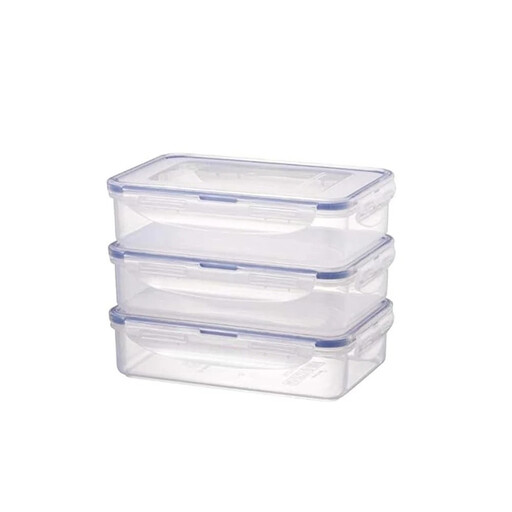
Why this product suits this profile: Three identical, transparent containers offer an easy starting point for leftovers, snacks and ingredients. The 800 ml capacity is suitable for many everyday portions.
The uniform size avoids an impractical mixed set. However, you should check the microwave approval before buying, as the product description includes a restriction in this respect.
Three containers of 800 ml each, transparent bodies and a stackable design.
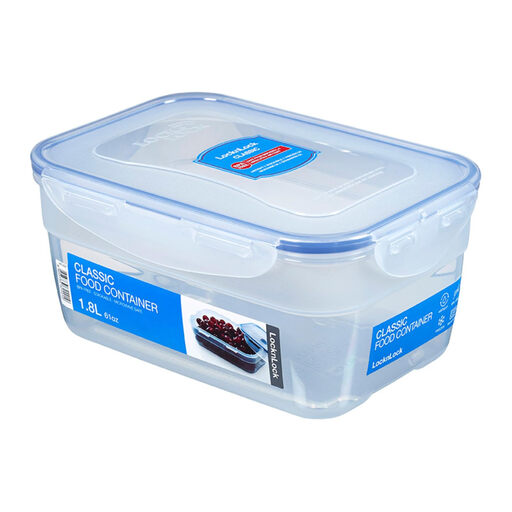
Why this product suits this profile: This set is designed for larger portions and transporting food. According to the product information, the containers feature a four-sided locking system and a silicone seal.
The clearly stated limits make usage easier: microwave use without the lid only and up to 120 °C; freezer use down to −20 °C according to the product information; not suitable for the oven.
Three 1.8-litre containers, BPA-free polypropylene and cleaning in the top rack of the dishwasher.
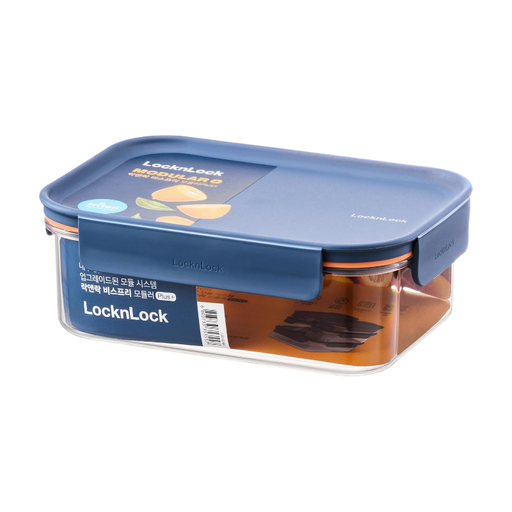
Why this product suits this profile: With a capacity between snack and family size, 910 ml is suitable for prepared side dishes, leftovers or individual meal-prep portions.
The modular rectangular shape makes better use of available space than awkwardly shaped round containers. The lid must be removed when heating; it is not suitable for use in the oven.
910 ml capacity, silicone seal, stackable design and information on microwave, freezer and dishwasher use.
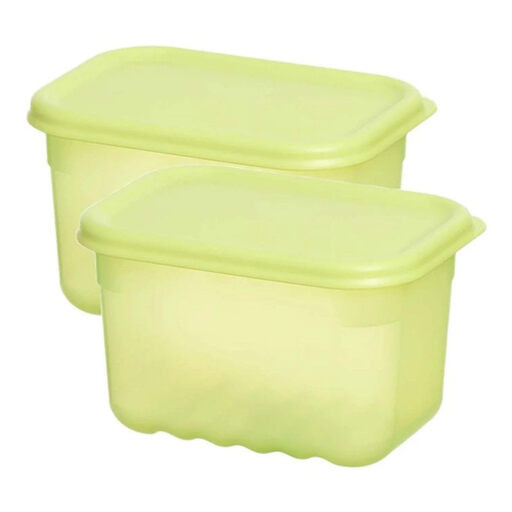
Why this product suits this profile: These compact containers are designed for fruit and vegetables and can be stacked in the fridge or food cupboard.
The usage limitations are clear: microwave use without the lid only, no oven and no direct heat. This prevents confusion with heat-resistant cooking containers.
Two containers of 640 ml each, BPA-free material, stackable design and dishwasher approval.
We have put together a complete, regularly updated list of products that fully meet these strict selection criteria and the safety regulations applicable in the EU.
Before ordering LocknLock food storage containers, these questions can help:
For larger households, 1.5- to 4-litre containers can be useful for family portions and dry provisions. Students and working professionals often benefit from 450- to 910-ml containers for snacks, lunches and meal prep. For fruit and vegetables, smaller Fresh Block models offer a separate storage solution.
According to the product information, some models are microwave-safe, but usually without the lid only. Before heating, always check the instructions for the specific model and any stated temperature limits. The containers are not designed for use in the oven or with direct heat.
Several of the models listed are described as suitable for freezer use. When freezing food, the container should not be filled completely, so the contents have room to expand. Frozen containers should be opened carefully and checked before heating.
There is no standard service life. It depends on how frequently the containers are used, the temperatures they are exposed to, how they are cleaned and how they are handled. Containers and lids should be checked regularly for cracks, deformation and damaged seals. If visible damage is found, the container should no longer be used.