
Lieferung heute & morgen

Qualitätsgarantie

Willkommens-Angebote freischalten: KOSTENLOSE Lieferung | Bis zu 80 % RABATT | Kostenlose 30-Tage-JoyPlus-Testphase
App herunterladen
A modern sideboard can completely transform the look of a room. It serves not only as a stylish piece of furniture but also as an indispensable storage solution. However, the search for the right model is often more complicated than it seems. Many buyers invest in a piece of furniture that shows defects after just a few months or proves to be impractical. As your Joybuy Product Recommendation Officer, I'll help you identify the typical pitfalls and make an informed decision.
Before you decide on a model, you should be aware of the most common problems that often only become apparent after the purchase. Marketing images frequently conceal quality defects that severely impact longevity and functionality.
living room credenza useless.high-gloss dresser looks elegant at first, but low-quality finishes are extremely prone to scratches and can yellow over time. The same applies to a sideboard with LED lighting: simple, glaring LED strips without a dimming function or colour control often look cheap rather than modern and fail to create a pleasant atmosphere.To avoid a bad purchase, you should focus on objective and measurable criteria. These three aspects are decisive for the quality and utility of your new piece of furniture.
The longevity of a sideboard depends directly on the material. MDF (Medium-Density Fibreboard) is generally denser and more stable than simple particleboard. However, the specified load capacity values are crucial. Check the maximum load capacity of the top surface (important if a television will be placed on it) and the weight capacity per drawer. A good living room cabinet with drawers should have smooth-running metal runners that don't jam even when fully loaded. Models in an oak-effect sideboard style often feature a melamine resin-coated surface, which is more scratch-resistant and easier to maintain than many high-gloss finishes.
Don't just measure the available space in the room; also check the internal dimensions of the drawers and compartments. Will your dishes, media collection, or office supplies fit? A key advantage is height-adjustable shelves. They allow you to flexibly adapt the storage space in the dining room or living room to your needs and accommodate bulky items. An anti-tip kit for wall mounting is also an essential safety feature, especially in households with children.
For a white dresser or one with a high-gloss finish, the quality of the coating is critical. Look for information on care and scratch resistance. With a sideboard featuring LED lighting, you should check the control options: does it offer only a simple on/off switch, or is there a remote control or even app control with adjustable brightness and various colour modes? The latter provides a much higher-quality and more adaptable atmosphere.
Here are some recommendations tailored to different needs and living styles that meet the quality criteria mentioned above.
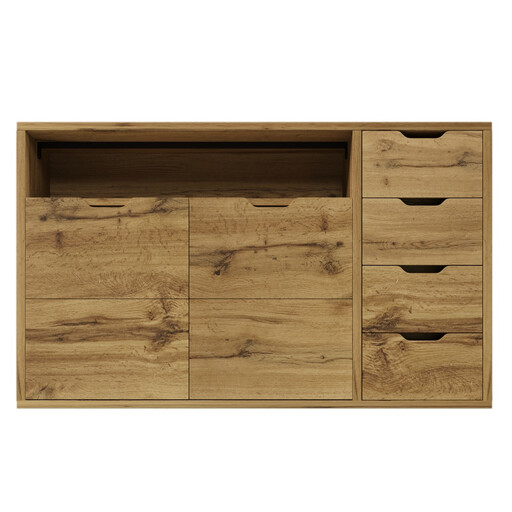
Why this model works: Ideal for households that need maximum and flexible storage. The easy-care oak-effect surface is resistant to fingerprints, and the generous layout offers space for everything from toys to tableware.
Prevents unstable construction and impractical layouts. The height-adjustable shelves offer flexibility, and the included anti-tip kit ensures stability and safety.
High surface load capacity (70 kg). Soft-close hinges on the doors prevent loud slamming.
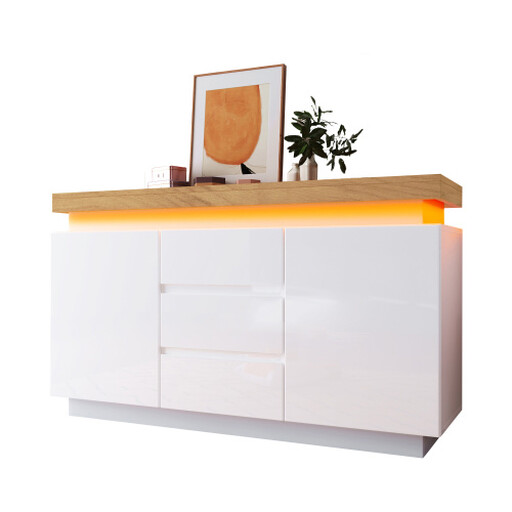
Why this model works: For anyone looking for a statement piece. The handleless high-gloss design and app-controlled LED lighting with a music mode make this sideboard a modern eye-catcher.
Avoids the "gimmicky LED" trap. The lighting is controllable via an app and offers hundreds of colour options and dynamic modes, far beyond a simple on/off function.
Flexible storage thanks to shelves adjustable to 3 heights. Quiet roller runners on the drawers for silent operation.
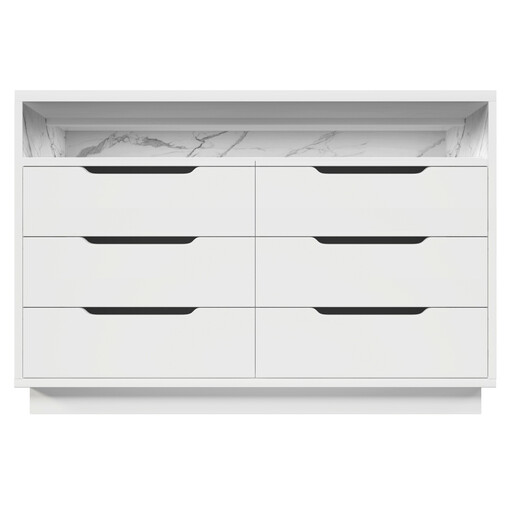
Why this model works: A successful combination of modern design and high utility. The simple white look is enhanced by integrated LED lighting and a marble-effect storage compartment.
Solves the problem of impractical layouts. Six spacious drawers provide plenty of organised storage, while the open compartment allows quick access to everyday items.
A ground clearance of 8 cm makes cleaning under the furniture easy. Integrated LED strips with adjustable brightness and various colour modes.
We've compiled a complete, real-time list of products that fully meet these strict selection criteria and safety regulations.
Most quality sideboards come with an anti-tip kit. This typically consists of a bracket or a strap that is attached to the back of the furniture and to the wall. Following the instructions, drill a hole in the wall, insert a suitable wall anchor, and screw the restraint firmly in place. This prevents the sideboard from tipping forward, which is an important safety measure, especially on uneven floors or in households with children.
For cleaning, use only soft, lint-free cloths (e.g., microfibre) and plain water or a mild soap solution. Absolutely avoid aggressive cleaners, abrasive agents, or rough sponges, as these will scratch the lacquer surface. Many new pieces of furniture have a protective film on the high-gloss surface that must be removed before first use.
The ideal width depends on the size of the room and the wall where it will be placed. A common rule of thumb is that the sideboard should take up about two-thirds of the wall's width to create a harmonious overall look. Measure the available space accurately, also considering doorways and the space you need to open doors and drawers. For smaller rooms, models with a width of 120-140 cm are suitable, while in large living rooms, sideboards of 150 cm or more can also look great.