
Lieferung heute & morgen

Qualitätsgarantie

Willkommens-Angebote freischalten: KOSTENLOSE Lieferung | Bis zu 80 % RABATT | Kostenlose 30-Tage-JoyPlus-Testphase
App herunterladen
A nut mix may seem straightforward at first glance: choose a packet, pay and start snacking. In practice, however, trail mixes, roasted nuts and nut-and-fruit mixes can differ considerably in their ingredients, salt content, sugar, allergens and pack sizes. If you decide based solely on the product image or brand name, you may end up buying a mix that is not right for your needs.
Descriptions such as “protein snack”, “natural” or “premium” reveal little about the actual composition on their own. The order of the ingredients is what matters: the ingredient listed first is generally present in the largest quantity. In a trail mix, for example, this could be a relatively high amount of raisins, while peanuts or cashews may dominate in a pure nut mix.
Added sugar, honey, oil, flavourings and smoke ingredients should also be taken into account. A cashew and cranberry mix, for example, contains dried, sweetened cranberries, so its flavour profile differs from that of an unsalted nut mix.
Dried fruit contains less water than fresh fruit. This means that carbohydrates and sugar are concentrated into a smaller weight. Seeberger Cashew & Cranberry Snack Mix 150 g lists 31 g of sugar and 503 kcal per 100 g. This does not automatically make the mix unsuitable, but it does show why portion size matters.
Conversely, pure nut mixes can contain comparatively little sugar while still having a high energy content. According to the product information, Seeberger Roasted & Salted Premium Nut Mix 150 g contains 24 g of protein, 54 g of fat and 637 kcal per 100 g.
Nuts, peanuts, almonds, cashews, soya and sulphites are among the details that should be checked before buying. Statements such as “May contain traces of …” are relevant for people with allergies. Whole nuts and kernels can also pose a choking risk for children under four.
A 150-g pack is suitable for individual snacking occasions or sharing. For regular use at home or in the office, 350-g to 500-g packs may be more practical. Individually portioned bags, such as Cha Cha Daily Nuts 115 g with five 23-g servings, make it easier to manage portions when you are out and about.
For fruity sweetness, choose mixes containing raisins, cranberries or mango. If you are looking for a savoury nut mix for snacking, roasted or salted nuts may be a good choice. Honey-and-salt mixes combine sweetness with savoury seasoning, but usually contain added sugar.
Also pay attention to the specific selection of nuts. Cashews have a mild flavour, almonds add a firmer texture, peanuts feature prominently in many budget-friendly mixes, while macadamias and pecans can significantly change the proportion of individual ingredients.
The nutrition table allows you to make an objective comparison. The key values are:
The figures apply per 100 g and not automatically to a handful. For a realistic assessment, you should take the amount actually consumed into account.
Resealable bags are practical for carrying in a rucksack, keeping in a desk drawer or storing in the car. Once opened, nuts and dried fruit should be stored in a cool, dry place and protected from heat and moisture. This helps them retain their crunch and flavour for longer.
A nut mix can be eaten straight from the pack, sprinkled over yoghurt or porridge, added to salads or used in baking. Seed and kernel mixes such as Seeberger Vital Salad Seed & Kernel Mix are particularly suitable for these purposes. The product information lists sunflower seeds, pumpkin seeds, roasted soya beans and pine nuts as ingredients.
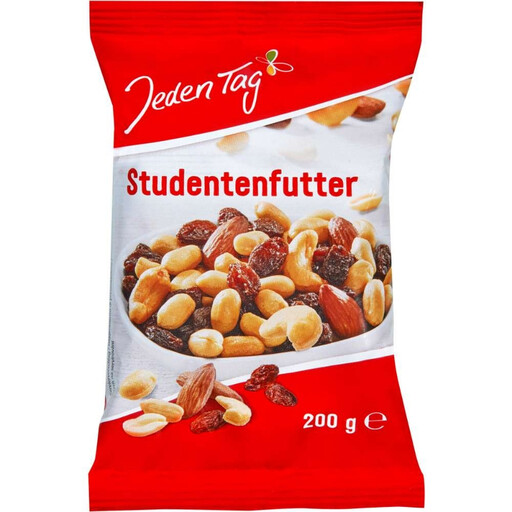
Why this product suits this profile: The classic combination of 40% raisins, 38% peanuts, almonds and cashews is suitable for school, university, the office and on the go.
The ingredient proportions and nutritional values are provided. This makes it possible to assess the relatively high proportion of raisins before buying.
200-g pack, 17 g of protein and 0.07 g of salt per 100 g according to the product information.
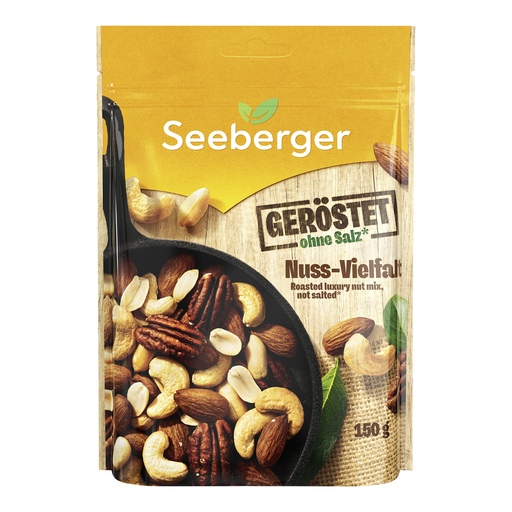
Why this product suits this profile: The mix combines roasted almonds, cashews, peanuts and pecans in a compact 150-g pack.
The product details list the ingredients, allergens and storage instructions. The salt content is stated as 0.01 g per 100 g.
Roasted nut selection, 24 g of protein and 647 kcal per 100 g according to the labelling.
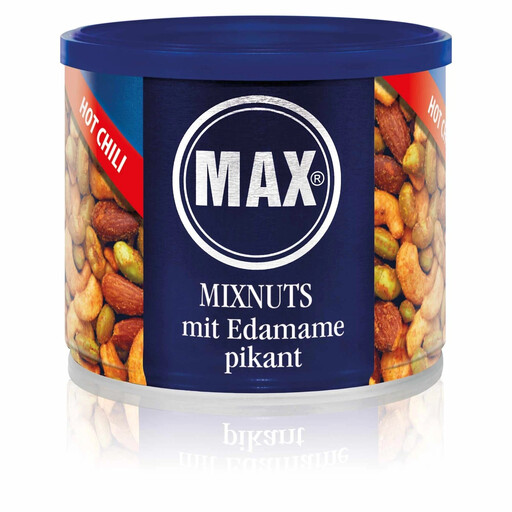
Why this product suits this profile: The combination of almonds, cashews and roasted edamame with chilli seasoning is aimed at people who prefer a savoury vegan snack mix.
The seasoning is clearly listed in the ingredients. With 1.3 g of salt per 100 g, you can make a realistic assessment of its savoury character.
250-g pack, 25 g of protein per 100 g and explicitly stated soya allergens.
We have put together a complete, regularly updated list of products that fully meet these strict selection criteria and the safety regulations applicable in the EU.
Classic trail mix combines nuts with raisins or other dried fruit. For university, walking or commuting, 150-g to 200-g packs are easy to carry. If you want to keep the sugar content lower, choose a mix with a higher proportion of nuts and fewer sweetened fruits.
That depends on your taste and how you intend to use them. Roasted nuts offer a more pronounced flavour and a crunchy texture. Unsalted varieties are easier to use in yoghurt, salads or baking recipes. With roasted products, compare the information on oil and salt.
The specific best-before date is shown on the packaging. Once opened, the nut mix should be kept tightly sealed, dry and protected from heat. Products containing dried fruit are best used promptly, as their texture and crunch may change over time.