Shoppers planning their portions
You want something crunchy with your coffee, without carrying on eating straight from the pack. For you, the calorie information and the amount in your bowl matter more than whether the nuts seem ‘light’.


Nuts aren’t automatically a light choice for a calorie-conscious coffee break just because they’re natural: how much you eat matters too. Set aside a small portion in advance, and check the sugar, salt and ingredients in sweet or savoury varieties. If you have an allergy, always check the labelling on the current pack.
You want something crunchy with your coffee, without carrying on eating straight from the pack. For you, the calorie information and the amount in your bowl matter more than whether the nuts seem ‘light’.
You’re choosing between plain, sweet and savoury nut products. The ingredients list, along with the sugar and salt figures in the nutrition information, helps you compare products within the same type.
If you or someone in your household has a food allergy, the current labelling on the specific product is essential. The product name and packaging image are no substitute for checking the ingredients list, allergen information and ‘may contain’ warnings.
First, decide how much you want to eat with your coffee. Then compare the information for the specific products, especially if you’re choosing between plain, salted and sweetened nuts.
| What matters | What to check | Who it matters to |
|---|---|---|
| Calories | Compare kcal per 100 g and take into account how much you actually plan to eat. | If I only want a small snack with my coffee, measuring out a portion in advance helps me avoid eating from an open pack. Around 40% of shoppers put this first. |
| Sugar, salt and ingredients | Check the ingredients list and the sugar and salt per 100 g; compare products of the same type where possible. | When choosing sweet or savoury nuts, I want to know what else they contain. For around 30% of shoppers, the ingredients come first. |
| Allergens | Check the ingredients, highlighted allergens and ‘may contain’ warnings on the current pack every time you buy. | If an allergen is relevant to my household, I need to check the specific pack before choosing nuts. Around 20% of shoppers put checking allergens first. |
| Flavour and choice | Compare the type of nut, how it’s prepared and the pack size; divide larger packs into portions for individual breaks. | I want to try different varieties and flavours without treating the whole pack as one portion. This is the top priority for around 10% of shoppers. |
REWE lists 596 kcal per 100 g for its plain almonds, while EDEKA lists 619 kcal per 100 g for its plain almonds. A short ingredients list doesn’t change the fact that the amount you eat affects your calorie intake.
Before your coffee break, put the amount you want in a small bowl and use the calorie information to work out the figure for that portion.
According to REWE, its REWE Beste Wahl honey and salt almonds contain 32,6 g of sugar per 100 g. For a roasted almond variety, REWE lists sunflower oil and 0,83 g of salt per 100 g. You can’t tell what’s in a product from the word ‘almonds’ alone.
For flavoured varieties, check the ingredients list and compare the sugar and salt in the nutrition information.
Even a product with one type of nut as its main ingredient may be labelled as containing traces of other allergens. According to gesund.bund.de, even small amounts of a trigger can cause a reaction in someone with a food allergy.
Check the current pack every time you buy, rather than relying on an older pack or an online image.
EDEKA notes that the information for its plain almond product may differ from what’s on the packaging. If a particular ingredient or allergen warning matters to you, check the information on the product you’re buying.
Use product pages to narrow down your choices, then check the labelling on the current pack before eating.
Seeberger sells nuts and kernels in plain, sweet, salted and roasted varieties, as well as mixed packs.
The range includes plain, roasted and honey-coated almonds.
EDEKA describes plain whole almonds from this own-brand range in a resealable 200-g bag.
Lidl’s Alesto range includes both plain nuts and seasoned snacks.
One product described by ALDI SÜD is a 200-g pack of plain almonds.
These products offer a range of nuts and preparations for your coffee break: plain almonds, unsalted roasted cashew kernels, and salted almonds and pistachios. Check the portion size and nutritional information for each specific product.
 No image available
If you’re looking for roasted cashew kernels with no added salt to enjoy with your coffee, this could be a good choice. Divide the 150-g pack into portions for your coffee breaks, and check the nutritional information on the pack.
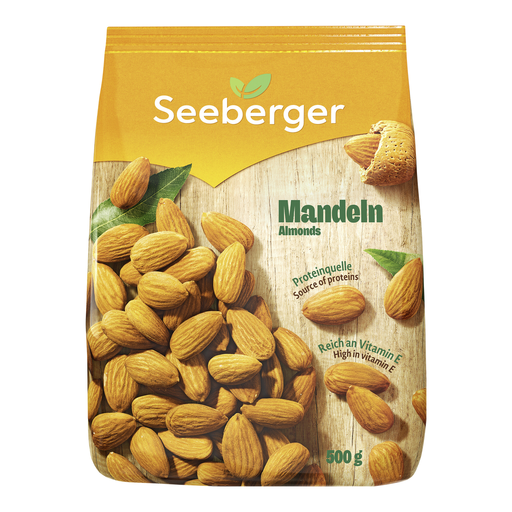 No image available
These whole plain almonds are a good option if you’re looking for an unprocessed variety. Divide the 500-g pack into portions for individual coffee breaks, and compare the calorie information with the amount you plan to eat.
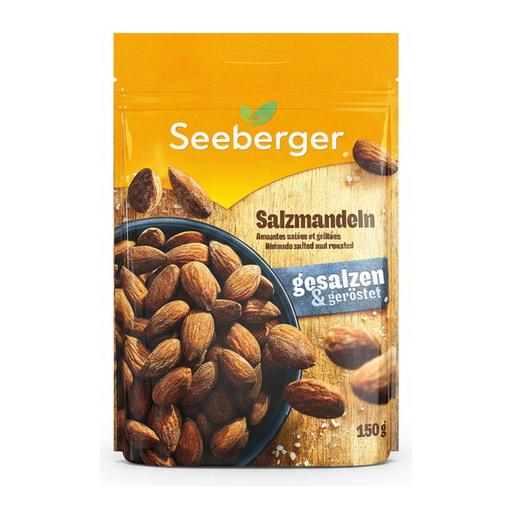 No image available
If you prefer a savoury almond variety, remember to consider the salt content as well as the portion size. These roasted and salted almonds come in a 150-g pack.
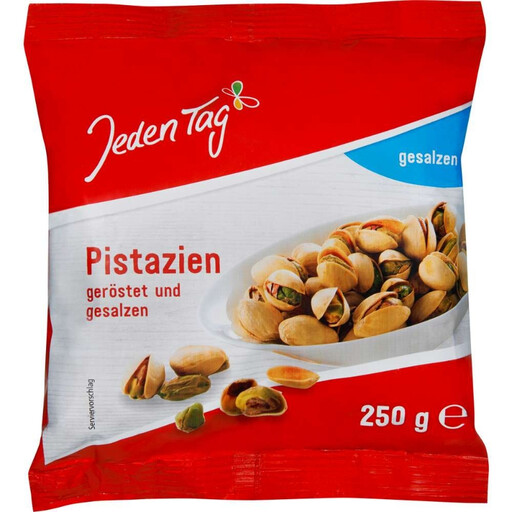 No image available
If you fancy pistachios in their shells with your coffee, bear in mind that this variety is roasted and salted. Set aside a portion from the 250-g pack, and check the calorie and salt information on the product.
Nuts aren’t low in calories just because they have a short ingredients list. Set aside a small amount in advance and use the calories per 100 g to work out the figure for your actual portion, rather than treating a whole pack as one snack.
No, you can’t tell from the words ‘plain’ or ‘sweetened’ alone. Compare the calories per 100 g for the specific products and consider your portion. If you’re also keeping an eye on sugar, check the ingredients list and sugar information too.
Check the current pack every time you buy for ingredients, highlighted allergens and ‘may contain’ warnings. The product name alone won’t show every detail that may be relevant to you; if you have unexplained symptoms, seek medical advice.
Seal opened nuts in an airtight container. For shelled walnuts, the Verbraucherzentrale Rheinland-Pfalz recommends an airtight container in the fridge or freezer.