
Lieferung heute & morgen

Qualitätsgarantie

Willkommens-Angebote freischalten: KOSTENLOSE Lieferung | Bis zu 80 % RABATT | Kostenlose 30-Tage-JoyPlus-Testphase
App herunterladen
Oat milk, also known as an oat drink, has evolved from a niche alternative to a staple in many households. The selection on store shelves is vast, but not every product delivers on its promises. As a Joybuy Product Recommendation Officer, I'm here to help you separate the wheat from the chaff and make an informed decision that fits your needs. Before you buy, you should know the three most common pitfalls that lead to disappointment and unnecessary expense.
To avoid a bad purchase, you should focus on a few crucial technical parameters. These will give you an objective basis for your choice.
For a good barista-style oat milk, the composition is critical. A stable, creamy milk foam is only achieved through a balanced ratio of fat and protein.
These two values are the most reliable indicators of whether an oat drink for coffee is suitable—often more so than the simple "Barista" label on the packaging.
A quick look at the back of the package reveals more than any marketing message.
Consider what you will primarily use the oat drink for. An all-rounder for cereal, cooking, and the occasional coffee has different requirements than a specialist product that needs to deliver perfect results in a milk frother every day. For daily coffee enjoyment, bulk packs like the Oatly Barista 6-pack or the Alpro oat drink 8-pack are often a practical and cost-effective solution.
Here are some options tailored to specific user profiles that successfully avoid the pitfalls mentioned.
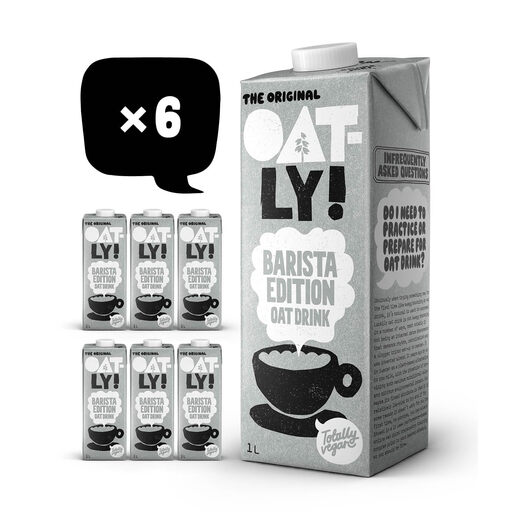
Why This Fits Their Persona: Ideal for anyone who wants to create café-quality coffee at home. The formula is specifically designed for use with coffee and delivers reliable results.
It sidesteps the "Barista Trap" with a proven formula containing 3% fat and an acidity regulator. The result is a consistently fine-pored, stable foam that won't curdle in coffee.
Excellent frothing capability and a neutral taste that doesn't overpower the coffee. The bulk pack is practical and economical for regular use.
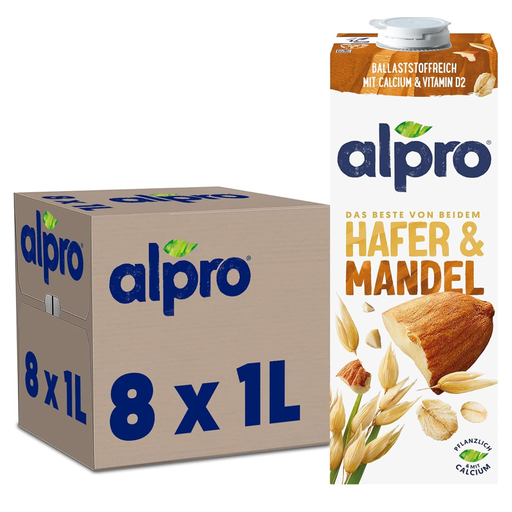
Why This Fits Their Persona: Perfect for users who value a short, "clean" ingredient list and want to avoid any added or process-related sugar.
It consistently evades the "hidden sugar trap," as its formula contains no sugar or sweeteners, according to the manufacturer. The sugar content is 0 g per 100 ml.
Combines the mild taste of oats with a nutty almond note. Fortified with vitamins (B2, B12, D2, E) and calcium. Naturally low in fat.

Why This Fits Their Persona: For anyone who wants full control over the ingredients in their plant-based drinks and loves to experiment. Ideal for making fresh homemade oat milk.
It solves all the aforementioned problems because you decide exactly which ingredients (oats, water, optionally a pinch of salt or a little oil) go into your drink. No hidden sugar, no unwanted additives.
Maximum freshness and control over the ingredients. The machine allows you to prepare various plant-based milk alternatives and features a self-cleaning function.
We have compiled a complete, up-to-date list of products that fully meet these strict selection criteria and our quality standards.
Oat milk curdling in hot coffee is a chemical reaction caused by the coffee's acidity and the temperature difference. The proteins in the oat drink coagulate. Special Barista Editions typically contain an acidity regulator (e.g., dipotassium phosphate) that stabilises the pH level and prevents this problem.
Theoretically, yes, but the quality of the foam differs significantly. For a dense, stable, and fine-pored foam needed for latte art, a special barista oat milk with an adjusted fat and protein content is required. Standard oat drinks often produce only large-bubbled, quickly collapsing foam.
The basic method to make your own oat milk is simple: blend rolled oats (e.g., 1 part) with water (e.g., 4 parts) in a high-performance blender for about 30–45 seconds. Then, strain the liquid through a fine-mesh sieve, a cheesecloth, or a nut milk bag. For a creamier consistency, a small amount of neutral oil can be added. Specialised devices like a "Nut Milk Maker" can automate and optimise this process.