
Lieferung heute & morgen

Qualitätsgarantie

Willkommens-Angebote freischalten: KOSTENLOSE Lieferung | Bis zu 80 % RABATT | Kostenlose 30-Tage-JoyPlus-Testphase
App herunterladen
By Joybuy Product Recommendation Officer, July 29, 2026
The check engine light comes on—a scenario that fills many drivers with dread. The subsequent trip to the mechanic is often fraught with uncertainty and high costs. A modern OBD2 scanner with bidirectional control promises a solution, enabling professional-grade diagnostics. But the market is confusing and full of pitfalls that make a smart investment difficult. This guide will help you cut through the noise and find a tool that truly fits your needs.
Before we dive into the technical details, it's crucial to understand the most common marketing traps that can lead to expensive buyer's remorse.
To make an informed decision, you should carefully examine three technical aspects. These determine whether a device is a useful tool or just an expensive toy.
This is the defining feature that separates a professional automotive diagnostic tool from a basic code reader. While simple devices can only read and clear fault codes, bidirectional control allows for active communication with the vehicle's control units.
The longevity and utility of a diagnostic tool depend directly on its software.
The range of functions should match your specific requirements.
We have selected a range of devices that meet the criteria above and are suitable for different user groups.
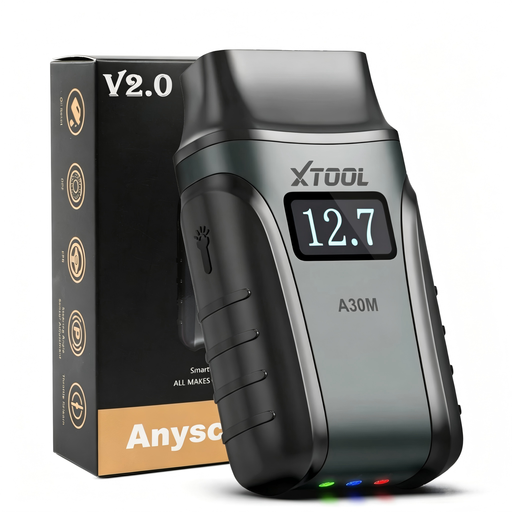
Why This Fits Their Persona: Ideal for users seeking a cost-effective yet powerful solution. This compact Bluetooth dongle transforms a smartphone (iOS/Android) into a full-featured diagnostic tool with bidirectional control and extensive service functions. Perfect for mobile diagnostics and maintenance on your own cars.
This device offers lifetime free updates for all functions, including the 26+ reset services. It completely bypasses the subscription trap and offers excellent future-proofing thanks to CAN FD support.
Full bidirectional control and a wide range of service functions in a very compact and affordable format. The wireless connection provides maximum flexibility when working on the vehicle.
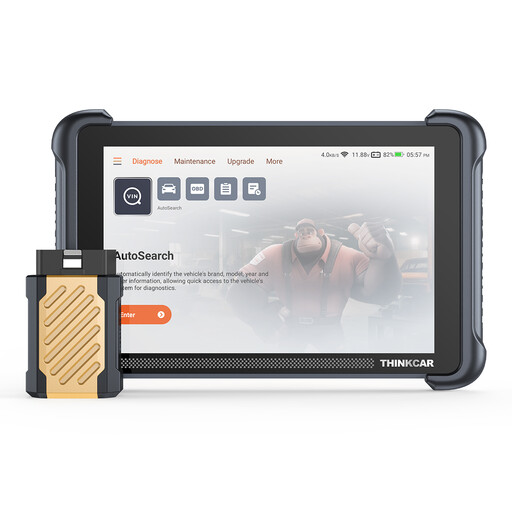
Why This Fits Their Persona: For experienced mechanics and small workshops looking for the optimal balance of price and performance. The 8-inch tablet provides a professional work environment with advanced features like ECU coding and full protocol support, without the premium brand price tag.
Delivers a clear value proposition with lifetime free updates for all diagnostic functions, 34+ reset services, and the vehicle database. This guarantees full cost control and protects against the subscription trap.
Comprehensive protocol support including CAN FD and DoIP, as well as advanced functions like ECU Coding, make this device an extremely future-proof and versatile choice in its price class.
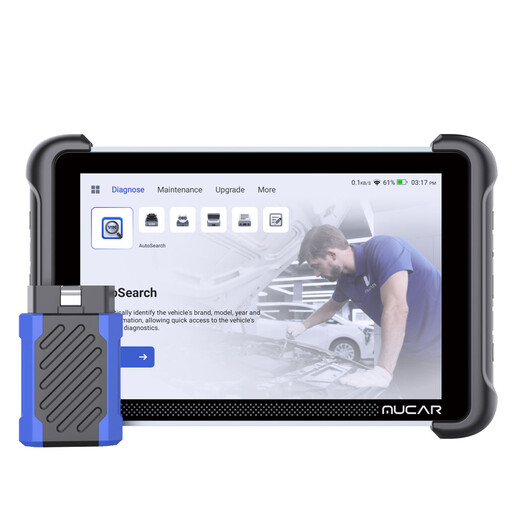
Why This Fits Their Persona: Designed for professional use in workshops that need a powerful, expandable, and cost-effective tool. The combination of advanced coding, broad vehicle coverage, and the option to expand with add-on modules (e.g., oscilloscope) offers maximum flexibility.
Eliminates the high running costs associated with many professional workshop tools through a strict policy of lifetime free updates. This allows for precise budget planning and maximises profitability.
Advanced ECU Coding, support for CAN-FD & DoIP, and modular expandability make it a versatile primary diagnostic tool for a modern workshop.
We have compiled a complete, up-to-date list of products that fully meet these strict selection criteria.
A basic OBD2 scanner can only receive data from the vehicle's control units (passively), meaning it can read fault codes and live data. A tool with bidirectional control can also send commands to the control units (actively). This allows you to specifically actuate individual components like fans, valves, or pumps to test their function and identify sources of error quickly and accurately.
Modern vehicles use increasingly complex electronic systems that exchange large amounts of data in a short time. CAN FD (CAN with Flexible Data-Rate) and DoIP (Diagnostics over Internet Protocol) are newer, faster communication standards required for diagnosing these systems. Without support for these protocols, a diagnostic tool cannot perform a complete system diagnosis on many vehicles manufactured from 2020 onwards.
Yes, absolutely. The cost of annual software subscriptions for professional diagnostic tools can range from ?100 to over ?500. A device with lifetime free updates is a one-time investment. After just two to three years, the potentially higher initial purchase price will have paid for itself compared to a subscription model. For home mechanics and small workshops, this is the most economically sound approach.