
Lieferung heute & morgen

Qualitätsgarantie

Willkommens-Angebote freischalten: KOSTENLOSE Lieferung | Bis zu 80 % RABATT | Kostenlose 30-Tage-JoyPlus-Testphase
App herunterladen
A recliner should suit your needs, whether you want to watch TV, read, take a nap or sit for longer periods. In practice, the right choice depends on more than just the upholstery and appearance. The key factors are the chair’s dimensions when fully reclined, its weight capacity and the adjustment options it actually offers.
A TV chair or reclining chair can take up considerably more room when fully reclined. For example, a model with a depth of 70 centimetres might extend to more than 150 centimetres. Before buying, check the following measurements:
This is often overlooked, particularly when choosing an adjustable chair for a small living room or bedroom.
Descriptions such as “oversized” or “extra-wide” don’t tell you much on their own. The actual seat width, maximum weight capacity and the chair’s own weight are more useful details. A wider seat may be more comfortable for larger users, but it also takes up more space. Do not exceed the stated weight limit.
An upholstered recliner for the living room isn’t automatically suitable for a balcony or patio. Protect fabric, linen and chenille from moisture. For outdoor use, materials such as coated steel and Textilene are more practical. A manual adjustment mechanism is also not the same as an electric one: a manually adjustable recliner doesn’t need a power socket, but the number of positions it offers may be limited, depending on the model.
Check the measurements in both positions. A chair with a maximum backrest recline of 140 to 160 degrees may be suitable for leaning back or having a short rest. However, that doesn’t necessarily mean it reclines to a fully flat position.
Also check:
A TV chair with a footrest is useful if you regularly want to put your feet up. A rocking chair or tilt chair, on the other hand, adds a gentle rocking motion, which may not suit everyone or every type of flooring.
When it comes to cushioning, specific details such as foam, high-density foam or pocket springs are more helpful than general promises of comfort. The covering affects care, feel and suitability for different settings:
Don’t choose an ergonomic chair on the strength of that label alone. What matters is the right seat height, adequate back support and a footrest that suits your height. These features do not, in themselves, indicate any medical or therapeutic benefits.
Some models arrive largely assembled, while others require several assembly steps. Check whether you’ll need tools and whether the chair may arrive in separate parcels. If the chair has a net weight of 38.5 or 47 kilograms, you should also arrange delivery to the place where it will be set up.
For care, deal with spills promptly, use only approved cleaning products and don’t treat moving mechanisms yourself with unsuitable products. If you have an outdoor model, store it somewhere dry when it’s not in use.
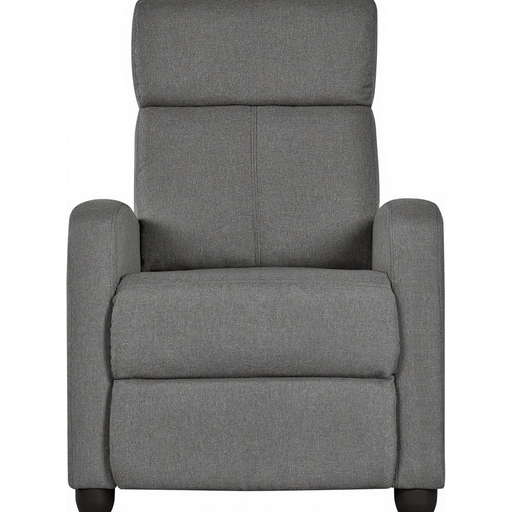
Why it suits this need: This compact chair offers three reclining positions and can be used in the living room, home office or bedroom. Its stated weight capacity is 120 kg.
The product details give specific dimensions of 67 × 73 × 99.5 cm, extending to 157 cm when reclined. This makes it easier to plan how much space you’ll need.
Adjustable footrest from 0° to 90°, high-density foam cushioning and a metal frame.
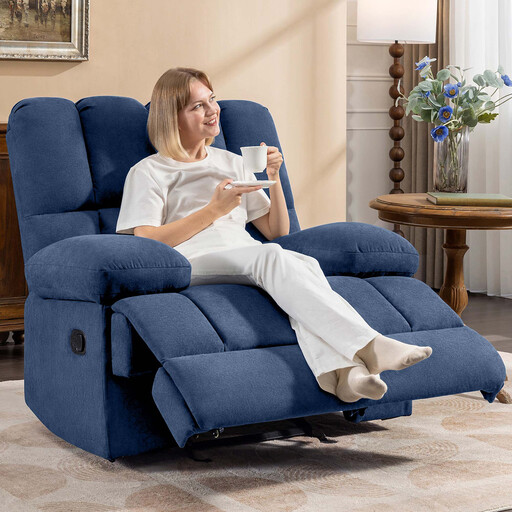
Why it suits this need: This wide chair is designed for people who want a generous seat, manual adjustment and a rocking function in one.
The description clearly states that the chair measures 105 × 94 × 103 cm and extends to 164 cm when fully reclined. Its weight capacity is listed as 350 lb, which you should factor into your plans before buying.
Manually adjustable backrest up to 150°, integrated footrest, 30° rocking function and a largely pre-assembled design.
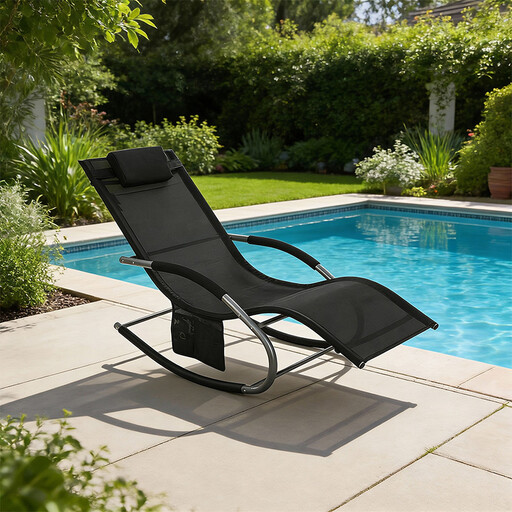
Why it suits this need: This garden lounger is a good option if you’re looking for a lightweight recliner for outdoor spaces that you can move between the garden, balcony, patio or beach.
This model isn’t designed as a living room chair; its materials are specifically listed as metal and Textilene for outdoor use. Be sure to follow the care instructions when using it.
Measures 63 × 150 × 87 cm, stated weight capacity of 150 kg, headrest, side pocket and a weight of 10 kg.
We’ve put together a complete, regularly updated list of products that meet these strict selection criteria and fully comply with the safety regulations in force in the EU.
As well as the chair’s footprint, you’ll need to allow for its extended depth. Many models need between 150 and 165 centimetres of depth. You should also leave space between the chair and the wall, and allow enough room to move around in front of it.
A manual recliner doesn’t need a motor or a power socket, so there are no electrical components that could fail. However, its actual lifespan also depends on the frame, mechanism, cushioning, how it’s used and how well it’s cared for. It’s therefore not possible to make a general statement about how long it will last.
A purely manual model has no electricity costs during normal use. Electric TV chairs and recliners, on the other hand, use power for their motors and any additional features. Before buying, check the power supply, cable length and how often you expect to use the chair.