
Lieferung heute & morgen

Qualitätsgarantie

Willkommens-Angebote freischalten: KOSTENLOSE Lieferung | Bis zu 80 % RABATT | Kostenlose 30-Tage-JoyPlus-Testphase
App herunterladen
A shelving unit used as a room divider gives you extra storage and can visually separate living areas without putting up a permanent wall. Open bookcases, ladder shelves and multi-compartment units are especially popular for books, plants, decorations and storage boxes.
Looks aren’t the only thing to consider, though. Some models look spacious in product photos but offer little usable depth in everyday use. Others need to be fixed to a wall or aren’t suitable for unevenly distributed loads. The points below will help you choose the right shelving unit for your living room, bedroom, office or kitchen.
A narrow shelving unit saves floor space, but may not be suitable for files, larger books or storage boxes. Before buying, compare the shelf depth with the items you plan to put on it. Skirting boards and the distance from the wall can also affect the usable floor space.
A high weight limit doesn’t automatically mean that every shelf can support the same load. Factors such as the construction, number of tiers, weight distribution and a level surface all matter. It’s best to place heavy books on the lower shelves.
For a freestanding unit, anti-tip safety is also important. Tall bookcases and ladder shelves should be securely fixed to the wall in accordance with the assembly instructions. Children must not climb on the shelves or pull themselves up on them.
A unit with open shelves is easy to access and often looks airy. At the same time, everything on it is on display. If you want to store lots of small items, you may need extra baskets or boxes. Before buying, decide whether the unit will mainly be used as a bookcase, a display shelf or general storage.
Measure the available width, height and depth. If you’re using a shelving unit as a room divider, also check that it won’t obstruct doors, windows, radiators or walkways. A low multi-compartment unit can help define different areas without completely screening off the room. A tall freestanding unit creates more separation, but needs to be secured against tipping.
Check the actual product dimensions rather than just the number of compartments. A model with lots of small compartments is better suited to decorations, plants and smaller items. Wider compartments are more practical for books, files or storage boxes.
For shelving made from wood or engineered wood, the material and surface finish are important factors to consider. Melamine-coated chipboard or MDF panels can usually be cleaned with a soft cloth. However, avoid prolonged exposure to moisture and abrasive cleaning products.
Also check that the edges are neatly finished and that the surface suits your décor. A minimalist unit in a light wood effect has a very different look from a black, vertically oriented ladder shelf.
Check the instructions for self-assembly, how many people are needed and whether the unit needs to be fixed to the wall. It should stand on a stable, level surface. Uneven flooring can affect its stability.
For tall or asymmetrical designs, a supplied anti-tip device is a useful safety feature. The right wall plugs and screws depend on the wall material, so you may need to choose these separately.
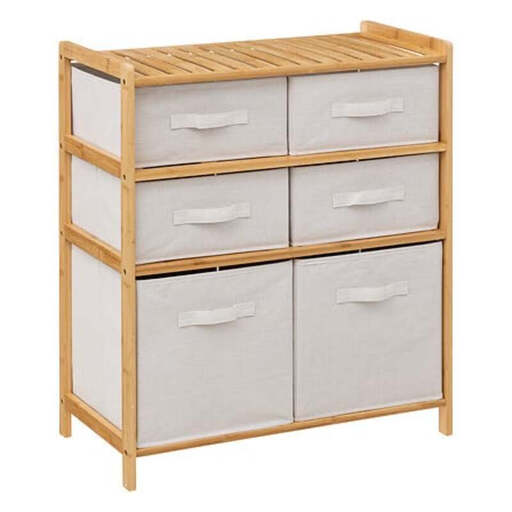
Why this product suits this profile: Its three-tier design offers a straightforward storage solution for smaller living spaces, bedrooms or a home office. It’s suitable for a selection of books, plants and decorations.
Its compact design helps reduce the risk of buying a unit that’s too large for a small space. According to the product information, it should be placed on a stable, level surface and kept away from damp areas.
Six open compartments across three tiers; clean with a dry or slightly damp cloth.
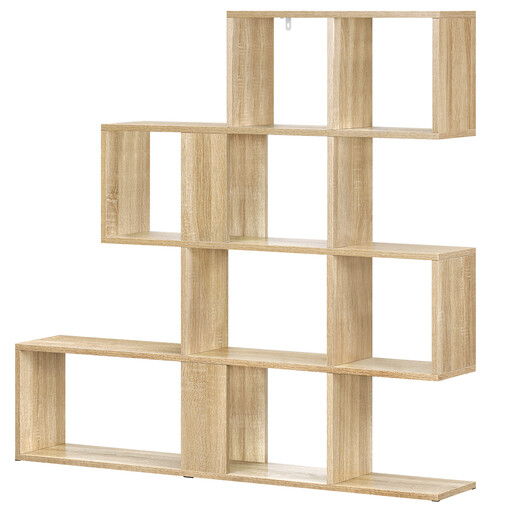
Why this product suits this profile: Measuring 115 × 109.5 × 19.5 cm, this freestanding unit has four tiers and eleven open compartments, making it suitable for the living room, bedroom, office or kitchen. Its staggered design can help define different areas of a room.
The product information lists a maximum total load of 70 kg, wide feet with non-slip pads and an anti-tip device for wall fixing. Even so, the load should be distributed evenly.
11 open compartments; coated engineered wood with stated water- and scratch-resistant properties.
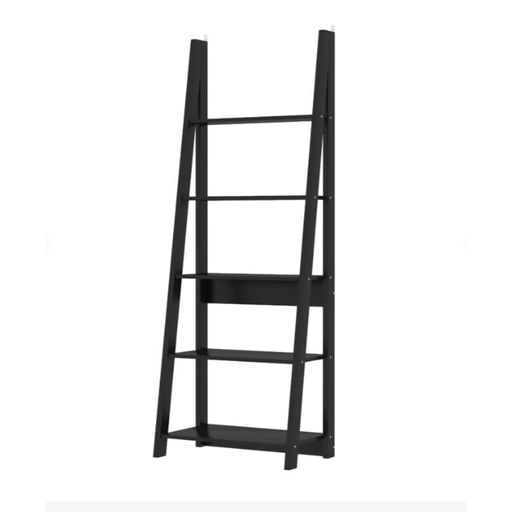
Why this product suits this profile: Measuring 64.5 × 39 × 175.5 cm, this vertical ladder shelf makes good use of height while taking up relatively little floor space. It’s suited to a living room, bedroom or home office where you want to display plants, books and personal items.
The clearly stated dimensions make it easier to work out how much space you’ll need before buying. According to the product information, assembly requires two people and a screwdriver; allow around 120 minutes.
Vertical, space-saving ladder design; open tiers for books, plants and decorations.
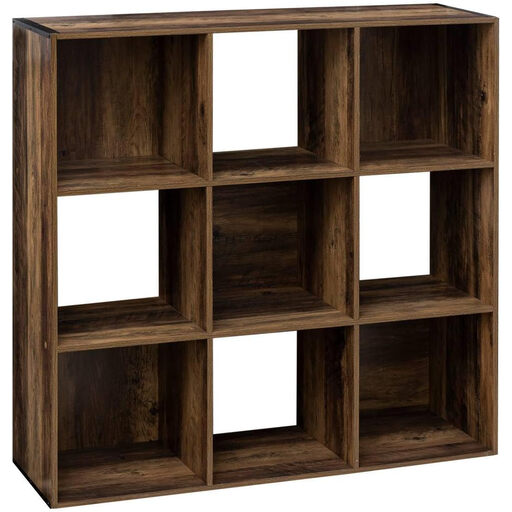
Why this product suits this profile: Its square design, measuring 100.5 × 32 × 100.5 cm, works well as a low room-divider unit or a wide storage shelf in a living area, office or hallway.
The product information lists a maximum load of 65 kg and a product weight of 22.18 kg. This makes it easier to check that the planned use is compatible with the technical specifications.
MDF back panel with engineered wood and metal components; the product information states FSC certification and two years of statutory warranty rights in the EU.
We’ve put together a complete, regularly updated list of products that meet these strict selection criteria and fully comply with the safety regulations in force in the EU.
Around 20 to 25 cm is often enough for decorations and smaller plants. You may need greater depth for lots of books, files or boxes. The key is to compare the shelf dimensions with the items you plan to store.
An anti-tip device is generally advisable for tall or narrow models and is often recommended in the manufacturer’s instructions. The right fixing method depends on the shelving unit, the wall and the fittings used. Always follow the assembly instructions.
Distribute the weight evenly, avoid prolonged exposure to moisture and clean the surface with a soft cloth. Abrasive cleaners, standing water and overloading can damage the material and finish.