
Lieferung heute & morgen

Qualitätsgarantie

Willkommens-Angebote freischalten: KOSTENLOSE Lieferung | Bis zu 80 % RABATT | Kostenlose 30-Tage-JoyPlus-Testphase
App herunterladen
Choosing a new bike light can quickly become overwhelming. Manufacturers advertise high lux ratings, long battery life, and various extra features. However, not every expensive-looking set delivers on its promises in everyday use. Many cyclists invest in lighting that either fails to meet legal requirements, has a battery that dies halfway through a ride, or drives up the price with unnecessary features.
This guide will help you identify the crucial features and avoid common purchasing traps. We focus on the three most frequent problems:
To make an informed decision, you should be guided by objective technical specifications, not marketing promises. Three aspects are of central importance.
Bike lights approved for German road traffic must meet specific technical requirements. The most important identifier is the K-number, issued by the German Federal Motor Transport Authority (Kraftfahrt-Bundesamt), which must be engraved or printed on the housing of the headlight or taillight. This approval ensures the light has a clearly defined sharp cut-off line. This effectively illuminates the road without blinding oncoming traffic—a critical safety factor. Therefore, always look for this marking.
While lumens describe the total light output of a lamp, illuminance in lux indicates how much light actually arrives on a specific surface—in this case, the road in front of you. For cyclists, the lux value is therefore the more practical metric.
100 lux bike light already offers a significant safety margin here.A rechargeable bike light set is standard today. However, the details are what count. An LED bike light with USB-C offers the advantage over outdated Micro-USB ports that you can use the same charging cable as for your smartphone or other modern devices. Check the battery life for the mode you will primarily use (usually the medium or high setting), not just the claim for the eco mode. A battery level indicator is also essential to avoid being unexpectedly left in the dark.
Based on these objective criteria, we have curated a selection of products suitable for specific user profiles.
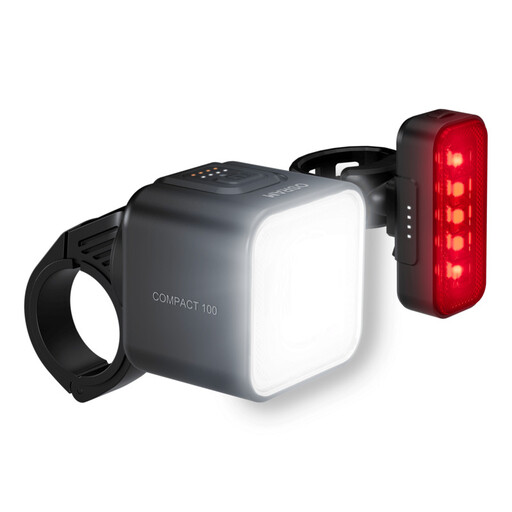
Why This Fits Their Persona: Ideal for the daily commute and city riding. This set provides a solid baseline feature set designed for reliability and ease of use, without superfluous functions.
Full StVZO approval ensures legal compliance. The 50 lux output is practical for urban environments, and the battery life of up to 9 hours in low mode (50%) is realistic for a week of commuting.
A balanced ratio of performance (50 lux), battery life, and price. Features a modern USB-C charging port and a convenient battery level indicator.
Why This Fits Their Persona: Perfect for e-bike riders and touring cyclists who frequently travel on unlit paths and prioritise maximum safety and comfort.
This set solves the "Lux Confusion" problem with a powerful 100 lux output for excellent long-range visibility. The rear light's integrated brake light function offers a distinct safety advantage often found only in more expensive systems.
Smart features like an automatic light sensor that adjusts brightness to conserve battery, and the sensor-controlled bike light with brake light for enhanced safety in traffic.
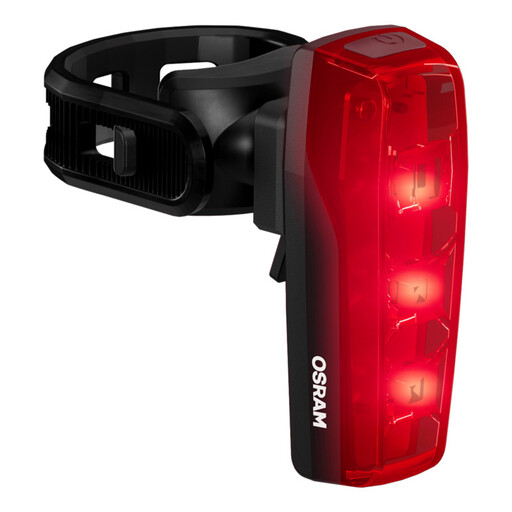
Why This Fits Their Persona: For cyclists who already own a good front light but want to maximize their rear visibility. An active brake light is a crucial safety benefit, especially in dense urban traffic.
Instead of buying a whole new set, this product offers a targeted upgrade. It is StVZO-compliant, and the brake light function is a genuine, tangible safety feature, not a marketing gimmick.
The sensor-controlled brake light function actively signals deceleration to following traffic. It boasts a long battery life of up to 13 hours and simple, tool-free installation.
We've compiled a complete, up-to-date list of products that fully meet these strict selection criteria and German safety regulations.
1. How can I identify an StVZO-compliant bike light? The most reliable identifier is the so-called K-number, followed by a wavy line and a number (e.g., ~K 12345). This must be directly engraved or printed on the housing of the headlight and taillight. If this marking is missing, the product is not permitted for use as the sole bicycle light in German road traffic.
2. How many lux are appropriate for my bike light? This largely depends on your riding environment. For rides in well-lit cities, 30-50 lux is often sufficient to be seen and to spot obstacles in time. For commuters who also ride on unlit paths, 70-100 lux is a great choice. Those who regularly ride at night on country roads or in forests will benefit from models with over 100 lux.
3. How do I mount my bike light correctly to avoid blinding others? The headlight must be adjusted so that the brightest point of the light beam hits the road about 5 to 10 meters in front of the bicycle. A simple check: stand in front of a wall. The top edge of the light beam should be noticeably below the height of the headlight. This ensures you do not blind oncoming traffic and meet the requirements of the StVZO.