
Lieferung heute & morgen

Qualitätsgarantie

Willkommens-Angebote freischalten: KOSTENLOSE Lieferung | Bis zu 80 % RABATT | Kostenlose 30-Tage-JoyPlus-Testphase
App herunterladen
A teapot should look appealing and work reliably day to day. But when buying one, it’s easy to focus more on its design and marketing claims than on the details that matter: Is the capacity right for your household? Is the material suitable for the way you want to brew tea? Can the filter be cleaned thoroughly?
If you overlook these points, you could end up with a teapot that’s too small, difficult to pour from or impractical after only a short time. The following criteria will help you look beyond the marketing claims and find the right option for your home, office, guests or as a gift.
A specification such as 1-litre teapot usually refers to the maximum capacity. Once you account for the filter, lid and the space needed at the top, the amount you can actually pour is often lower. A teapot holding around 800 to 900 ml may be enough for two people. Families and those who regularly host guests may prefer a capacity of 1.1 to 1.5 litres.
Very small models, around 400 to 520 ml, are better suited to one person or a quick brew. Bigger isn’t always better: if you only fill a large teapot partway, the tea may cool more quickly.
A teapot with a strainer or teapot with an infuser should have a sufficiently large internal filter. Loose-leaf tea needs room for the leaves to unfurl in the water. A very narrow or shallow strainer can restrict the brew and make cleaning more difficult.
Look out for the following details:
A heat-resistant teapot may be suitable for hot water without being safe to use on a hob or over an open flame. This is especially important with glass: always check the product description. Sudden changes in temperature – such as placing hot glass on a cold stone surface – can cause stress in the material.
So, if you’re considering a glass teapot, check whether the manufacturer specifically states that it’s suitable for use with particular heat sources. If this information isn’t provided, pouring in hot water is the safer option. The lid, handle and spout should also be secure when you pour.
A glass teapot lets you see the colour of the tea as it brews. Borosilicate glass is often used for teapots designed to withstand high brewing temperatures. However, you should still follow the guidance on temperature changes and heat sources. Glass is especially well suited to flowering teas, green tea and blends where it’s a pleasure to watch the leaves unfurl.
A ceramic teapot or stoneware model retains heat differently and can bring a subtle or decorative touch to a set table. Ceramic can be more susceptible to impact, though. Check that claims such as ‘dishwasher safe’ apply to the specific product, rather than assuming they apply to all types of ceramic.
A cast-iron teapot is heavy and feels sturdy. Make sure its weight suits where you plan to use it, especially if you’ll be moving it regularly when full of hot water. Follow the manufacturer’s cleaning instructions; many models are recommended for hand washing.
As a practical guide:
The number of cups will depend on their size. When looking for a teapot for loose-leaf tea, also check that the filter makes use of the full capacity, rather than covering only a small area near the spout.
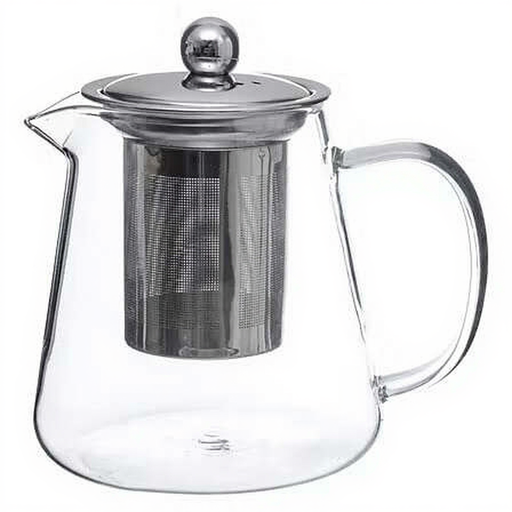
Why this product suits this profile: Its 800 ml capacity is ideal for everyday tea for two or smaller groups. The glass and stainless steel let you watch the tea brew, and the filter can be removed.
Its stated capacity is a good fit for smaller households. The removable filter means loose tea leaves don’t have to be left in the pot.
800 ml capacity, glass body, stainless steel filter and ergonomic handle.
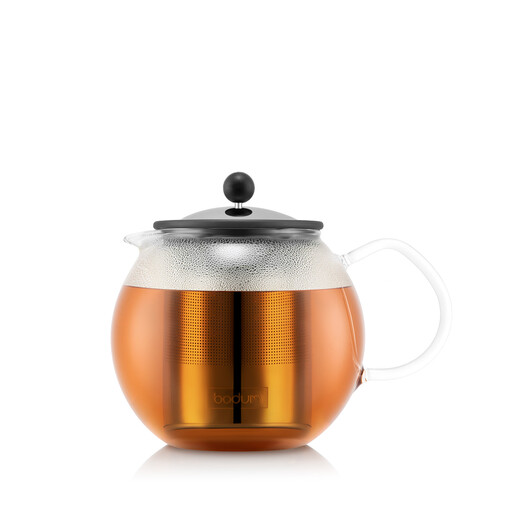
Why this product suits this profile: This 1-litre borosilicate glass model has a stainless steel filter with a press mechanism, so you can stop the brewing process directly in the teapot.
There’s no need to remove the integrated filter to stop the tea from brewing further. The stated maximum capacity of 1 litre helps prevent overfilling.
1 litre capacity, borosilicate glass, stainless steel filter, press system and stated dishwasher suitability.
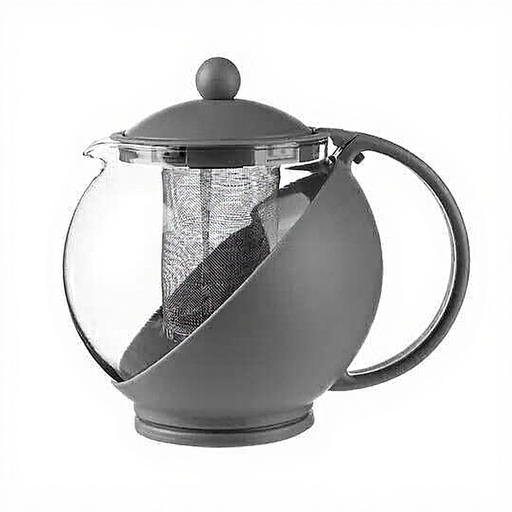
Why this product suits this profile: Its 1.25-litre capacity is suitable for several people. The transparent design is made for brewing loose-leaf tea, so you can watch it steep.
The larger capacity means fewer top-ups when you have guests. Before using it on a hob, check that it’s compatible with the specific heat source.
1.25-litre capacity, heat-resistant glass according to the product description and an ergonomic handle.
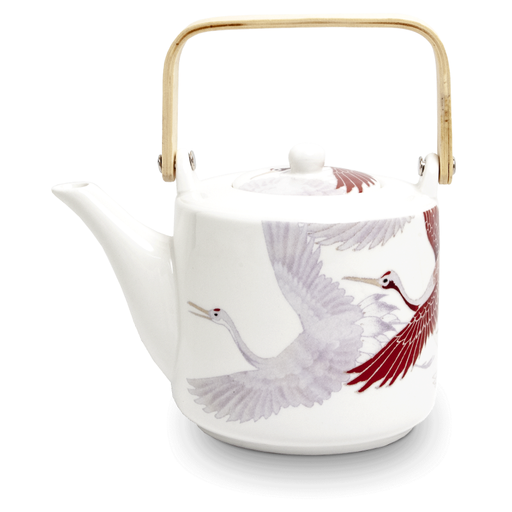
Why this product suits this profile: This 1-litre stoneware model combines an integrated stainless steel filter with a decorative crane motif and bamboo handle. It’s suited to serving tea and brewing loose-leaf varieties.
The metal filter is integrated and designed for loose-leaf tea. As bamboo and stoneware may need special care, follow the stated cleaning instructions.
1-litre capacity, stainless steel filter, stoneware body and bamboo handle.
Before using your teapot for the first time, clean the filter, lid and inside of the pot with warm water. For glass, avoid sudden temperature changes and don’t use it on a heat source unless this is explicitly approved. Check ceramic and cast-iron teapots for cracks, chips or loose handles.
If you have a cast-iron teapot, it’s particularly important to dry it thoroughly after hand washing. Hand washing is also recommended for models with bamboo lids, unless the manufacturer says otherwise. Tea stains are usually easier to remove if you rinse the filter straight after brewing.
We’ve put together a complete, regularly updated list of products that meet these strict selection criteria and fully comply with the safety regulations in force in the EU.
Choose a model with a removable, sufficiently large filter. A glass teapot with a stainless steel or glass filter also lets you watch the colour develop as the tea brews. The filter shouldn’t be too small for larger leaves.
A capacity of 400 to 600 ml is often enough for one person. Two to three people can usually share 700 to 900 ml. For families, the office or guests, consider a model holding 1 to 1.5 litres. The key is to fill the teapot according to how much tea you’ll actually drink.
Its lifespan depends on the material, how well it’s cared for and how often it’s used. Glass can break if knocked or exposed to sudden temperature changes, ceramic can chip, and cast iron needs suitable cleaning. A sturdy handle, a well-fitting lid and an easy-to-remove filter are practical features for long-term use.