
Lieferung heute & morgen

Qualitätsgarantie

Willkommens-Angebote freischalten: KOSTENLOSE Lieferung | Bis zu 80 % RABATT | Kostenlose 30-Tage-JoyPlus-Testphase
App herunterladen
Choosing the right charging cable for your electric car can be overwhelming. Navigating different charging speeds, cable lengths, and safety features, pitfalls abound that can lead to unnecessary expenses or impractical charging solutions. Many drivers invest in over-spec'd technology their vehicle can't even use, or they cut corners in the wrong places and risk safety issues. This guide will help you understand the essential criteria and make an informed decision.
The 3 most common mistakes when buying an EV charging cable:
To avoid these mistakes, it's crucial to focus on the technical parameters that are relevant to your vehicle and your daily routine.
The maximum charging speed is determined by the weakest link in the chain: the charging station, the charging cable, and your car's on-board charger (OBC).
An EV charging cable is a high-performance product where safety should be the top priority. Look for the following markings:
Your charging habits will determine the right solution:
Here are some product recommendations tailored to specific user profiles.

Why it's a great fit: Ideal for drivers who charge daily at home or work and need a reliable, straightforward solution. The 7-metre length offers enough flexibility for most parking situations without being unwieldy.
At 11 kW, it's perfectly matched to the most common EVs, avoiding unnecessary costs for over-spec'd 22 kW technology. The T?V certification ensures tested safety.
Focused on the core function: safe and reliable charging. The durable TPU cable jacket and IP54 rating ensure longevity for everyday use.
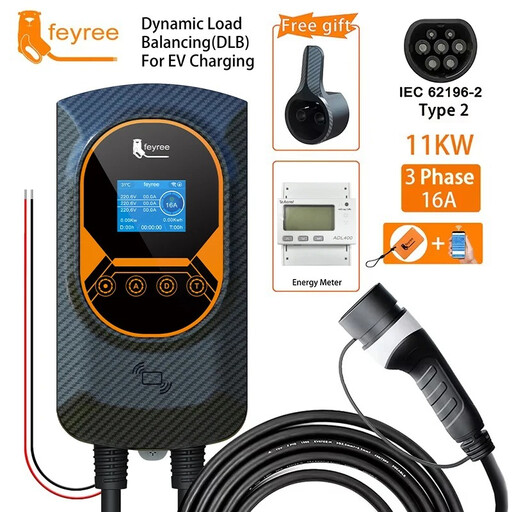
Why it's a great fit: For homeowners looking for a smart and secure charging solution. The app control allows for scheduling charging sessions, and dynamic load balancing (DLB) protects the home's electrical connection from overload.
The DLB system is an advanced safety feature that goes far beyond basic requirements, actively preventing issues with your home's electrical system—an often-overlooked aspect.
Total control and efficiency. The app lets you schedule charging for off-peak hours with cheaper electricity rates. The DLB ensures you're always charging at the maximum available power.

Why it's a great fit: This portable charger offers maximum flexibility. It can be connected to a CEE industrial socket, enabling fast charging on the go, for example, at campsites or in workshops.
It solves the problem of relying on public charging stations. The ability to adjust the charging current via the app is a crucial safety feature when connecting to unfamiliar power grids.
Portability meets smart control. Despite its mobile design, it offers features via the app like charge scheduling and monitoring, which are typically found only on permanently installed wallboxes.
We've compiled a complete, up-to-date list of products that fully meet these strict selection criteria and European safety regulations.
The Type 2 connector is the European standard for AC charging and fits almost all electric cars and plug-in hybrids sold in Europe, including models from Tesla. However, older imported vehicles from the US or Asia might have a Type 1 connector. Different connectors (CCS or CHAdeMO) are used for DC fast charging, but the charging cable for Tesla and other brands for regular charging at home and at public AC stations is Type 2.
Yes, that's technically no problem. The charging cable communicates with the vehicle, and the car's on-board charger automatically limits the charging power to its maximum, in this case, 11 kW. So you won't gain any speed advantage, but you might pay more for the more powerful cable.
The regulations vary by region, but in places like Germany, they are clearly defined: