
Lieferung heute & morgen

Qualitätsgarantie

Willkommens-Angebote freischalten: KOSTENLOSE Lieferung | Bis zu 80 % RABATT | Kostenlose 30-Tage-JoyPlus-Testphase
App herunterladen
A well-chosen up and down outdoor wall light enhances any home's facade, creates a welcoming atmosphere, and improves security. However, the market is flooded with products whose true quality only becomes apparent after the first winter season. Many homeowners invest in lights that quickly become unsightly or fail technically due to weather exposure. This guide will show you what to look for to avoid poor purchases and find a durable, functional lighting solution.
Before we dive into the technical details, here are the three most common issues that lead to disappointment and additional costs:
To avoid these pitfalls, you should check three core aspects before buying. These define the longevity and functionality of your new facade lighting.
The IP (Ingress Protection) rating is a two-digit code that indicates how well an electrical device is protected against the ingress of foreign objects (first digit) and water (second digit). For a weatherproof LED wall light, the following values are relevant:
For a durable modern outdoor wall lamp, the housing material is crucial. Aluminium, particularly die-cast aluminium, is an excellent choice here. It is lightweight, sturdy, and naturally corrosion-resistant. An additional powder coating, often in colours like anthracite or black, further protects the material and ensures a long-lasting, attractive finish. Look for clean workmanship without sharp edges or uneven paintwork.
Modern outdoor up-down spotlights are almost exclusively equipped with integrated LED technology. There are good reasons for this: LEDs are energy-efficient, have a very long lifespan, and are maintenance-free.
Based on the criteria above, we have identified several products suitable for different profiles and use cases.
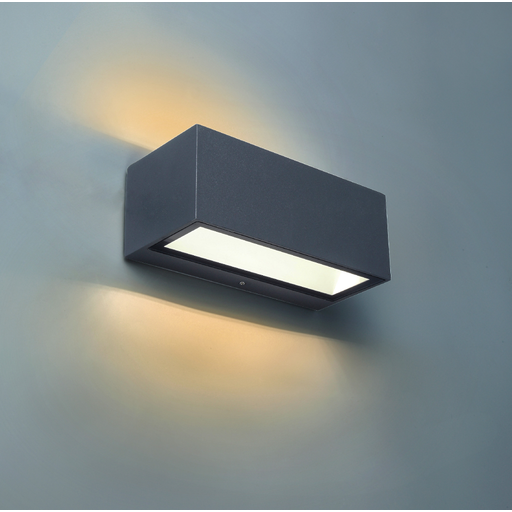
Why This Fits Their Persona: Ideal for homeowners who value a clean, modern design and high-quality materials. The anthracite finish and cubic shape are a perfect match for contemporary architecture.
The die-cast aluminium housing and IP54 rating provide robust protection against corrosion and the ingress of water and dust, ensuring a long service life.
A high light output of 1300 lumens provides effective yet stylish facade illumination. The 4000K colour temperature delivers a clear, neutral white light.
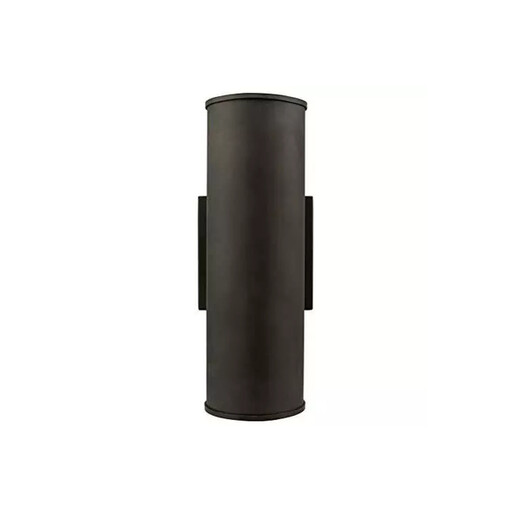
Why This Fits Their Persona: A reliable and functional choice for entrance areas, patios, or garages. The design is modern yet understated, with a focus on durability and pleasant light output.
With IP44 protection and a weather-resistant housing, this light is well-equipped for most sheltered and semi-sheltered outdoor areas, preventing failures from splashing water.
The integrated 8W LED technology delivers a bright yet inviting illumination with 870 lumens and 3000K warm white light, equivalent to a 60W incandescent bulb.
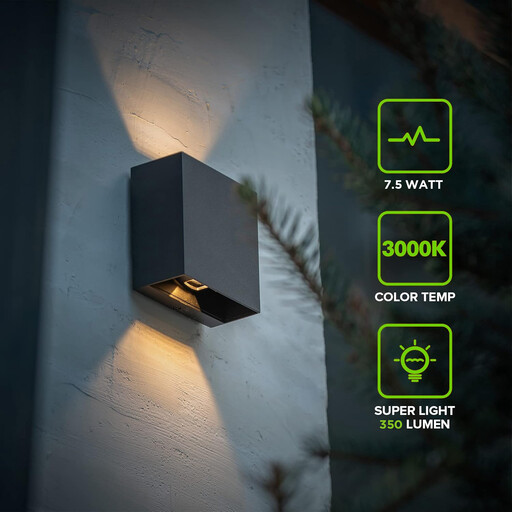
Why This Fits Their Persona: Offers the sought-after up-and-down light effect in a modern design at an attractive price point. Ideal for upgrading a facade without breaking the bank.
Despite its accessible price, this model uses an aluminium housing, which prevents the typical rust issues found in cheaper steel models. The construction is declared as water-repellent.
A special feature is the individually adjustable beam angle (0 to 106 degrees), which allows for creative and customised light effects on the wall.
We have compiled a complete, up-to-date list of products that fully meet these strict selection criteria and safety standards.
For most residential applications, IP44 is sufficient, especially if the light is mounted under an eave or in a covered entrance area. For walls directly exposed to rain and weather, a higher rating like IP54 or IP65 is recommended to ensure maximum durability.
For residential buildings, 3000K (Warm White) is the most common and popular choice. This light creates a warm, inviting atmosphere. A colour temperature of 4000K (Neutral White) appears more modern and functional and is often used to accent minimalist architecture or on commercial buildings.
Yes, in many regions, the installation of hard-wired outdoor lights must be performed by a qualified electrician. This is not only mandatory for safety reasons (protection against electric shock and fire hazards) but is also often a condition for the product warranty and insurance coverage.