
Lieferung heute & morgen

Qualitätsgarantie

Willkommens-Angebote freischalten: KOSTENLOSE Lieferung | Bis zu 80 % RABATT | Kostenlose 30-Tage-JoyPlus-Testphase
App herunterladen
By Joybuy Product Recommendation Officer, August 30, 2026
Limited storage space is a common problem, whether you're in a city apartment, a student dorm, or preparing for your next trip. Vacuum storage bags for clothes promise a simple solution to dramatically reduce the volume of textiles. But not all products live up to their claims. Many buyers soon find that the bags leak air, the material tears, or handling is cumbersome. This guide highlights the most common pitfalls and explains which technical features you should look for to make an informed decision.
Before investing in a set, it's important to know the typical weak points that often only become apparent after purchase.
A conscious choice that focuses on material and construction can eliminate these problems from the outset.
To avoid a bad investment, you should check three key parameters. These significantly determine the durability and functionality of a vacuum bag.
A high-quality clothing storage bag is typically made from a composite film of Polyamide (PA) and Polyethylene (PE).
Products made only from PE often do not offer sufficient durability for long-term or repeated use. Therefore, look for the PA+PE specification in the product details.
The reliability of a vacuum bag depends on its closure and valve.
The shape of the bag should match its intended use to enable truly space-saving storage.
Instead of making a blanket recommendation, we have identified products tailored to specific needs and usage scenarios.
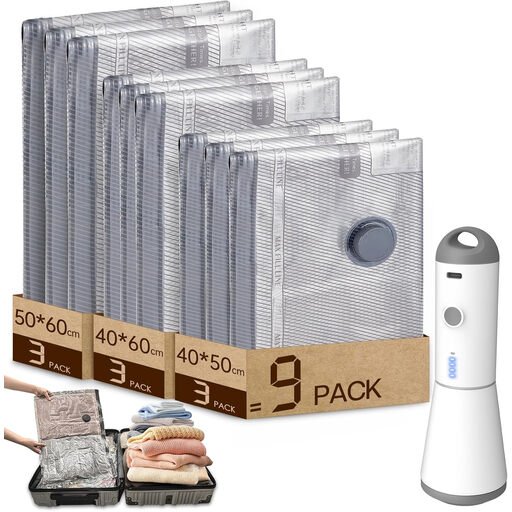
Why This Fits Their Persona: This set is ideal for individuals who need maximum flexibility both at home and while travelling. The cordless, USB-rechargeable pump makes you independent of a vacuum cleaner and is small enough for carry-on luggage.
Solves the incompatibility problem by including a matching, powerful pump. The double-zip closure and special valve ensure a reliable seal.
Compression takes about 30 seconds. The set includes three different sizes for various garments and is made from tear-resistant PA+PE material.
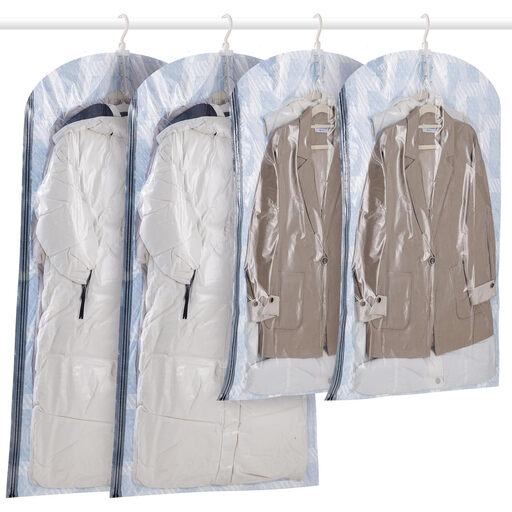
Why This Fits Their Persona: Perfect for those looking to maximise space in their wardrobe. Coats, suits, and long dresses can be stored wrinkle-free and protected without taking up valuable floor space.
The robust PA+PE material and patented valve are designed for durability, counteracting material fatigue and air leaks. The 360° hook fits most wardrobe rails.
Makes optimal use of vertical closet space. The set includes two different lengths (135 cm and 105 cm) for different garments. Compatible with any standard vacuum cleaner.
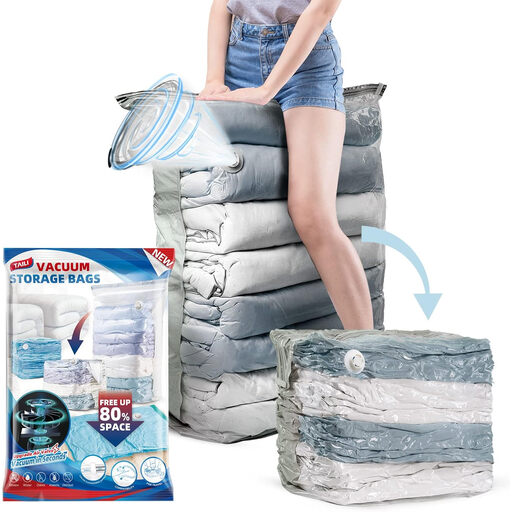
Why This Fits Their Persona: For households that need to store bulky items like winter duvets, pillows, or large quantities of seasonal clothing. The cube shape creates neat, stackable blocks, maximising storage space in the basement, attic, or closet.
The self-standing structure with a widened base makes it easy for one person to fill. The double-zip closure with a sliding clip ensures a secure seal that holds even with large volumes.
Huge capacity (approx. 3-5 duvets per bag). The cube shape is significantly more space-efficient than traditional flat bags and allows for organised storage.
We have compiled a complete, up-to-date list of products that fully meet these strict selection criteria and UK safety regulations.
A high-quality vacuum bag made of PA+PE material with an intact double-zip closure and a functional valve should maintain its vacuum for several months. For very long-term storage, such as for seasonal duvets, it is recommended to check the seal's condition every 6 to 12 months and re-vacuum if necessary.
Yes, most modern vacuum bags are designed for multiple reuses. Durability depends on the material quality (PA+PE is advantageous here) and how they are handled. Avoid contact with sharp objects, do not overfill the bags, and store them clean and dry when not in use.
Although they are suitable for most textiles, there are exceptions. Items made of leather or fur should not be vacuum-sealed, as the intense pressure can permanently damage the material and cause creases. Caution is advised with natural fibres like down or wool: excessive compression can break the fibre structure and permanently reduce its volume. Compress such items to only about 50–60% and not completely.