
Lieferung heute & morgen

Qualitätsgarantie

Willkommens-Angebote freischalten: KOSTENLOSE Lieferung | Bis zu 80 % RABATT | Kostenlose 30-Tage-JoyPlus-Testphase
App herunterladen
A wall shelf might seem like a simple purchase. However, several pitfalls lurk between wobbly constructions, unsuitable materials, and misleading product descriptions. Many buyers only realise after installation that their new shelf is useless for its intended purpose, begins to sag after a short time, or the surface swells at the first sign of moisture. This guide will show you what to look for to find a durable and functional solution for your home.
Before we dive into the important selection criteria, let's look at the three most common problems that lead to disappointment and unnecessary expenses:
To avoid these mistakes, you should check three core parameters before buying. These will help you separate the wheat from the chaff and choose a product that will serve its purpose for years to come.
The material determines not only the look but also the durability and application of the shelf.
The specified maximum load capacity is a critical value. Check if it is sufficient for your needs (e.g., as a bookshelf). A floating shelf with invisible mounting looks elegant but requires a stable, solid wall. Visible brackets often offer more stability and are more flexible for mounting on different wall types. Determine beforehand whether your wall is made of concrete, brick, or drywall, and get special anchors (e.g., hollow-wall anchors) if necessary.
Measure the available space accurately. A shelf that is too bulky can overwhelm a small room, while a wall board that is too small can look lost. For unused corners, a special corner shelf is a space-saving solution. Models with integrated drawers or hooks offer additional, organised storage, which can be particularly useful in the hallway or as a living room shelf.
Here are some recommendations tailored to different needs and living situations.
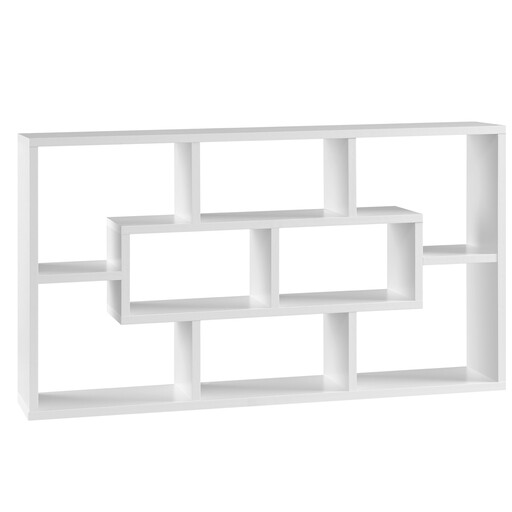
Why It's a Great Fit: Ideal for anyone needing maximum storage in a small footprint. The eight compartments provide a clear structure for books, decor, or office supplies, making efficient use of vertical wall space.
The load capacity is clearly defined at 5 kg per compartment, which prevents unrealistic expectations. The material is declared as E1-grade engineered wood with a melamine foil—an honest specification that indicates a water-repellent and easy-to-clean surface.
High space efficiency thanks to its vertical design. The clear compartment structure creates instant organisation.
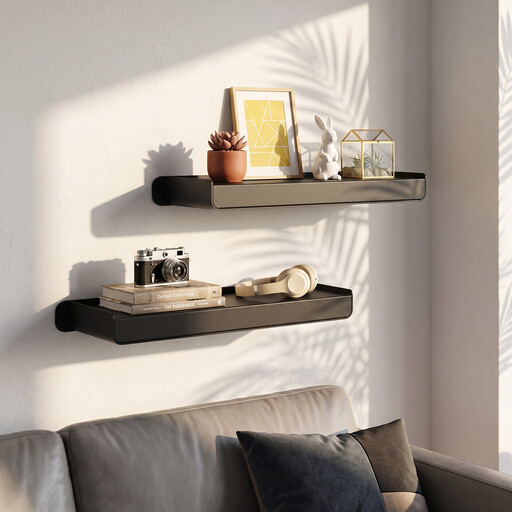
Why It's a Great Fit: For aesthetes who want to make a durable yet stylish statement in their living room or office. According to the manufacturer, the minimalist design was honoured with the German Design Award 2022.
The shelf is made of aluminium, a clearly defined, rustproof, and robust material. The high load capacity of up to 20 kg (44 lbs) is explicitly stated, preventing sagging under load. The rubber pads on the back protect the wall.
High-quality, durable material (aluminium) and a high, reliable load capacity. The award-winning design serves as an objective benchmark for its design quality.
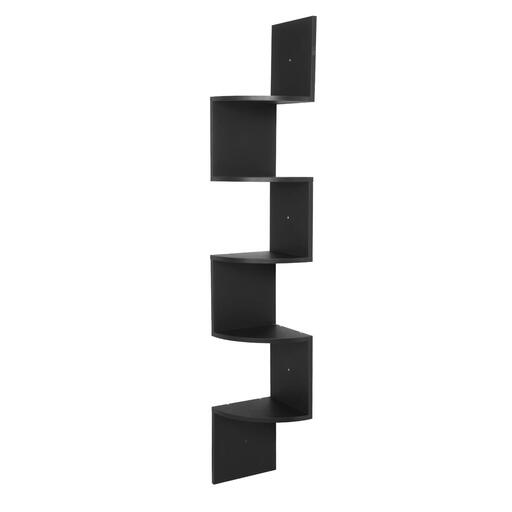
Why It's a Great Fit: Perfect for transforming unused corners in the living room, hallway, or office into valuable storage space. The zigzag design is not only an eye-catcher but also offers space on five levels for books, plants, or decor.
This corner shelf solves a specific space problem that standard shelves cannot address. The manufacturer clearly states that the shelf is not suitable for drywall, thus preventing installation errors. The load capacity of approx. 15 kg is realistically sized for a shelf of this type.
Optimal use of otherwise dead space in corners. The invisible mounting ensures a clean, floating look.
We have compiled a complete, up-to-date list of products that fully meet these strict selection criteria and safety regulations.
1. What is the maximum load capacity of an average wall shelf? The load capacity varies greatly depending on the material, size, and mounting system. Decorative floating shelves often only support 3-5 kg. More robust models with brackets or made of solid material can hold 10 kg, 15 kg, or even over 20 kg per linear meter. Always check the manufacturer's specifications and compare them with your needs.
2. Can I mount a floating shelf on a drywall wall? Mounting on a drywall wall is possible but requires special fasteners. Standard wall plugs will not provide a secure hold. Instead, use hollow-wall anchors made of metal or plastic, which expand behind the drywall panel. However, note that the maximum load capacity on such a wall is lower than on a solid wall made of concrete or brick. For heavy loads, it is necessary to anchor the shelf into the underlying wooden or metal stud structure.
3. What material is suitable for a shelf in the bathroom? For a shelf in the bathroom, waterproof or at least moisture-resistant materials are essential. Shelves made of powder-coated metal (aluminium, stainless steel), plastic, or glass are recommended. If you prefer a wooden wall shelf, make sure it is lacquered solid wood or MDF panels with a sealed, water-repellent PVC or lacquer finish. Untreated particle boards will swell quickly when exposed to moisture and are unsuitable.