
Lieferung heute & morgen

Qualitätsgarantie

Willkommens-Angebote freischalten: KOSTENLOSE Lieferung | Bis zu 80 % RABATT | Kostenlose 30-Tage-JoyPlus-Testphase
App herunterladen
The flexibility to charge an electric car at almost any CEE industrial socket is a decisive advantage for many drivers. A mobile 11 kW wallbox, often called a "Wallbox to Go," promises exactly this freedom—whether at a holiday home, a campsite, or a friend's house. However, the market is crowded and not every device delivers on its promises. Before you make a decision, you should be aware of the typical pitfalls that often lead to frustration and unnecessary expenses.
The 3 Most Common Traps When Buying a Mobile Charging Station:
To make an informed decision, it's important to understand the technical fundamentals. Three parameters are decisive for the performance, safety, and convenience of a mobile wallbox.
A charging power of 11 kW is an ideal compromise between speed and grid compatibility for charging at home and on the go. This power is achieved through three-phase charging at 16 amps per phase.
Safety is the most important aspect of any charging process. A high-quality portable EV charger must have multiple protection mechanisms.
An EV charger with an app offers more than just the ability to start and stop the charging process. The truly useful features are:
A good app connection via Wi-Fi or Bluetooth turns a simple 11kW mobile charger into an intelligent tool for cost optimisation.
Based on the criteria mentioned, we have identified a few models that represent a considered choice for different user profiles.
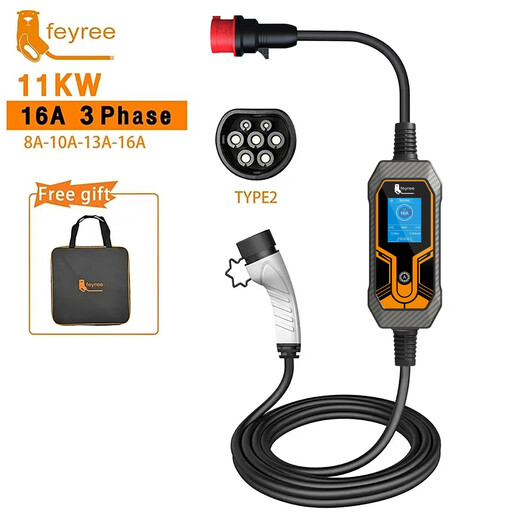
Why This Fits Their Persona: Ideal for users seeking a reliable and straightforward 11 kW charging solution without complex app features. The device focuses on the core functions: safe charging at 11 kW from a CEE socket.
It bypasses the trap of unreliable apps by relying on a clear LCD screen for monitoring charging data. Essential safety features like overcurrent and overvoltage protection are integrated.
Focused on robustness and ease of use. The high-strength ABS material housing and IP65 protection rating ensure durability. The current is adjustable directly on the device.
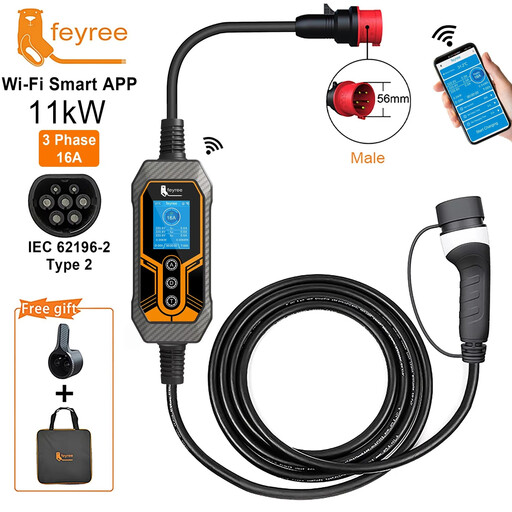
Why This Fits Their Persona: Perfect for drivers who want to precisely control charging sessions and reduce electricity costs through scheduled charging. The Wi-Fi and Bluetooth connectivity allows for full control via a smart app.
Offers a functional app for scheduling and monitoring without falling into the trap of useless gimmicks. It features comprehensive safety protection, including a Type B (AC30mA+DC6mA) RCD.
The combination of app control and physical buttons for delayed charging offers flexibility. The 2.8-inch LCD screen displays all relevant charging data in real-time.
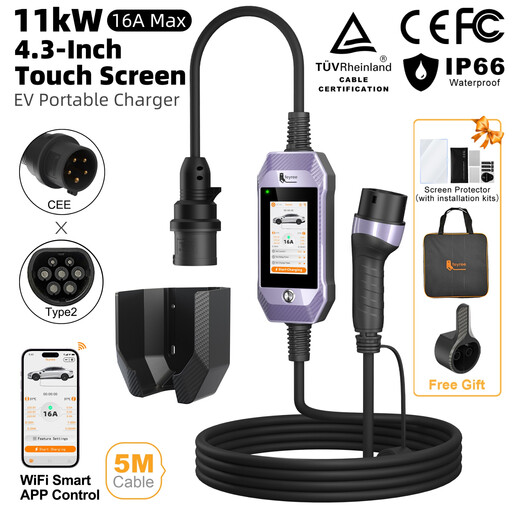
Why This Fits Their Persona: For users who value intuitive operation and maximum transparency. The large 4.3-inch tempered glass touchscreen makes control and monitoring directly on the device exceptionally convenient.
This model avoids the trap of poor material quality with dual temperature monitoring on the plug and control box, which automatically reduces power if overheating occurs. It combines a premium feel with certified safety.
The HD touchscreen and detailed charging history directly on the device provide an outstanding user experience. Remote over-the-air (OTA) firmware updates also keep the device technically up to date.
We have compiled a complete, up-to-date list of products that fully meet these strict selection criteria and German safety regulations.
No electrician is required to operate the mobile wallbox itself; it is a plug-and-play device. However, the required red CEE 16A three-phase socket must be professionally installed and protected by a qualified electrician if one is not already present.
The lifespan heavily depends on the material quality and usage. Models with robust housings and high-quality, kink-resistant TPU cables are more durable. With proper handling and storage (dry and without extreme temperatures), a quality charger can function reliably for many years.
Yes, that is one of the main advantages. Many electricity providers have variable tariffs where power is significantly cheaper at night. With the app's scheduled charging feature, you can specifically set the charging process for these off-peak times and thus noticeably reduce your charging costs over the year.