
Lieferung heute & morgen

Qualitätsgarantie

Willkommens-Angebote freischalten: KOSTENLOSE Lieferung | Bis zu 80 % RABATT | Kostenlose 30-Tage-JoyPlus-Testphase
App herunterladen
A water-saving shower head should reduce water consumption without making the spray uncomfortably weak for everyday use. At the same time, many models are advertised with features such as high pressure, massage settings or a rainfall spray. These descriptions alone, however, tell you little about how suitable a shower head will be for your bathroom.
Before you buy, watch out for these three common pitfalls:
In German bathrooms, the G1/2 connection is widely used for shower hoses and handheld shower heads. Even so, check that the existing thread and hose are compatible before ordering. A shower head with a G1/2 connection can often be fitted without any extra tools.
For a straightforward replacement, you’ll usually just need to unscrew the old handheld shower head and screw on the new one. Make sure the seal is positioned correctly, then check for leaks around the connection once it’s fitted. A shower head supplied with a hose can be a good choice if your existing hose is worn or you need more room to move.
A complete shower system, on the other hand, requires a little more planning. Check the existing wall connections, the distance between them and whether you already have a thermostatic mixer. If you’re renovating without making major changes, a shower system without a mixer may be a suitable option.
Water-saving shower heads often use smaller or more closely spaced nozzles. This can make the spray feel more concentrated. However, the actual water savings depend on the water pressure, how long you shower for and the position of the control.
The Cobbe models featured here claim to save up to 30 per cent. This should be understood as a manufacturer or product claim, not a general guarantee for every household. To make a reliable comparison, you need to measure the flow rate under comparable conditions.
If you want to keep a closer eye on consumption, you can also look for a flow restrictor. Make sure it’s compatible with your existing hot water system. If you have an instantaneous water heater, check that the shower head is suitable for it. For example, according to the product description, the first Cobbe model is not suitable for electric showers.
A high-pressure shower head or pressure-boosting shower head may be worth considering if your household has moderate water pressure. However, the term usually describes the nozzle design rather than an increase in the pressure of your home’s plumbing.
Useful features to look for include:
A handheld shower head with several settings is often more versatile for everyday use, cleaning the shower or rinsing long hair than a fixed rainfall shower alone.
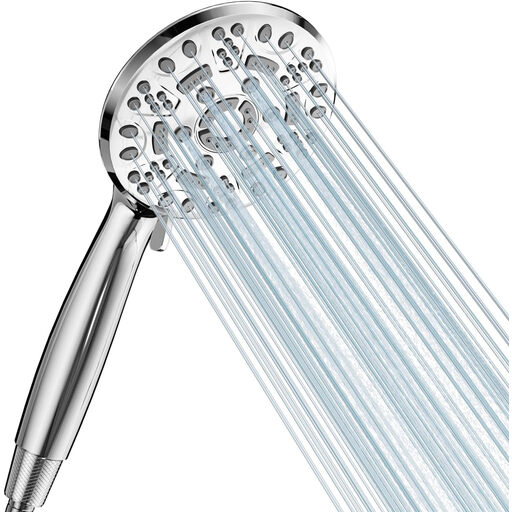
Why this product suits this profile: This handheld shower head is designed as a straightforward replacement and screws onto a standard G1/2 shower hose. Eight spray settings give you plenty of choice to suit different preferences.
The product description mentions self-cleaning nozzles and a water-stop setting. Even so, check that it’s suitable for your hot water system before buying.
ABS body with a multi-layer chrome finish, weighs 360 grams and offers eight selectable spray settings.
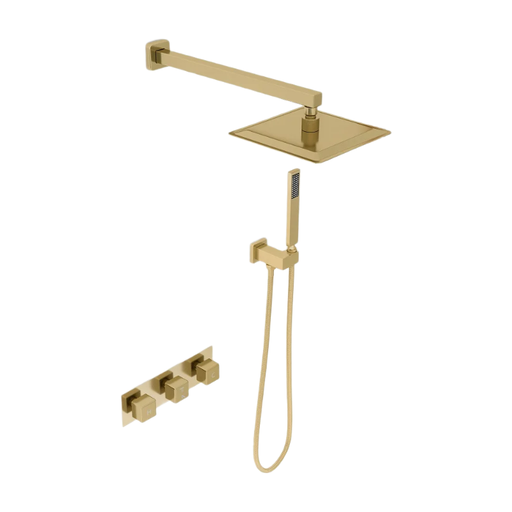
Why this product suits this profile: This wall-mounted system combines a square rainfall shower head with a handheld shower and a 1,500-mm stainless steel hose. It’s a good fit if you want both fixed and flexible water delivery.
The product details state a minimum pressure of 0,05 MPa, or 0,5 bar. Check that this is compatible with the conditions in your bathroom before installation.
Solid brass body, 200-mm rainfall shower head, ceramic valve and separate handheld shower.
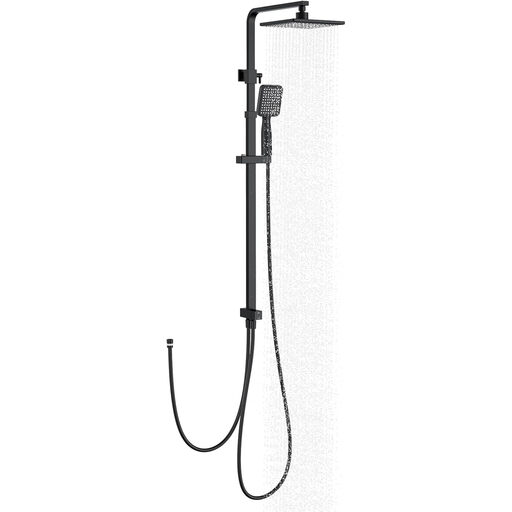
Why this product suits this profile: The shower column can be adjusted in height from 730 to 1.153 mm, making it suitable for households with several users. It’s supplied without a thermostatic mixer, so it’s intended for certain types of retrofit.
The product details clearly state that a thermostatic mixer isn’t included. This lets you check in advance whether you can continue using your existing mixer.
20 × 20 cm black rainfall shower head, height-adjustable stainless steel column and two stainless steel shower hoses measuring 150 and 50 cm.
We’ve put together a complete, regularly updated list of products that meet these strict selection criteria and fully comply with the safety regulations in force in the EU.
Before installation, turn off the water supply and clean the thread on the existing connection. Use the supplied seal and tighten the shower head by hand only, unless the instructions say otherwise. Once you turn the water back on, check the connection for drips.
To help your shower head last longer:
It depends on the flow rate, water pressure and how long you shower for. Models with finer nozzles or a flow restrictor can reduce water consumption. Manufacturer claims such as “up to 30 per cent” apply under specific conditions and shouldn’t be taken as a guaranteed result for every household.
Many handheld shower heads use a G1/2 connection. Even so, check the thread, seal and condition of your hose before buying. If you’re unsure, it may be more practical to choose a shower head with a compatible hose or a complete set.
Its lifespan depends on water hardness, materials, cleaning and how often it’s used. Easy-to-clean nozzles, sturdy connections and regular care can help keep it in good working order. If you live in a hard water area, check the nozzles more often and follow the care instructions.