
Lieferung heute & morgen

Qualitätsgarantie

Willkommens-Angebote freischalten: KOSTENLOSE Lieferung | Bis zu 80 % RABATT | Kostenlose 30-Tage-JoyPlus-Testphase
App herunterladen
For owners of electric cars or plug-in hybrids, a reliable charging solution is crucial. While permanently installed wallboxes are one option, a 3.7 kW mobile wallbox offers a flexible and often more cost-effective alternative. It allows you to charge from any standard domestic socket—ideal for renters, travellers, or as a secondary device.
However, the market is saturated and confusing. Many products promise more than they can deliver and, in the worst-case scenario, can pose safety risks. This guide highlights the most common pitfalls and explains which technical features you need to look for to make an informed decision.
Choosing the wrong device not only leads to frustration but can also endanger your home's electrical system or your vehicle's battery. Watch out for these three common problems:
To avoid these pitfalls, you should check three core technical parameters. These determine the safety, flexibility, and longevity of your mobile charging station.
The most important feature for an EV charger for domestic sockets is the ability to manually adjust the amperage. Reducing it to 10A or 8A is essential when charging from an unknown or older socket.
A good device allows you to adjust the setting directly on the control box or via a reliable app.
The length of the charging cable determines its flexibility in everyday use.
The Schuko to Type 2 charging cable should also be made from a robust and weather-resistant material like TPU (Thermoplastic Polyurethane). This ensures durability even in cold or wet conditions.
Reputable manufacturers have their products tested. Look for the following features:
Based on the criteria mentioned, we have identified some products that are suitable for different user groups.
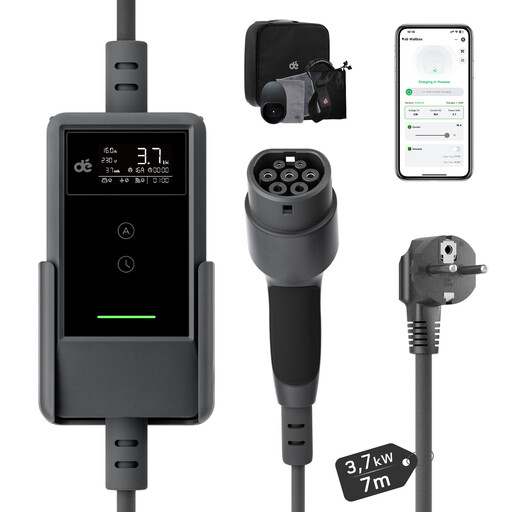
Why This Fits Their Persona: Ideal for users who need a balanced solution for daily charging at home and occasional trips to visit friends or go on holiday. The 7-metre cable length offers enough flexibility for most parking situations without being cumbersome to transport. The app control allows for convenient charge scheduling.
The amperage is adjustable from 6A to 16A, which minimises the risk of overloading older sockets. App control is an additional feature; the core functions can also be operated directly on the device.
Flexible amperage adjustment (6-16A) and the ability to schedule charging via the app to take advantage of cheaper off-peak electricity tariffs.
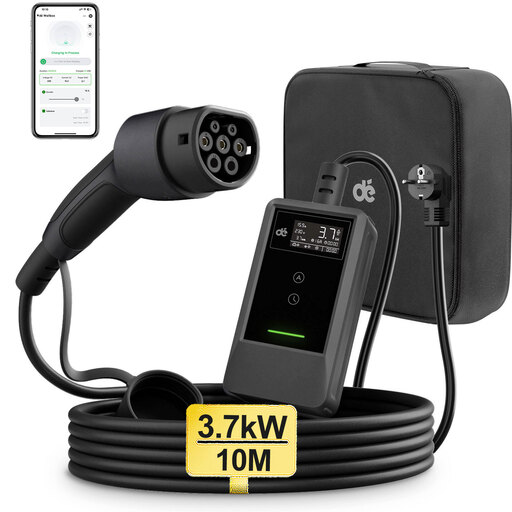
Why This Fits Their Persona: Perfect for homeowners or renters whose parking space is far from the nearest socket. The 10-metre cable length bridges distances in underground garages, courtyards, or gardens where shorter cables would not be sufficient.
Despite its long length, the cable retains all important safety features, including adjustable amperage. This prevents overloading, which can be particularly critical with long cable runs.
Maximum reach and flexibility thanks to the 10-metre cable length. Retains all the smart features and safety standards of the shorter version.
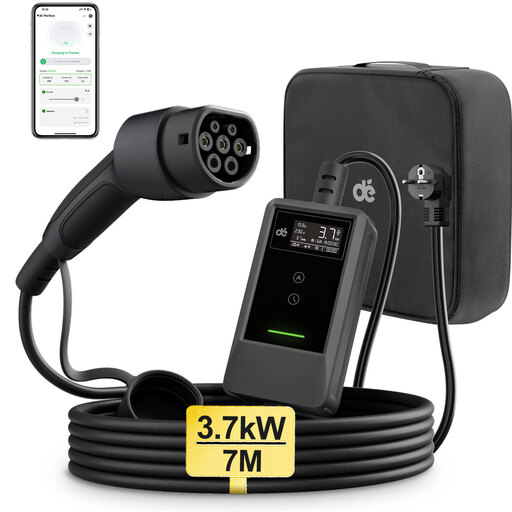
Why This Fits Their Persona: This mobile charging station is an economical alternative to the expensive installation of a fixed wallbox. It provides all the necessary features for safe and reliable charging without the hassle and cost associated with an electrician's appointment. A true plug-and-play solution.
It bypasses the cost trap of a permanent installation. Unlike ultra-cheap, uncertified offers, this device provides tested safety and adjustable charging power, protecting your car and home from damage.
High potential savings compared to a permanently installed wallbox. Offers all essential safety features for daily use.
We've compiled a complete, up-to-date list of products that fully meet these strict selection criteria and German safety regulations.
Yes, but under certain conditions. The socket and its associated wiring must be in perfect condition and rated for a continuous load. It is strongly recommended to limit the charging power to 10A (2.3 kW) unless an electrician has inspected the socket and approved it for 16A. A charger with adjustable amperage is therefore a crucial safety feature.
The charging time depends on the vehicle's battery capacity and its state of charge. As a rule of thumb: a mobile EV charging station with 3.7 kW adds about 20-25 km of range per hour of charging. A 50 kWh battery would be charged from 0 to 100% in about 14-15 hours. This makes this solution ideal for overnight charging.
With most high-quality models, yes. The basic functions, especially adjusting the amperage and starting/stopping the charging process, are usually also accessible via buttons on the charger's control box. The app often provides additional features like charge scheduling, consumption statistics, or remote monitoring, which are not essential for the charging operation itself.