
Lieferung heute & morgen

Qualitätsgarantie

Willkommens-Angebote freischalten: KOSTENLOSE Lieferung | Bis zu 80 % RABATT | Kostenlose 30-Tage-JoyPlus-Testphase
App herunterladen
3-in-1 instant coffee sticks combine soluble coffee, sugar and milk ingredients in a single serving. They're ideal for the office, travel, lecture halls or a quick coffee at home: simply open the stick, pour the powder into a mug, add hot water and stir. However, products vary significantly in coffee content, sweetness, portion size and ingredient list.
As Joybuy's Product Recommendation Officer, I've filtered the key product data to show what shoppers in Germany should look for before buying soluble coffee sticks.
Many instant mixes achieve a creamy texture through milk powder, vegetable fats, glucose syrup and stabilisers. The actual coffee content can be relatively low. Among available products, it ranges from around 4.6% for Nescafé 3in1 Creamy Latte to 20% for Jacobs 3in1 Strong.
If you're looking for a noticeably strong coffee flavour, don't just rely on terms like "Creamy", "Latte" or "Cappuccino". Instead, check the percentage of soluble coffee in the ingredients list.
A 120 g pack can yield a different number of cups depending on the weight of each stick. For example, Jacobs 3in1 Classic contains 120 g, while Jacobs Original Cappuccino Sticks come in 8 portions totalling 92.8 g. For price comparison, the price per portion is more meaningful than the price per pack.
3-in-1 mixes are often already sweetened. Jacobs 3in1 Mild has a declared sugar content of 61%, while G7 3-in-1 sits at 46.94%. If you prefer to sweeten your coffee yourself or add milk separately, you're better off with pure soluble coffee.
For allergies and intolerances, you also need to consider milk ingredients, soya, gluten or possible traces. Always refer to the labelling on the packaging you receive.
For a mild cup, Jacobs 3in1 Mild or a café latte product could be suitable. If you prefer a stronger taste, choose a product with a higher coffee content or one explicitly labelled "Strong". For sweet flavour profiles, there are caramel coffee sticks, while chocolate coffee sticks or cappuccino mixes contain cocoa and milk components.
However, the flavour description is only a guide. The ingredients list, coffee content and serving size provide more comparable data.
The recommended water volume affects the intensity. Jacobs Cappuccino is prepared with around 150 ml of hot, not boiling, water. Trung Nguyen G7 3-in-1 suggests approximately 75 ml at 80 to 100 °C. A smaller water volume usually gives a more concentrated cup, but also alters the sweetness and creaminess.
For instant coffee single servings at the office or on the go, consistent stick sizes are practical. If you want to adjust the strength flexibly, look for products where the mix can be prepared with additional water or milk.
Nutritional information is often given per 100 g of powder, not per individual cup. For everyday use, a simple conversion is helpful:
A lower-calorie option isn't automatically sugar-free. For example, AGF Blendy Stick Café au Lait Calorie Half uses erythritol and sweeteners such as aspartame and acesulfame K. The product contains milk and soya and indicates a source of phenylalanine. For people with phenylketonuria, the packaging label is especially important.
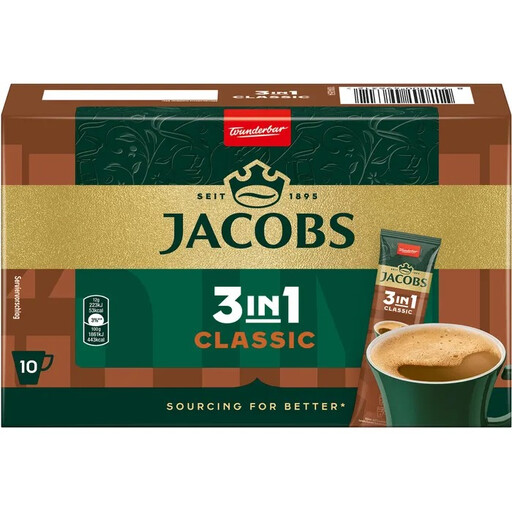
Why this product fits the profile: The classic blend is ideal for a straightforward introduction to portioned instant coffee at the office or at home.
The pack states 120 g total weight and lists the ingredients transparently, with 54% sugar and 8% soluble coffee.
Individual sticks, 120 g pack contents and milk ingredients are clearly stated.
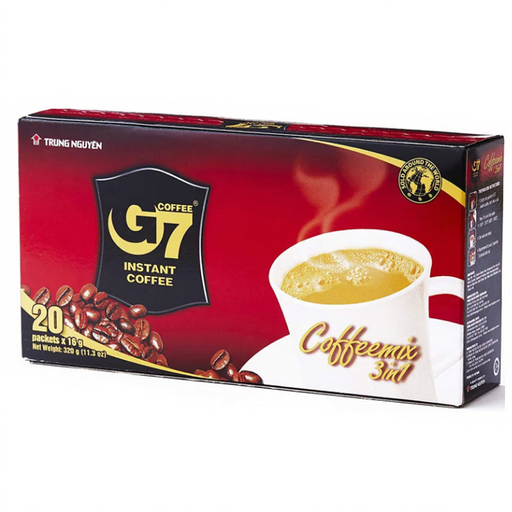
Why this product fits the profile: The 20 single servings of 16 g each appeal to buyers looking for clear quantity information and a compact bulk pack.
The recommended preparation uses 75 ml of hot water, making the portion strength easy to understand.
20 × 16 g, coffee, sugar and milk-based creamer in one portion; milk is listed as an allergen.
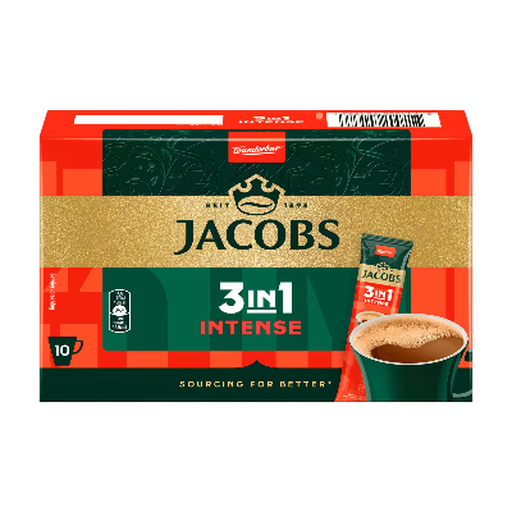
Why this product fits the profile: Ideal for professionals and heavy users who prefer a more intense blend and want to store individual sticks flexibly.
The declared soluble coffee content is 20%; 61% sugar and milk ingredients are also listed.
Approximately 11.1 g per stick and around 44 kcal per portion according to product information, making quantity planning easier.
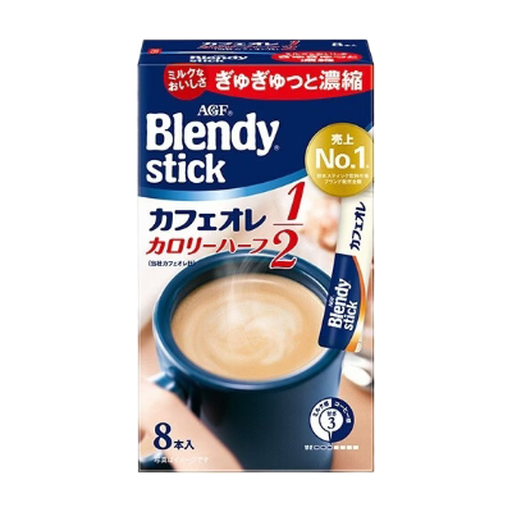
Why this product fits the profile: The recipe uses erythritol and sweeteners, making it suitable for buyers who scrutinise sugar and calorie information closely.
The ingredients list explicitly names sweeteners, milk and soya. A source of phenylalanine is also indicated.
8 individual sticks, 11% instant coffee according to product information, and can be prepared hot or as iced coffee.
We've put together a complete, regularly updated list of products that fully meet these strict selection criteria and the safety regulations in force in the EU.
For an even cup, the water should be hot but not necessarily boiling. First, distribute the powder evenly in the mug, then stir thoroughly. With cappuccino sticks or café latte sticks, some of the powder may dissolve more slowly if the water volume is too low.
Sticks should be stored in a dry, cool place away from direct sunlight. Once opened, reseal the outer packaging tightly. Although single servings are protected, they don't last indefinitely. The best-before date on the packaging is what matters.
It depends on the product. Around 150 ml is common; for G7 3-in-1, approximately 75 ml is recommended. Always follow the specific preparation instructions.
Generally, no. Many mixes contain sugar as the main ingredient. If you want to reduce sugar, you need to look specifically for products with sweeteners, erythritol or a pure coffee variant, and check the nutritional table.
Unopened products can be stored until the stated best-before date, provided they are kept dry and cool. After opening, the outer packaging should be sealed tightly and the contents used according to the manufacturer's instructions.