
Lieferung heute & morgen

Qualitätsgarantie

Willkommens-Angebote freischalten: KOSTENLOSE Lieferung | Bis zu 80 % RABATT | Kostenlose 30-Tage-JoyPlus-Testphase
App herunterladen
Choosing a new mattress is a critical decision that will influence your sleep and well-being for years to come. The 7-zone pocket spring mattress is a top choice for many who are seeking targeted body support and excellent durability. However, the market is cluttered and full of marketing promises that often confuse more than they help. This guide will show you what to look for to avoid buyer's remorse and find a mattress that truly suits your needs.
Before we delve into the important features, let's highlight the typical pitfalls that lead to dissatisfaction and unnecessary expense.
To make the right choice, focus on these three objective criteria that define a high-quality 7-zone pocket spring mattress.
The core of the mattress is its spring system. Unlike simple Bonnell springs, a pocket spring mattress features hundreds of steel springs individually encased in fabric pockets. This offers two crucial advantages:
Such a structure is the foundation for an ergonomically correct sleeping posture and can help alleviate back pain.
For those who tend to sweat at night, a breathable mattress is essential. Both the core and the cover play a role here:
The firmness level indicates how firm a mattress is. An H3 medium-firm mattress is one of the most common variants and is generally suitable for people with a body weight of approximately 80 to 110 kg. However, this is just a guideline. Your personal preference and sleeping position also play a role. A mattress that is too soft will cause the spine to sag, while one that is too hard will prevent the necessary sinkage for the shoulder area.
Here are some models that represent a considered choice for different user profiles, based on objective criteria.
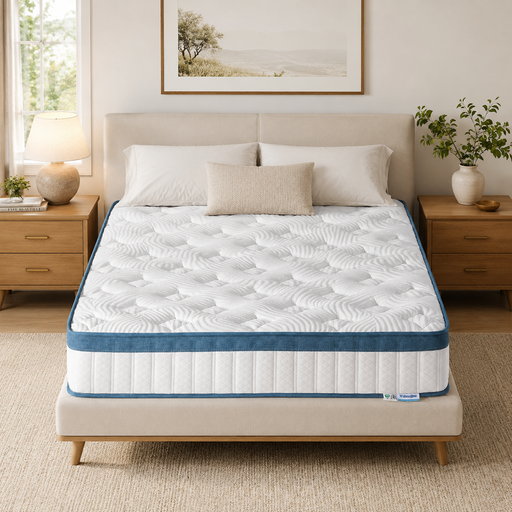
Why This Fits Their Persona: Ideal for couples looking for a common size like the 140x200 mattress who value undisturbed sleep without spending a fortune. The combination of a spring core and gel foam offers a great compromise between support and comfort.
The individually wrapped pocket springs counteract the pitfall of poor motion isolation. Movements are absorbed and not transferred to the other side of the mattress, ensuring quieter nights.
Good motion isolation thanks to pocket springs. The breathable Tencel cover and Oeko-Tex certification are beneficial for allergy sufferers and ensure a healthy sleep environment.
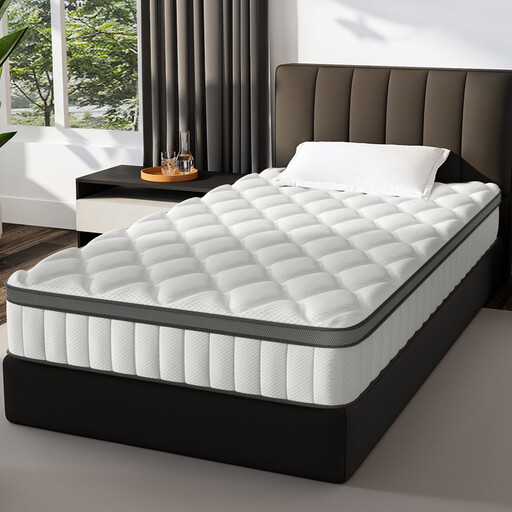
Why This Fits Their Persona: Perfect for individuals seeking targeted support for back issues. The multi-layer construction and explicit 7-zone design aim to provide ergonomically correct spinal alignment.
Instead of vague "orthopaedic" promises, this model delivers a concrete 7-zone structure with a 9-layer construction. This provides a verifiable basis for its advertised support function.
The 9-layer construction with viscoelastic foam and high-density foam ensures precise pressure distribution. Its antibacterial properties are a plus for sleep hygiene.
Why This Fits Their Persona: This set is an economical and flexible solution. It can be used for a double bed (180x200 cm), where each person has their own mattress, or for separate beds in guest or children's rooms.
Instead of buying one large, unwieldy mattress, this set offers flexibility. For a double bed, using two single mattresses completely prevents motion transfer and avoids the "gap" in the middle due to its construction height.
Excellent value for money in a two-pack. The 25 cm comfort height and the combination of a 7-zone core and gel foam provide a solid foundation for restful sleep.
We have compiled a complete, up-to-date list of products that fully meet these strict selection criteria and German safety regulations.
A high-quality pocket spring mattress has a lifespan of about 8 to 10 years with proper care. To maximise its longevity, it is recommended to rotate the mattress every 3 to 6 months (unless otherwise specified by the manufacturer) and use a mattress protector to shield it from moisture and dirt.
Although H3 is generally recommended for individuals over 80 kg, it can also be suitable for lighter people who prefer a very firm sleeping surface, such as stomach sleepers. However, for most side sleepers under 80 kg, an H2 (medium) firmness level is often a better fit, as it allows the shoulder to sink in more deeply. Offers with a sleep trial period are a great way to test suitability risk-free.
Yes, the bed base plays a crucial role. For a pocket spring mattress, a slatted base with narrow gap spacing (no more than 3-4 cm) is ideal. Gaps that are too wide can cause the springs to push through and damage the mattress. A rigid roll-out slat system is less suitable than a flexible sprung-slat base, which supports the mattress's point elasticity.