
Lieferung heute & morgen

Qualitätsgarantie

Willkommens-Angebote freischalten: KOSTENLOSE Lieferung | Bis zu 80 % RABATT | Kostenlose 30-Tage-JoyPlus-Testphase
App herunterladen
Coffee beans, ground coffee and capsules require different storage solutions. If you want to buy an airtight coffee canister, you should therefore look beyond colour and design. The seal, material, capacity and everyday usability are what really matter.
Many products are advertised as “aroma-protective” or “vacuum”. However, these terms are only useful if the design suits your own consumption habits. Our selection highlights the features that are practically relevant in Germany when buying a coffee storage canister, a coffee container or a capsule holder.
A lid that simply rests on top does not reliably reduce air exchange. Look for a silicone seal, a precisely fitting lid or a closure explicitly described as airtight. The seal itself is also a wearing part: it should be clean, dry and free from deformation.
A large coffee container may initially seem practical. However, if it is only partly filled, more air remains above the coffee. For households with regular consumption, a canister with a suitable capacity may be more useful than an oversized container. So check how much coffee you actually use within a few weeks.
Glass, wood, stainless steel and plastic all have different care requirements. A glass container makes the contents visible, but is vulnerable to breakage. Wooden lids often cannot go in the dishwasher. Coated metal canisters may be robust, but depending on the model they may need to be washed by hand. Attractive looks do not replace information about the material, cleaning requirements and usage limits.
With an airtight coffee canister, the lid should close evenly. A continuous silicone seal can reduce the entry of air and moisture. A vacuum coffee canister also creates a manually generated vacuum. This is useful if the closure is checked regularly and operated correctly.
Important: “Airtight” does not automatically mean that coffee stays fresh indefinitely. Beans and ground coffee should still be stored in a dry, dark place away from heat sources. The canister should be closed again promptly after each use.
For a ground coffee canister, a tightly closing lid is particularly important, as the larger surface area of ground coffee increases its contact with the surrounding environment. With capsules, on the other hand, visibility and quick access are usually the priorities. A coffee capsule holder or capsule storage solution therefore does not necessarily need to be airtight.
Measure the available space on the worktop, in a cupboard or beside the coffee machine. A slim canister may suit smaller kitchens, while a rotating holder makes it easier to access several capsule varieties. For beans, details such as 500 g capacity, 1,300 ml or approximately 250 g are more useful than a purely general size description.
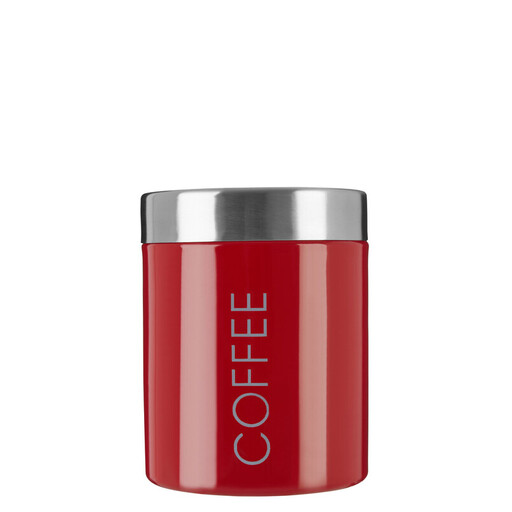
Why this product suits the profile: This stainless steel canister with a red enamel finish is designed for beans or ground coffee and measures approximately 13 cm high and 10 cm wide and deep.
The satin-finish stainless steel lid sits on the container and is described as airtight. This makes the closure more clearly defined than that of a simple storage pot.
Stainless steel construction, light-blocking design and vertical coffee labelling. Not dishwasher-safe.
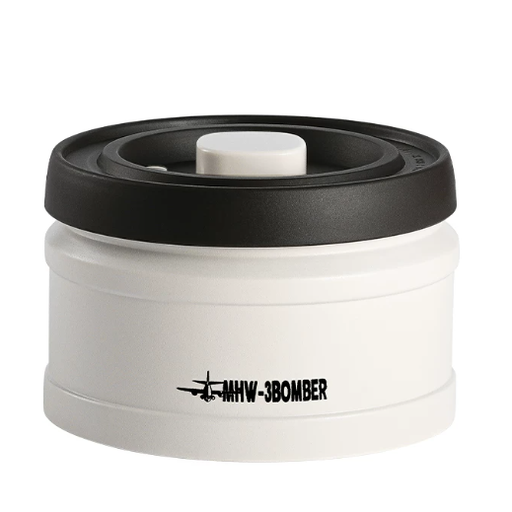
Why this product suits the profile: A manual vacuum solution is aimed at users who want to operate the closure actively and control their coffee storage more deliberately.
The manual system makes the closing process clear and easy to understand. This means it is not simply relying on a marketing term such as “vacuum” without instructions for use.
Manual vacuum function and storage suitable for coffee. The seal and container should be kept dry and cleaned regularly.
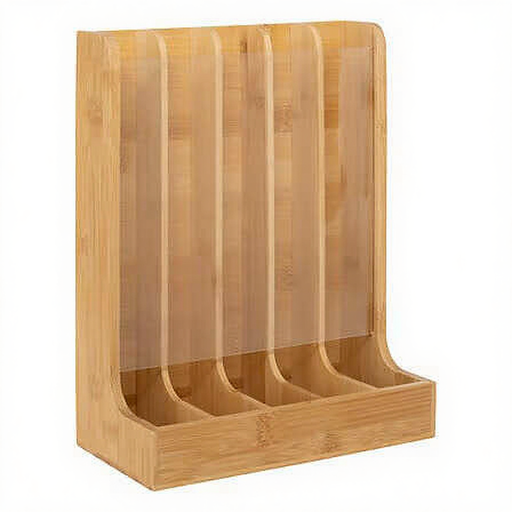
Why this product suits the profile: According to the product details, the vertical capsule holder can hold up to 70 capsules, making it suitable for households or offices with several varieties.
The visible compartments make sorting easier and stop capsules from being left loose on the worktop. Before buying, check compatibility with your own system.
Bamboo material, vertical design and a stated capacity of 70 capsules. This holder is not an airtight canister.
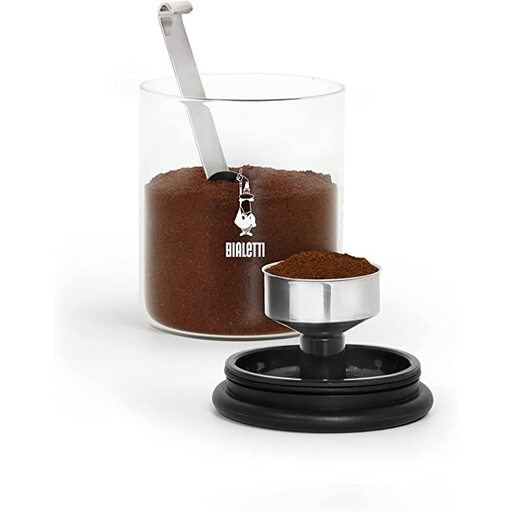
Why this product suits the profile: The glass container makes the fill level visible and is described as coming with a stainless steel coffee spoon and funnel function.
The stated capacity of approximately 250 g helps you choose according to your actual needs. This helps avoid a permanently large amount of residual air in an oversized canister.
Glass, stainless steel and plastic components, visible contents and a coffee spoon. Clean before use; handle the glass carefully.
We have put together a complete, regularly updated list of products that fully meet these strict selection criteria and the safety regulations applicable in the EU.
With a vacuum coffee canister, the vacuum should be recreated after each use in accordance with the instructions. A moisture indicator, such as those offered with certain containers, is intended as a general guide rather than for highly precise measurement.
That depends on the shape and actual capacity. According to the product details, a container with a stated capacity of 1,300 ml may be designed to hold up to 500 g of coffee beans. Also check the diameter and height to make sure the canister fits in your chosen location.
It can be useful if you use the coffee regularly and operate the closure consistently. However, it does not replace dry, dark storage. A functional seal, a suitable size and easy cleaning are what matter most.
Its lifespan depends on the material, usage and care. Stainless steel or glass containers can be used for a long time if handled carefully. Sealing rings may wear out sooner and should be replaced if there is visible damage or if the seal becomes less effective.