
Lieferung heute & morgen

Qualitätsgarantie

Willkommens-Angebote freischalten: KOSTENLOSE Lieferung | Bis zu 80 % RABATT | Kostenlose 30-Tage-JoyPlus-Testphase
App herunterladen
Whether you’re organising a pantry, fridge or freezer, the right kitchen storage containers make it easier to keep your kitchen tidy and store food neatly. But food containers can vary considerably in their material, seal, size and intended use. A low price or the label ‘airtight’ alone doesn’t tell you how well a container will perform day to day.
A simple push-on lid won’t necessarily protect food from moisture or prevent liquids from leaking out. Look for specific features such as a silicone seal, clip closure, all-round seal or a multi-sided locking mechanism. Even if a container is described as leakproof, check whether it’s genuinely suitable for carrying food on the go.
Large food containers may seem practical, but they won’t always fit the shelves you have. Before buying, measure the inside of your pantry cupboard, fridge or drawer. Check not just the length and width, but also the height with the lid on.
Not every plastic container is suitable for the microwave, freezer or dishwasher. With glass food storage containers, the lid often needs to be treated separately. Check that claims such as microwave-safe, freezer-safe or dishwasher-safe apply to the specific product and, ideally, to each individual component. If temperature limits aren’t clear, follow the manufacturer’s guidance.
Plastic food storage containers suitable for food are often made from polypropylene, or PP for short. Some of the models featured here are described as BPA-free PP. This label relates to the material stated in the product description; it doesn’t replace checking the care and usage instructions.
Glass containers are odour- and taste-neutral, and are usually easy to clean. Borosilicate glass is often used because it can withstand changes in temperature. Even so, don’t move a glass container straight from the freezer into a very hot environment unless it’s specifically designed for this. Check plastic lids and lids with silicone rings separately.
For dry foods such as flour, rice, muesli or sugar, airtight storage containers with a silicone ring or clip closure are a good choice. A tight seal can help reduce the amount of air and moisture getting in. For liquids, also check whether the lid locks securely on all sides.
A lid should be easy to open, but not so loose that it comes off when you lift the container. Multiple locking points can be useful for families or frequent meal prep, while a simpler lid may be enough for dry snacks.
Stackable storage containers make better use of cupboard height. Rectangular shapes can usually be arranged more space-efficiently than round containers. Also check whether they can be nested inside one another when empty.
Removable seals and smooth interiors make containers easier to keep clean. If a container is described as dishwasher-safe, check whether this applies to the lid too. Some models recommend hand-washing the lids.
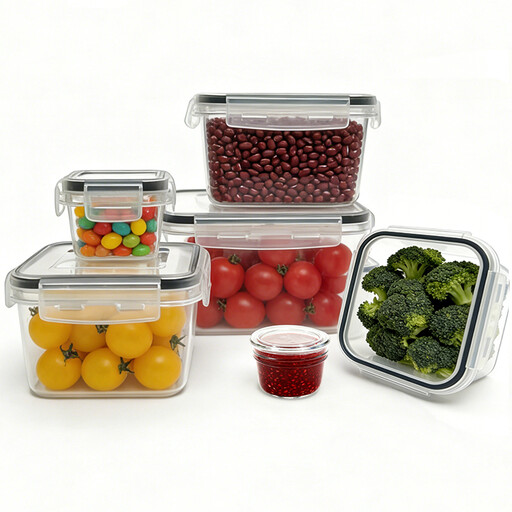
Why this product suits this profile: This six-piece set covers everyday needs such as storing leftovers, meal prep and keeping dry foods fresh. The transparent containers make it easy to see what’s inside.
The product description lists clip closures and an airtight, leakproof seal, and says the containers are suitable for the microwave and freezer. Follow the specific usage instructions before use.
BPA-free PP according to the product description, six containers, a transparent design and a stackable shape.
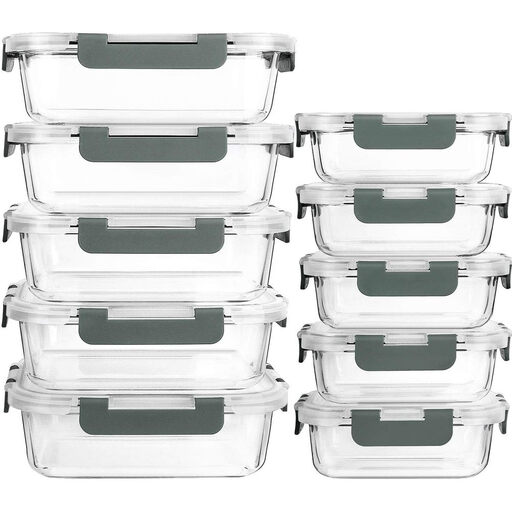
Why this product suits this profile: This set combines two sizes for portions, leftovers and pre-prepared meals. According to the product description, the glass containers are suitable for the oven, microwave, freezer and dishwasher; remove the lids first.
The product information distinguishes between the glass containers and the plastic lids. This helps prevent the temperature guidance from being mistakenly applied to the whole container, including the lid.
Ten borosilicate glass containers in 370 ml and 1040 ml sizes, silicone rings, clip closures, and stackable, nestable shapes.
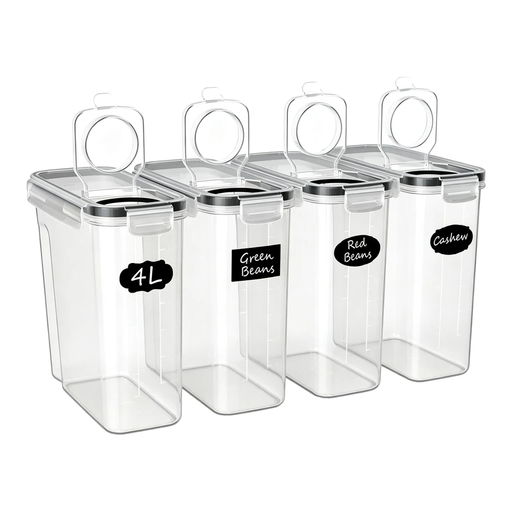
Why this product suits this profile: These four 4-litre containers are ideal for households that buy flour, rice, pasta, muesli or pet food in larger quantities. A pouring opening, measuring scale and labels make them handy for everyday use.
The product description mentions a silicone seal and removable lids. This makes it clear that the seal and ease of cleaning are separate things to check.
Four large containers, BPA-free PP according to the product description, a pouring opening, measuring scale and included labels.
We’ve put together a complete, regularly updated list of products that meet these strict selection criteria and the safety regulations in force in the EU.
Small containers of around 300 to 500 ml are often enough for individual portions and leftovers. Medium-sized containers are handy for side dishes or meal prep. Large containers with a capacity of several litres are better suited to flour, rice, pasta, muesli or pet food. The right choice depends on how much storage space you have and how much food you regularly store.
It depends on how you plan to use them. Glass is odour-neutral and, depending on the product, may be suitable for the oven and microwave. Plastic containers are usually lighter and more convenient for carrying. The key is to check the specific guidance on temperature, lids, cleaning and closures.
There’s no set lifespan that applies to every container. Frequent microwave use, sudden temperature changes, harsh cleaning or damaged seals can shorten how long they last. Replace a container if it develops cracks, becomes badly warped, retains stubborn odours or has a lid that no longer closes securely.