
Lieferung heute & morgen

Qualitätsgarantie

Willkommens-Angebote freischalten: KOSTENLOSE Lieferung | Bis zu 80 % RABATT | Kostenlose 30-Tage-JoyPlus-Testphase
App herunterladen
A cordless leaf blower promises fast, effortless cleanup for your garden, walkway, and driveway. Without tangled cords and gasoline fumes, yard work becomes significantly more pleasant. But the market is flooded with tools that make bold promises and often fail to deliver in practice. Many buyers are left frustrated by short runtimes, poor performance on damp leaves, or unwieldy designs.
To help you make an informed decision, we'll show you the three most common pitfalls to avoid when buying and which technical features truly matter.
Before you invest in a new garden tool, you should be wary of exaggerated marketing claims. These three points are especially common sources of disappointment:
To objectively evaluate the performance of a cordless leaf blower, you need to understand three core technical aspects. These will help you distinguish high-quality models from the rest.
A high-performing cordless blower needs a good balance between two metrics:
Look for a tool that delivers convincing specs in both categories, rather than being dazzled by a single record-breaking figure.
The choice of motor directly impacts performance, lifespan, and efficiency. Modern tools increasingly rely on a brushless motor. Compared to traditional brushed motors, this technology offers clear advantages:
The heart of any cordless tool is its battery system. Two key figures are important here:
A kit that includes a leaf blower with a battery and charger—ideally with two batteries—often offers the best value and allows for uninterrupted work. Also, check if the batteries are compatible with other garden tools or power tools from the same brand.
Based on the objective criteria above, we have identified several models that are particularly well-suited for specific user profiles.
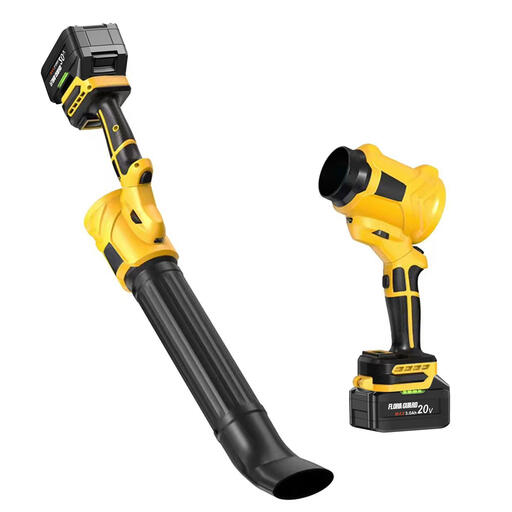
Why This Fits Their Persona: Ideal for homeowners with medium-sized yards looking for a complete, ready-to-use kit. The rotating handle and low weight make it easy to handle, while the six speed settings allow for flexible adjustment to different tasks.
Avoids the battery trap by including two 4.0Ah batteries and a charger. This allows for a seamless swap and prevents frustration from unexpected work interruptions.
Features a 600W brushless motor for efficiency and durability. The 180° rotating handle significantly improves ergonomics for various working positions.
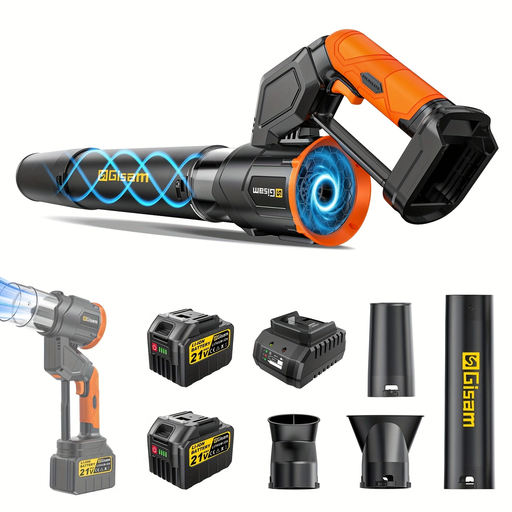
Why This Fits Their Persona: Perfect for users with large properties or professional demands who need maximum runtime and high area-clearing performance. Compatibility with Makita batteries offers additional flexibility for existing tool collections.
Counters the misleading performance trap with a high, specified air volume of 850 m?/h (approx. 500 CFM). This ensures that not just the speed, but also the amount of air moved, is sufficient for large areas.
Equipped with two 6.0Ah batteries for exceptionally long runtime. The brushless motor and 2-in-1 functionality (handheld and carry mode) offer versatility and power.
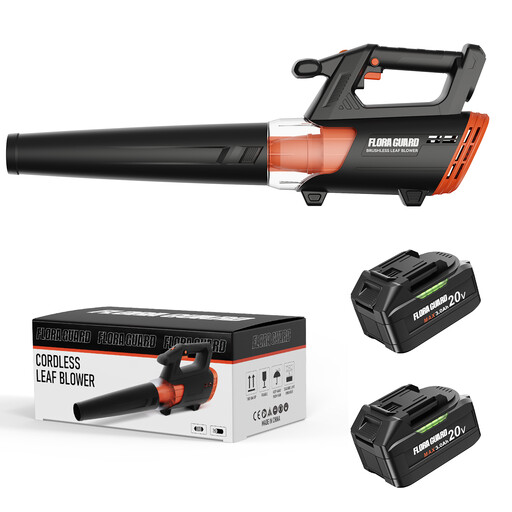
Why This Fits Their Persona: An excellent choice for DIYers who already own tools from the Dewalt 20V Max battery system. This model offers high performance and integrates seamlessly into an existing battery infrastructure.
Avoids the ergonomics trap by featuring a lightweight and ergonomic design despite its high performance (190 MPH / 600 CFM). This significantly reduces fatigue during extended use.
The compatibility with Dewalt 20V Max batteries is the key advantage. Its high-efficiency brushless motor ensures powerful and reliable cleaning performance.
We've compiled a complete, up-to-date list of products that fully meet these strict selection criteria and rigorous safety standards.
The actual runtime heavily depends on the selected power level and the type of material. At full power for clearing wet leaves, a 4.0 Ah battery might last about 15-25 minutes. In a lower power mode for dry leaves, the runtime can increase to 40 minutes or more. Buying a tool with two batteries is therefore highly recommended.
Yes, modern, high-performance cordless models are certainly capable of moving wet and heavy leaves. For this, look for a high air speed (over 180 km/h or 110 MPH) and a brushless motor. You may need to get closer to the leaves and use a narrower nozzle to concentrate the airstream.
Neither value is more important on its own; the combination is what's crucial. High air speed is like a sharp jet of water—ideal for dislodging stubborn debris. High air volume is like a wide current of air—ideal for moving large quantities. A good tool offers a balanced compromise for versatile applications.