
Lieferung heute & morgen

Qualitätsgarantie

Willkommens-Angebote freischalten: KOSTENLOSE Lieferung | Bis zu 80 % RABATT | Kostenlose 30-Tage-JoyPlus-Testphase
App herunterladen
The market for dashcams is growing, but with more choice comes more confusion. Anyone looking for a car camera is confronted with a flood of marketing promises that often obscure more than they clarify. It's not uncommon for vehicle owners to invest in a device, only to discover in the crucial moment that the recordings are useless.
This guide will help you separate the wheat from the chaff. We'll highlight the most common pitfalls when buying and explain which technical features really matter for making an informed decision.
The 3 Most Common Dashcam Buying Traps:
To avoid a bad purchase, you should focus on objective, verifiable parameters. The following three aspects are central to the performance of a car camera.
The resolution, as with a 4K dashcam (3840 x 2160 pixels), indicates the level of detail in the image. However, the actual quality depends significantly on the image sensor and the lens. A native 4K sensor, like the Sony STARVIS, captures significantly more light and thus more detail than a cheap sensor whose image is artificially upscaled later. Therefore, pay attention to the exact sensor model and a wide aperture (a smaller f-number like f/1.8 is better) to get usable recordings even in low-light conditions.
The choice of the right car camera depends on which perspectives you want to record.
A dashcam with GPS not only records video but also simultaneously saves geodata such as the exact location, speed, and route taken. This information can serve as contextual data in the event of an accident.
The parking mode is used to monitor the vehicle for impacts or movements while it is parked. A constant power supply is necessary for reliable operation. This is usually achieved via a hardwire kit, which is connected directly to the vehicle's fuse box. Models with a supercapacitor instead of a lithium-ion battery are often better suited for this purpose, as they are more resistant to extreme temperatures and have a longer lifespan.
Instead of presenting an overwhelming list, we have selected models for specific user profiles.
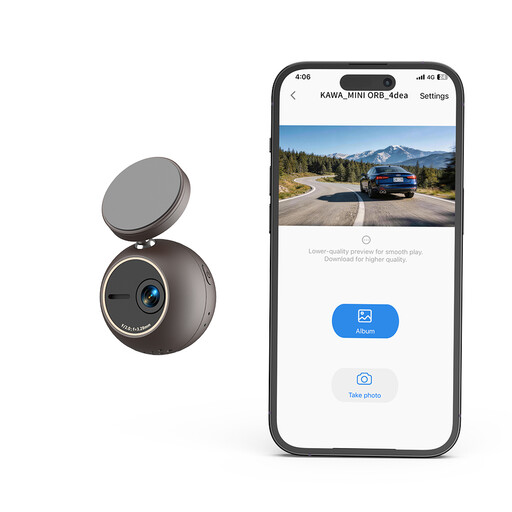
Why it's a good fit: Ideal for drivers looking for a straightforward and reliable front-facing camera. It focuses on the essentials: a clear recording of the road ahead, without superfluous and complex functions.
This model doesn't promise an exaggerated 4K resolution, but instead delivers a solid 2K quality that is sufficient for most situations. Its simple functionality avoids the vulnerability of complex but unreliable extra features.
Compact, discreet design and easy management of recordings via the companion app.
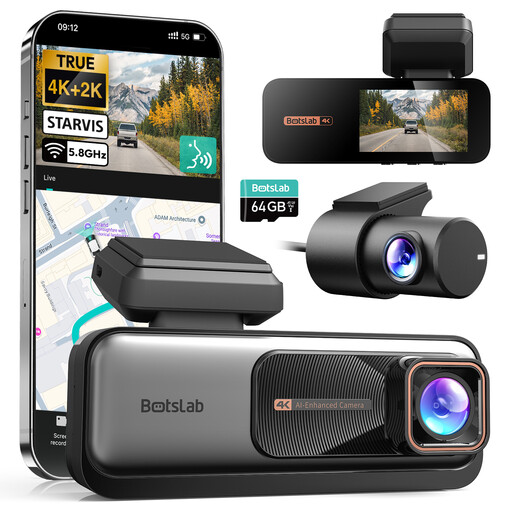
Why it's a good fit: For daily drives, complete documentation is crucial. This front and rear camera set, combined with GPS and a high-quality sensor, offers a high degree of security and evidentiary value.
It bypasses the "4K trap" by using a Sony IMX415 STARVIS Sensor for true 4K recordings. The supercapacitor also ensures reliable function in extreme temperatures, thus preventing parking mode failures.
True 4K resolution at the front, 2K resolution at the rear, and integrated GPS for precise recording of route and speed.
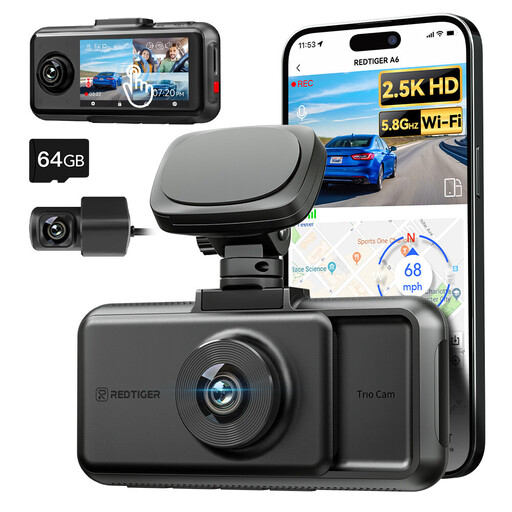
Why it's a good fit: Perfect for users who want maximum surveillance. The three channels cover the road ahead, behind, and the vehicle interior—a requirement for rideshare providers or tech-savvy users.
Instead of focusing on a single, potentially misleading metric, this system offers verifiable, comprehensive coverage with clear resolution specifications for each of the three cameras (2.5K + 1080P + 1080P).
3-channel recording for complete surveillance of the front, rear, and vehicle interior in one system.
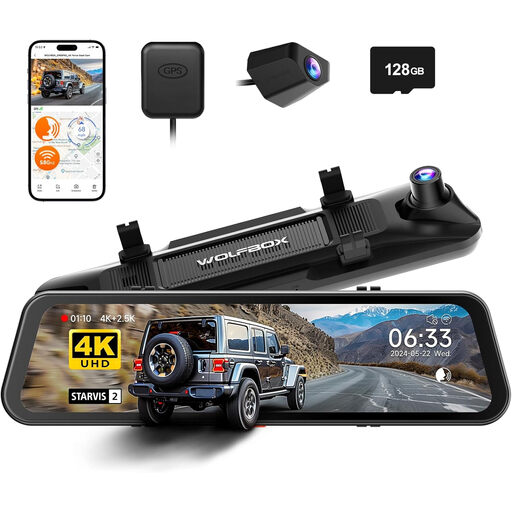
Why it's a good fit: This mirror dashcam replaces the conventional rearview mirror, offering a clean, integrated look with no extra devices on the windshield. Ideal for drivers who value an uncluttered cockpit.
The model avoids the compromise between design and performance. It integrates a high-quality 8MP STARVIS IMX678 Sensor for 4K recordings and a 2.5K rear camera, rather than just focusing on aesthetics.
Seamless integration as a rearview mirror that doubles as a large 12-inch touchscreen for video display.
We've compiled a complete, up-to-date list of products that meet these strict selection criteria and comply with legal regulations in Germany.
Yes, the use of a dashcam is generally permitted in Germany, and the recordings can be admissible as evidence in court. However, the requirements of the General Data Protection Regulation (GDPR) must be observed. Permanent, indiscriminate filming of public space is not allowed. Modern dashcams solve this problem with a loop recording function: old material is continuously overwritten, and a video clip is only saved permanently in the event of an incident (e.g., triggered by a G-sensor).
A supercapacitor, compared to a conventional lithium-ion battery, is significantly more resistant to the high and low temperatures that can occur inside a car. It has a longer lifespan and is considered safer because it cannot overheat or swell. Batteries can lose performance or be damaged in extreme heat, which severely impacts the reliability of the dashcam, especially in parking mode.
For a reliable parking mode that monitors the vehicle for hours or days, a constant power supply is essential. This is typically ensured by a so-called hardwire kit. This is connected directly to the vehicle's fuse box by a professional workshop or an experienced user. The kit supplies the camera with power even when the ignition is off and has an integrated battery monitor that prevents the car battery from being drained.