
Lieferung heute & morgen

Qualitätsgarantie

Willkommens-Angebote freischalten: KOSTENLOSE Lieferung | Bis zu 80 % RABATT | Kostenlose 30-Tage-JoyPlus-Testphase
App herunterladen
Published on August 29, 2026 by Joybuy Product Recommendation Officer
Are your shampoo bottles cluttering the shower floor or balancing precariously on the narrow rim of the tub? A no-drill shower caddy promises a quick and easy solution for a tidier bathroom. However, the market is flooded with products whose promises often prove to be short-lived. Before you make a decision, it's crucial to understand the common pitfalls that can quickly turn a practical helper into a frustrating nuisance.
Many buyers report three main problems:
This guide will show you which technical features to look for to find a durable and functional solution that perfectly fits your needs.
To make an informed choice, you should examine three core aspects. These will determine whether a no-drill bathroom shelf will truly work for you in your daily life.
The installation method is the most important criterion. Each method has specific surface requirements.
The humid environment of a shower places high demands on the material.
Consider what you plan to store in your shower caddy. Large, bulk bottles of shampoo and shower gel weigh significantly more than a single bar of soap.
Instead of a long list, here are three models tailored to specific user profiles that are designed to avoid the common pitfalls mentioned.
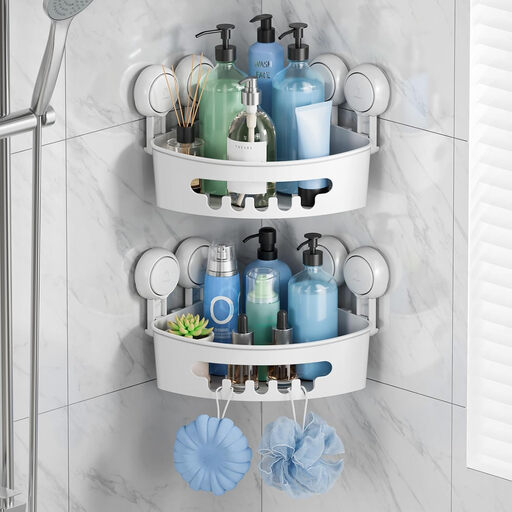
Why This Fits Their Persona: Ideal for renters who can't drill holes and need a solution that can be removed without leaving residue. The corner design makes optimal use of space in small shower stalls.
According to the manufacturer, the patented suction system is based on bionic principles and is designed for superior adhesion on smooth surfaces, addressing the problem of conventional, weak suction cups.
Tool-free installation in seconds; high load capacity of up to 10 kg per caddy (according to manufacturer); ABS plastic is rustproof and easy to clean.
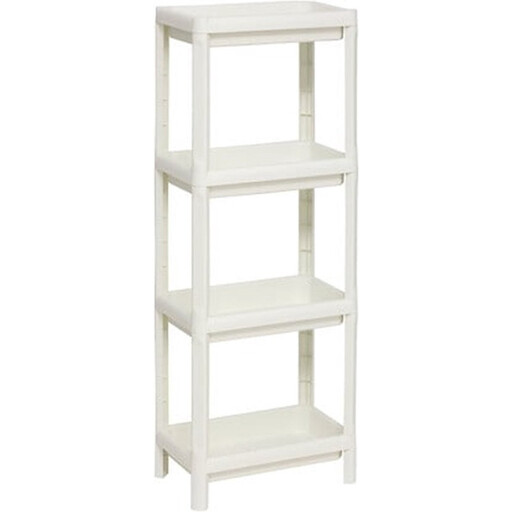
Why This Fits Their Persona: Perfect for families or shared living situations where many different toiletries need to be stored. This freestanding rack offers maximum storage without any wall mounting.
Completely bypasses the problems of insufficient load capacity and weak wall mounts, as it is designed as a standalone unit. There is no risk of it falling off the wall.
Four tiers with a very high load capacity (up to 20 kg per shelf, according to the manufacturer); tool-free assembly in minutes; polypropylene material is rustproof and durable.
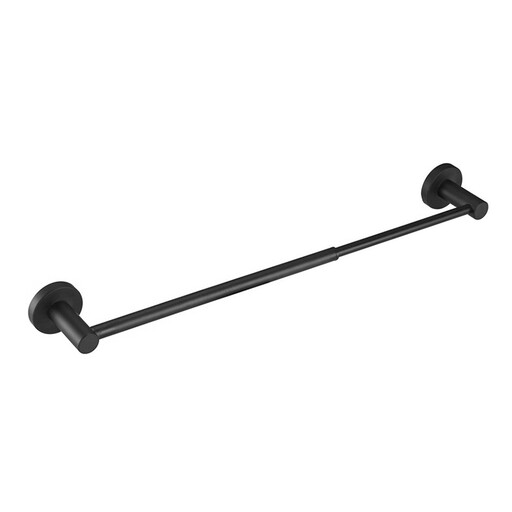
Why This Fits Their Persona: Suits users who prefer a modern, understated aesthetic. The sleek, black design integrates seamlessly into contemporary bathrooms and attaches directly to the shower riser rail.
This model completely avoids the need for adhesives or suction cups. It clamps directly onto the shower riser rail, providing a stable yet reversible mounting solution with no wall contact.
Modern, minimalist design; adjustable height for flexible adaptation to different bottle sizes; integrated water drainage and hooks.
A well-organised shower area enhances daily comfort. If you'd like to compare more models that meet our criteria for material and mounting, you can find a more comprehensive selection here.
The durability heavily depends on the quality of the adhesive, correct surface preparation, and the load. With high-quality systems and proper installation, an adhesive shower caddy can hold securely for several years. It is crucial to thoroughly clean the tiles with alcohol before application to remove any grease or soap residue and to strictly adhere to the manufacturer's specified curing time.
No, this is generally not possible. Suction cups work by creating a vacuum between the cup and a smooth, non-porous surface. Grout lines are uneven and porous, which prevents a vacuum from forming. The suction cup will not find a grip there. Choose a position where the entire suction cup rests on a single, smooth tile.
For a humid environment like the shower, materials such as high-quality stainless steel (look for grades like 304 or 18/8), aluminium, and plastics like ABS, polypropylene (PP), or polystyrene (PS) are suitable. These materials are naturally corrosion-resistant. With chrome-plated metals, there is a risk that the thin chrome layer can be damaged by scratches, causing the underlying metal to rust.