
Lieferung heute & morgen

Qualitätsgarantie

Willkommens-Angebote freischalten: KOSTENLOSE Lieferung | Bis zu 80 % RABATT | Kostenlose 30-Tage-JoyPlus-Testphase
App herunterladen
A good vegetable slicer saves time and ensures uniform results, whether for salads, gratins, or vegetable side dishes. But the market is flooded with models of widely varying quality. Many buyers get frustrated with unstable devices, blades that dull quickly, or cumbersome cleaning. Before you make a decision, it's crucial to know the typical weaknesses that can quickly render a supposed bargain useless.
This guide will show you the key features to look for and help you find a durable and functional kitchen gadget that truly meets your needs.
Many products promise more than they deliver. Pay close attention to these three weaknesses to avoid a bad buy:
To avoid the problems mentioned above, you should base your choice on objective criteria. The following three points are crucial for the functionality, durability, and safety of your new kitchen gadget.
The quality of the blade determines the slicer's performance and lifespan. A stainless steel vegetable slicer is often the more reliable choice. Look for blades made of hardened stainless steel, as they retain their sharpness longer. A common and efficient design is the V-slicer. Unlike models with a straight blade, a V-slicer engages the vegetable from two sides at once, reducing the effort required and enabling clean cuts, especially with softer foods like tomatoes.
An adjustable vegetable slicer offers maximum flexibility. A dial or slider allows the slicing thickness to be precisely set—from paper-thin slices for carpaccio to thicker slices for gratins. Also, pay attention to the included accessories. A julienne slicer is a valuable addition for preparing fine vegetable strips for salads or stir-fries. Sets that include various inserts for dicing, crinkle cuts, or grating expand the range of uses and make the multi-slicer a versatile tool.
Safety is paramount when working with sharp blades. An indispensable accessory is a food holder (finger guard), which securely guides the food and protects your fingers from the blade. Non-slip rubber feet ensure a stable footing on the work surface. A kitchen slicer with a collection container is not only practical because it keeps the kitchen clean, but it also often increases stability, as the slicer rests directly on the container. Also, check whether the blade inserts can be changed easily and safely and if the device is declared dishwasher-safe.
Different models suit different cooking habits and demands. Here are three recommendations tailored to various user profiles.
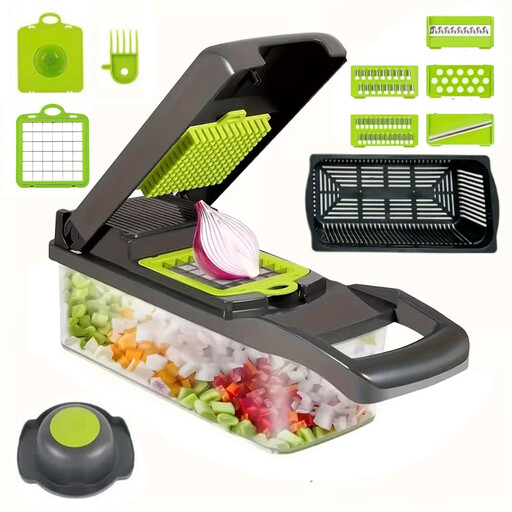
Why This Fits Their Persona: Ideal for those who want to try out different types of cuts without investing in multiple separate devices. This set offers a wide range of functions for a small budget and covers the most common use cases in an everyday kitchen.
The set includes a collection container that adds stability to the slicer and simplifies cleaning. The various interchangeable blades bypass the problem of a single, fixed blade that quickly becomes dull.
Extensive accessories for various cuts (slices, grates) in one package. The integrated collection container ensures a clean workspace.
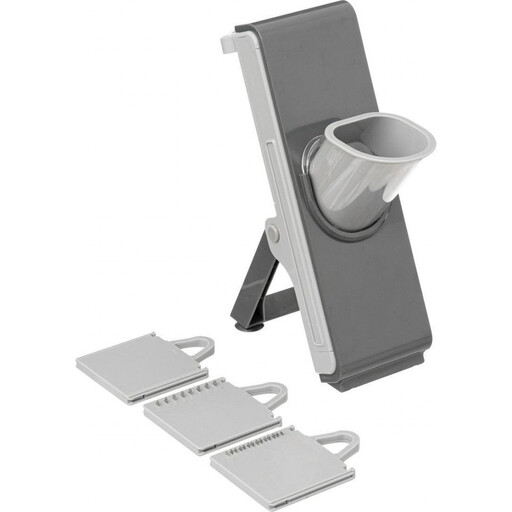
Why This Fits Their Persona: For home chefs who value precision and durability. This classic kitchen mandoline is streamlined to the essentials, focusing on clean, reliable slicing performance for regular use.
The combination of a stainless steel blade and a sturdy ABS plastic body counteracts the pitfall of unstable constructions. An included food holder (pusher) ensures the necessary safety during handling.
Robust construction for a long lifespan. The multifunctional design allows for slicing, grating, and shredding with a single, stable device.

Why This Fits Their Persona: Perfect for users who regularly process large quantities and seek maximum efficiency and precision. This electric multi-slicer eliminates manual effort and consistently delivers professional results, not just for vegetables.
The all-metal "Made in Germany" construction is the epitome of stability and durability. High-quality blades and a powerful motor prevent the problems of dull blades and unstable performance that can occur with manual devices.
Electric operation for effortless slicing of large quantities. The slicing thickness is precisely adjustable up to 23 mm, and the robust construction promises a very long service life.
We have compiled a comprehensive, up-to-date list of products that fully meet these strict selection criteria and German safety regulations.
1. How do you clean a vegetable slicer safely? The safest method is to never touch the blades directly with your fingers. Use a dish brush to remove residue under running water. Before buying, check if the model or its individual parts are designated as dishwasher-safe. If manual cleaning is necessary, dry the blades carefully with a cloth by running it along the non-cutting edge.
2. What is the difference between a V-slicer and a straight blade? A slicer with a straight blade has a single, horizontal cutting edge. It requires a bit more pressure to move the food across it. A V-slicer has two blades arranged in a V-shape. This distributes the force and allows for a pulling cut, which delivers cleaner results and prevents crushing, especially with soft vegetables that have a firm skin (e.g., tomatoes).
3. How often do the blades of a vegetable slicer need to be replaced? The lifespan of the blades depends heavily on the material quality and frequency of use. Blades made of high-quality, hardened stainless steel can remain sharp for several years with normal household use. For models with replaceable blades, it is advisable to replace them as soon as you notice that more effort is required or the cuts are becoming messy. This is an important feature for the long-term usability of the device.