
Lieferung heute & morgen

Qualitätsgarantie

Willkommens-Angebote freischalten: KOSTENLOSE Lieferung | Bis zu 80 % RABATT | Kostenlose 30-Tage-JoyPlus-Testphase
App herunterladen
A slipping mat can disrupt your focus and, in the worst-case scenario, lead to injury. Yet, the yoga mat market is overwhelming and filled with marketing promises that rarely deliver. A mat advertised as "non-slip" can turn out to be a slippery disappointment after just a few weeks.
As a Joybuy Product Recommendation Officer, I analyse product data to provide you with objective and practical advice. In this guide, I'll show you the three most common pitfalls when buying a yoga mat and what you need to look for to make an informed decision for your practice at home or in the studio.
Many users invest in a new mat only to find it fails to meet basic requirements. These three problems are especially common:
To avoid the pitfalls mentioned above, you should check three technical features before buying. These define the performance and longevity of your new training mat.
The material is the foundation for grip and durability. Two materials have proven to be particularly effective in practice:
The right thickness depends on your primary use case.
The standard size of a yoga mat is approximately 183 x 61 cm. For taller individuals or for exercises with wide movements, a large yoga mat (e.g., 190 x 80 cm or wider) can offer significantly more comfort. A supplied training mat with a carrying strap is also a crucial advantage for easy transport between home and the studio.
Based on the objective criteria above, we have identified some products that are suitable for specific user profiles.

Why This Fits Their Persona: Ideal for users seeking a reliable, standard mat for various exercises like yoga, Pilates, and general fitness. The dimensions and thickness are suitable for most body sizes and exercise types in a typical home environment.
The TPE material prevents the typical stretching found in PVC mats. The dual-sided texture ensures reliable grip, and the 6 mm thickness provides cushioning without compromising stability.
Versatile Thickness: 6 mm offers a great compromise between comfort and stability. Includes Carrying Strap: Simplifies transport and storage.

Why This Fits Their Persona: Perfect for taller individuals or for dynamic yoga styles that require more freedom of movement. The generous surface area ensures hands and feet stay on the mat, even during wide lunges.
Directly addresses the problem of standard mats being too small. The dual-sided texture (leaf and wave patterns) provides the necessary slip resistance across the enlarged surface.
XXL Dimensions: 190 x 100 cm offers maximum freedom of movement. Stable Cushioning: The 6 mm dense TPE structure protects joints without giving way.
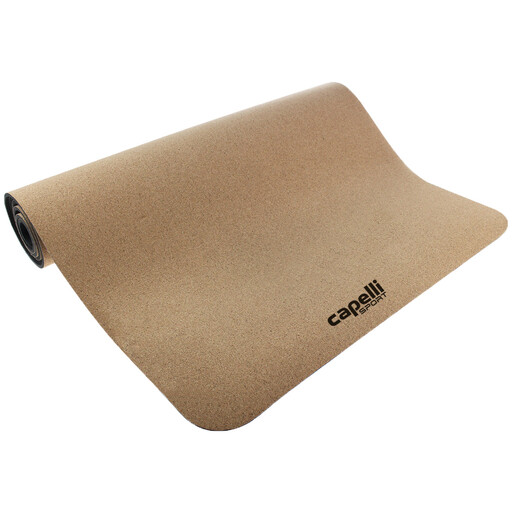
Why This Fits Their Persona: Designed for users who need maximum grip during intense workouts or Hot Yoga. The cork surface improves grip with sweat and offers a natural, pleasant feel.
Solves the problem of slipping when wet. While many mats become slick with sweat, cork's grip increases. The TPE base provides the necessary stability on the floor.
Superior Wet Grip: The cork surface becomes grippier with moisture. Material Combination: Combines the benefits of natural cork with the cushioning and stability of TPE.
We have compiled a complete, up-to-date list of products that fully meet these strict selection criteria and applicable regulations.
For a TPE mat, wiping it down with a damp cloth and a mild soap solution is usually sufficient. Allow the mat to air dry completely before rolling it up. Avoid harsh cleaning agents and direct sunlight, as this can damage the material. A cork mat is naturally antimicrobial and often only needs to be wiped with a damp cloth.
With regular use (two to three times a week), a high-quality TPE mat can have a lifespan of one to three years. Signs of wear include diminishing grip, visible thinning at the main pressure points (hands and feet), or if the material starts to peel.
Not necessarily. While a thicker mat offers more padding, it can lead to instability during balance exercises. For knee protection, a mat with high density is more important than sheer thickness. A 6 mm thick, high-density TPE mat often provides a better combination of joint protection and stability than a soft, 10 mm low-density NBR mat.