
Lieferung heute & morgen

Qualitätsgarantie

Willkommens-Angebote freischalten: KOSTENLOSE Lieferung | Bis zu 80 % RABATT | Kostenlose 30-Tage-JoyPlus-Testphase
App herunterladen
A Bialetti Moka pot is compact, manual to use and a practical alternative to electric coffee machines for many households. However, the models vary considerably in capacity, materials and hob compatibility. If you choose based solely on colour or the familiar design, you could end up buying a pot that is unsuitable for your hob or makes more coffee than you actually need.
This buying guide explains what to look for when choosing a Bialetti Moka Express, a Bialetti Moka Induction or another Italian espresso maker.
The stated size of a moka pot usually refers to small Italian espresso cups. Depending on the model, a 1-cup pot produces around 40 to 60 ml, while a 3-cup version can make approximately 130 to 150 ml. According to the product details available here, a 6-cup moka pot holds around 270 to 300 ml.
If you regularly drink a large mug of coffee, you should therefore not automatically choose the 6- or 9-cup version. The key consideration is how much moka coffee you need to make each time.
A classic aluminium espresso maker generally works on gas, electric and some ceramic hobs, but not directly on an induction hob. Aluminium on its own is not heated by induction in the same way as materials suitable for magnetic induction.
When choosing a moka pot for induction, make sure that compatibility is expressly stated. The lower chamber of the Bialetti Moka Induction is made from stainless steel, while the upper section is aluminium. According to the product description, this makes it suitable for all common hob types, including induction.
With a classic Moka Express, a separate Bialetti adapter plate may be required for induction. This is not automatically included with every delivery.
Many Bialetti models are not dishwasher-safe. Residue from cleaning products and abrasive sponges can affect both the material and the flavour. The product information recommends rinsing the pot with clean water after use and allowing it to dry completely.
The safety valve, seal and filter should also be checked regularly. A damaged seal or blocked valve can compromise safe use.
The right size depends on your household and how often you want to make coffee:
A moka pot should ideally be used with the intended amount of water. Partially filling a larger pot does not automatically produce better results. Choosing the right size is therefore an important factor in achieving consistently good coffee.
The classic Bialetti Moka Express is made predominantly from aluminium. This material is lightweight and associated with the traditional models’ characteristic eight-sided body. However, aluminium pots are not automatically suitable for induction.
A stainless steel espresso maker, or a model with a stainless steel lower chamber, is the more obvious choice for induction hobs. The Bialetti Moka Induction combines a stainless steel lower section with an aluminium upper section. Always check the specific construction and stated hob compatibility against the product page before buying.
Before placing your order, check whether the model is approved for gas, electric, ceramic or induction hobs. On gas hobs, the flame must not extend beyond the base of the pot. The handle should point away from the heat source.
Important features include:
Preparation is manual: fill the lower chamber with water up to the mark or just below the safety valve, add ground coffee loosely to the filter, close the pot and heat it. As soon as the characteristic bubbling begins, remove the pot from the hob.
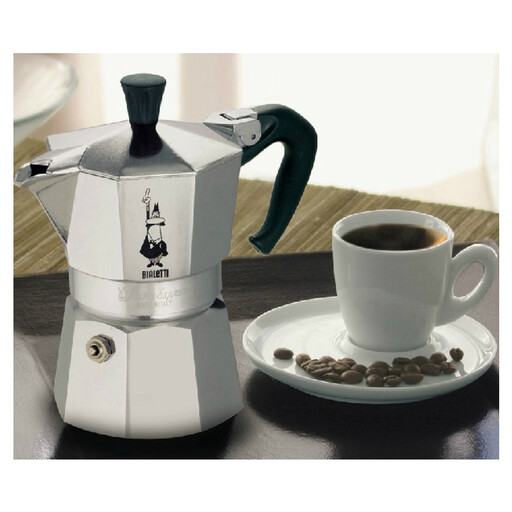
Why this product suits this profile: Its classic size is suitable for smaller households and makes around 130 to 150 ml of coffee, according to the product details.
The stated cup size helps beginners avoid choosing a much larger pot for everyday use. An adapter is required for induction.
Aluminium body, manual operation, reusable filter and a controllable safety valve.
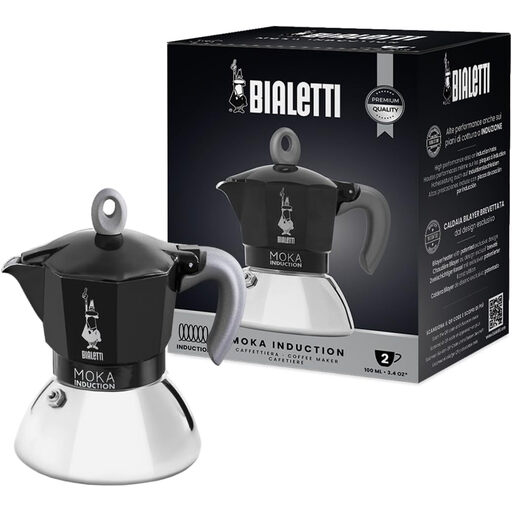
Why this product suits this profile: This model combines an aluminium upper section with a stainless steel chamber and is suitable for all hob types, including induction, according to the product description.
Its explicitly stated induction compatibility reduces the risk of ordering a classic aluminium pot without a suitable adapter solution.
Suitable for gas, electric, ceramic and induction hobs; reusable filter and manual preparation.
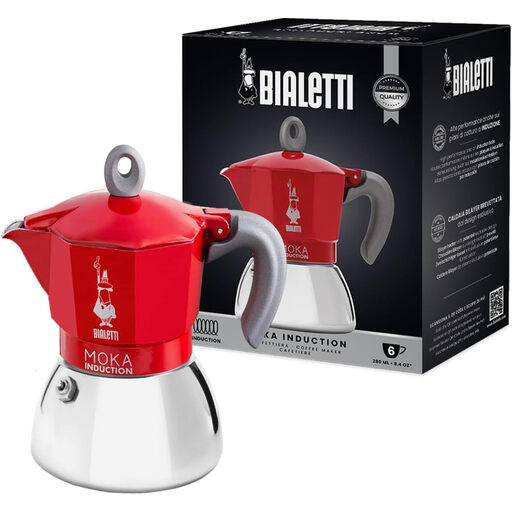
Why this product suits this profile: With a stated capacity of 280 ml, this model is designed for several servings, as well as camping and travel use with a suitable power supply for the hob.
The capacity is clearly stated. Its suitability for induction, electric and gas hobs is also specified, allowing you to check the hob type before buying.
Aluminium and stainless steel construction, safety valve, reusable filter and six stated espresso cups.
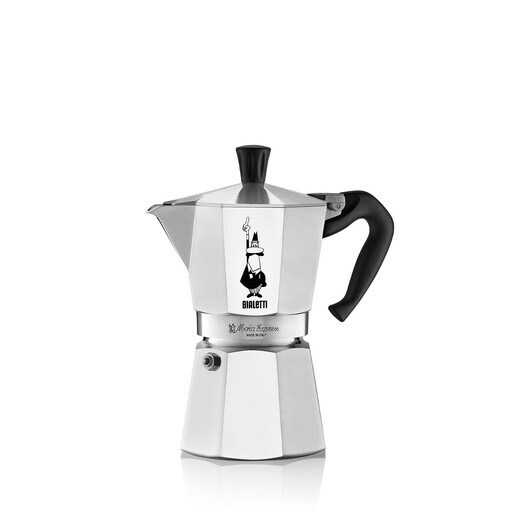
Why this product suits this profile: Its stated capacity of 420 ml is intended for several small servings in one brewing cycle.
The large capacity is designed for groups. If you only need one serving, a smaller model helps you avoid unnecessary excess capacity.
Aluminium body, ergonomic handle, safety valve and suitability for gas and electric hobs; an adapter plate is specified for induction.
The pot should never be heated when empty. The safety valve must remain clear. A clean seal and undamaged filter are also important for everyday use. If you notice cracks, deformation or a porous seal, the affected part should be replaced.
We have put together a complete, regularly updated list of products that fully meet these strict selection criteria and the safety regulations applicable in the EU.
Classic aluminium models are not automatically suitable for induction. Check the product details for the specific model. An appropriate adapter plate is often required for use on induction hobs. The Bialetti Moka Induction, on the other hand, has a stainless steel chamber and is designed for all hob types according to the product description.
Its service life depends on care, the seal, the filter and correct use. A moka pot should not be heated when empty, treated with harsh cleaning products or left unchecked for signs of wear. The body can be used for a long time, while seals and filters are typical wear parts.
Running one requires ground coffee, water and the energy needed to heat it on the hob. A reusable filter creates no capsule waste. The actual running costs depend mainly on the type of coffee, amount of ground coffee, energy price and cup size selected.