
Lieferung heute & morgen

Qualitätsgarantie

Willkommens-Angebote freischalten: KOSTENLOSE Lieferung | Bis zu 80 % RABATT | Kostenlose 30-Tage-JoyPlus-Testphase
App herunterladen
If you want to buy canned meat, you are usually looking for a simple solution for the cupboard, a camping weekend or a quick meal. The range includes classic canned meat, canned sausages and ready meals with sauce, rice or vegetables. However, the product presentation alone says little about whether an item suits your needs.
An unopened tin will generally keep for a long time. Even so, you should check the best-before date, recommended storage conditions and packaging. A bulging lid, rust spots, a damaged tin or a broken safety vacuum are all reasons not to use the product.
Shelf-life information varies considerably. For example, some of the products listed here state an unopened minimum shelf life of at least 48, 53 or 67 days. The date on the individual packaging is always the deciding factor.
With tinned goulash or ready meals, some of the contents may consist of sauce, water, rice, vegetables or thickening agents. That is why the ingredients list in descending order is so important. The percentage quantity of the main ingredient helps when comparing products directly.
Examples from the selection:
A 500-g product is not automatically intended for a single meal. By contrast, sausage in a jar or small tins may be enough for a snack or a sandwich. You should also check whether the contents are ready to eat or need to be heated. For travel, products with quick, clearly explained preparation are more practical than tins that require additional side dishes.
First, work out what you need:
Always compare nutritional values per 100 g. Canned sausages and spreadable products may have a higher fat and salt content. In the product data provided, example salt values range from 1.2 g to 2.5 g per 100 g. This is an objective comparison value, but it does not replace personalised nutritional advice.
Also check for allergens such as gluten, milk, celery, mustard or soya. Labelling may vary from one product to another, even when the product types appear similar.
Jars allow you to inspect the contents and, for some products, have a safety seal. Tins, on the other hand, are robust and space-saving for storing supplies or taking on trips. Unopened products should be stored in accordance with the manufacturer’s instructions: in a cool, dry place and protected from direct sunlight.
After opening: do not store the contents in the tin for an extended period. Transfer leftovers to a sealable container, refrigerate them and consume them within the stated period. Depending on the product, this may be two or three days.
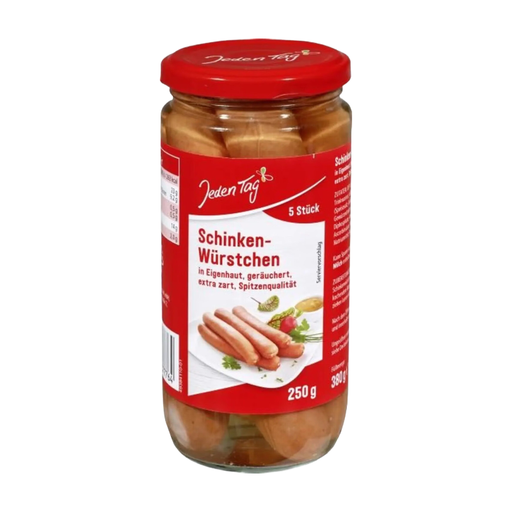
Why this product suits the profile: Five individually portioned mini ham sausages, weighing 250 g in total, are suitable for a snack with bread, a quick bite or a small hot meal.
The product data states 85% pork, glass packaging and preparation in hot, non-boiling water.
250 g total weight, 14 g protein and 0.5 g carbohydrates per 100 g according to the product information.
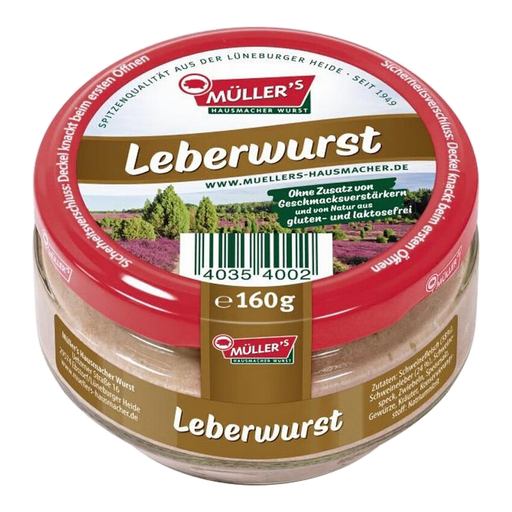
Why this product suits the profile: This spreadable liver sausage in a jar is designed for classic German sausage specialities, snacks with bread and small portions.
The ingredients list states 58% pork and 24% pork liver. Before buying, check that the jar is undamaged and the seal is intact.
160-g jar, ready to eat and, according to the product information, free from gluten and lactose.
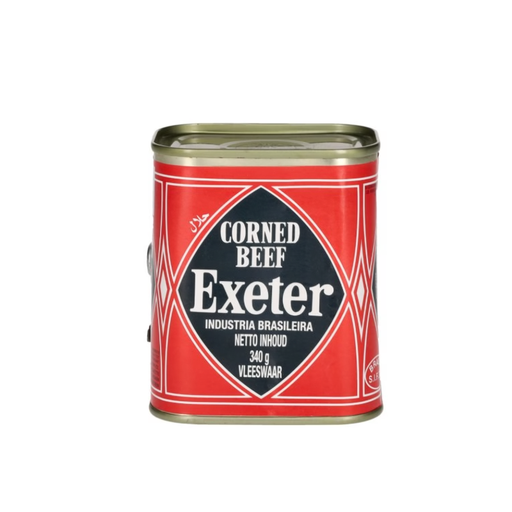
Why this product suits the profile: Corned beef can be served cold on bread, fried in slices or kept in the cupboard for simple meals.
The ingredients list states 91.5% cooked beef and 5% beef. According to the product information, no allergens are listed.
340-g tin, can be stored at room temperature unopened, and is versatile for both cold and hot dishes.
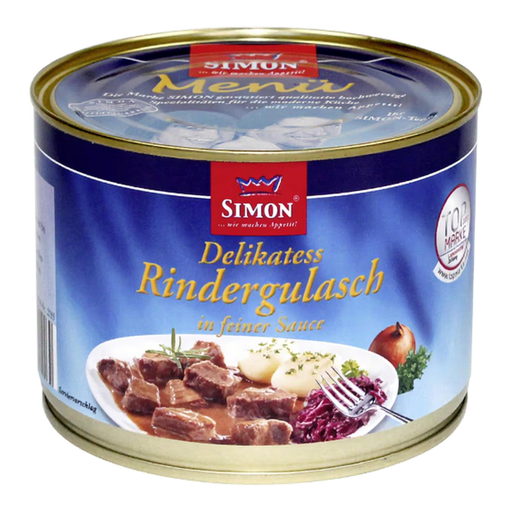
Why this product suits the profile: This ready-made beef goulash is intended for a hot meal with bread, potatoes, pasta or rice.
The ingredients list states 51% beef and lists wheat and celery as allergens. This information makes it easier to check whether the product meets your needs.
500-g portion, can be prepared in a saucepan or microwave; according to the product information, 70 kcal and 8.5 g protein per 100 g.
We have put together a complete, regularly updated list of products that fully meet these strict selection criteria and the safety regulations applicable in the EU.
This depends on the recipe, packaging and manufacturing process. Always check the best-before date on the tin or jar. Undamaged packaging stored in a cool, dry place away from light is intended to last for the stated storage period. After opening, the product should be refrigerated and consumed within the period specified by the manufacturer.
For storage and travel, tins are easy to stack and resistant to damage. A jar, on the other hand, allows you to inspect the contents and can be a suitable form of packaging for sausage products such as liver sausage in a jar or Bockwurst in a jar. The deciding factors are where you will use it, its weight, portion size and the manufacturer’s storage instructions.
Choose a suitable portion size, check how the product is opened and heated, and consider any equipment you may need, such as a saucepan, water or a microwave. For simple meals on the go, corned beef, luncheon meat or pre-cooked sausages may be suitable. For air travel or crossing borders, you should also check the relevant transport and import regulations.