
Lieferung heute & morgen

Qualitätsgarantie

Willkommens-Angebote freischalten: KOSTENLOSE Lieferung | Bis zu 80 % RABATT | Kostenlose 30-Tage-JoyPlus-Testphase
App herunterladen
Anyone looking to buy kimchi will find a wide range of Korean kimchi, pickled cabbage and similar Asian side dishes online. However, the products can differ significantly in terms of heat, ingredients, storage requirements and portion size. An eye-catching label or claim of a “traditional recipe” alone says little about whether a product suits your eating habits.
Classic Chinese cabbage kimchi is often seasoned with fish sauce, fermented anchovy sauce or shrimp paste. If you follow a vegetarian or vegan diet, you should therefore check the full ingredients list. Even seemingly plant-based recipes may contain soya or other ingredients that must be declared.
Spicy kimchi can vary considerably depending on the chilli powder and seasoning used. Fermented cabbage also becomes more acidic over time. A product with a bold flavour may work particularly well in rice dishes or soups, while a milder version may be better suited as a direct accompaniment to a wide range of meals.
Kimchi in a jar or tinned kimchi can be stored in a space-saving way in the kitchen cupboard before opening, provided the packaging allows this. Once opened, the product should generally be kept in the fridge and consumed promptly. A small pack is practical for occasional use, while regular consumers should pay attention to the net weight and shelf life.
The ingredients list shows whether the product contains fish, crustaceans, soya, wheat or other allergens. Delief Sliced Napa Cabbage Kimchi 160 g lists fish sauce, garlic, ginger and chilli powder, among other ingredients. The product is therefore not suitable for a vegan diet. Fish and crustaceans are also declared for Jongga KR Chongga Mat Kimchi.
A plant-based alternative is bibigo Kimchi Ambient 150 g. According to the product information, it is vegan and halal-certified, but contains soya. For allergies or intolerances, always refer to the current labelling on the packaging.
For a single meal, 100 to 160 g may be sufficient. Anyone who regularly serves kimchi with rice, noodles, stir-fries or soups may benefit more from 215 g or 410 g. Smaller packs reduce the risk of leftovers being stored for too long after opening.
Also pay attention to the cut. Pre-cut kimchi can be used straight away as kimchi as a side dish. It is also suitable as a noodle topping, an ingredient for fried rice or for kimchi jjigae.
For products that do not require refrigeration, the storage instructions are particularly important. According to the product description, Delief Sliced Napa Cabbage Kimchi Bottle 215 g can be stored in a cool, dry place before opening. bibigo Kimchi Ambient 150 g is likewise designed to be stored at room temperature.
Other products must be refrigerated even before opening. Jongga KR Chongga Mat Kimchi should be stored at 0 to 4 °C, and prompt consumption is recommended after opening. Yu Yuan Suan Cai Whole Cabbage, on the other hand, must be cooked before eating and should not be confused with Korean kimchi that is ready to eat straight away.
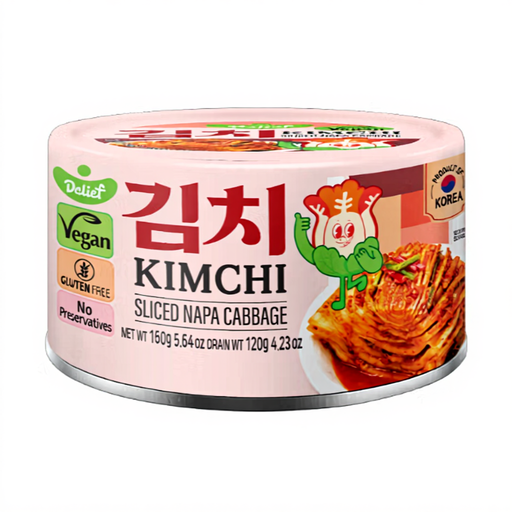
Why this product suits this profile: The compact tin contains a manageable amount for a first try and is ready to eat straight away. This kimchi goes well with rice, noodles and soups.
The portion size limits the risk of leftovers. Before buying, however, bear in mind that it contains fish.
160 g, sliced Chinese cabbage and storage in a cool, dry place before opening.
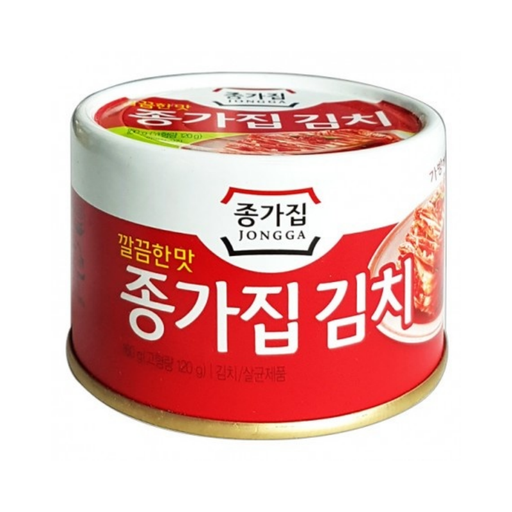
Why this product suits this profile: The bite-sized pieces do not need cutting and are ideal for straightforward, organised use as a side dish or recipe ingredient.
The ingredients and allergen information clearly identifies fish and crustaceans. The required refrigeration is clearly stated.
Bite-sized pieces, 50 kcal per 100 g according to the product information, and no additional preparation required.
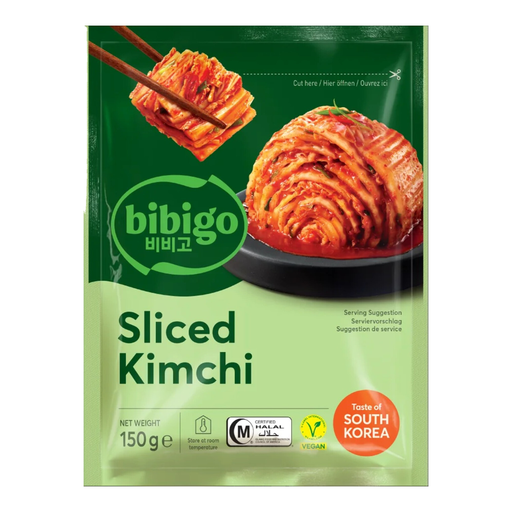
Why this product suits this profile: The product information states that it is vegan and halal-certified, with no fish sauce. This kimchi is intended as a side dish, bowl topping or ingredient.
Its plant-based recipe is clearly stated. Even so, soya should be taken into account as an allergen before purchase.
150 g pack, ready to eat and, according to the product description, suitable for storage at room temperature before opening.
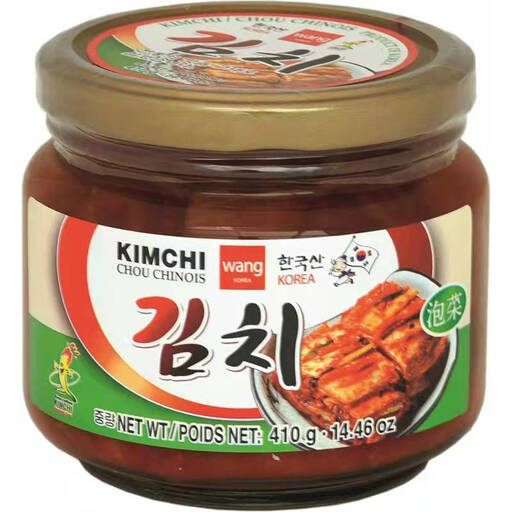
Why this product suits this profile: The larger format is aimed at households that regularly serve Korean kimchi with several meals or use it in cooked dishes.
The ambient-stable packaging reduces the need for refrigeration before opening. Once opened, follow the storage instructions.
410 g contents, lightly seasoned according to the product information, and suitable for eating as is or using in cooked dishes.
We have put together a complete, regularly updated list of products that fully meet these strict selection criteria and the safety regulations applicable in the EU.
Not every pickled cabbage side dish is kimchi. Buying sauerkraut makes sense if you are looking for a mildly tangy accompaniment to sausages, roast meat or traditional German dishes. According to the product information, Hengstenberg Mildessa Wine Sauerkraut is vegan, gluten-free and available in a tin.
Red cabbage in a jar is usually prepared with vinegar, sugar and spices, and goes well with roast meat, sandwiches or salads. Kühne Traditional Recipe Pickled Red Cabbage 720 ml and Hak Red Cabbage with Apple Pieces 650 g are examples of these ready-made side dishes. Their flavour is not comparable with fermented kimchi.
Pickled mustard greens or Chinese pickled cabbage are also suitable for Asian recipes. Yu Yuan Suan Cai Whole Cabbage must be cooked before eating, while Salted and Sour Pickled Mustard Cabbage is intended for soups, rice porridge and stir-fries.
Generally, yes. The exact requirement depends on the product. Ambient products can be stored at room temperature before opening; once opened, they should be refrigerated according to the packaging instructions and consumed promptly.
There is no universal time limit. Depending on the product, consumption within a few days or up to one week may be recommended. Use clean cutlery, seal the packaging and check the smell, appearance and use-by or best-before date.
Products labelled vegan do not contain fish sauce or crustaceans. bibigo Kimchi Ambient 150 g is described as vegan. Nevertheless, always check the current ingredients list and allergen labelling on the packaging before buying.