
Lieferung heute & morgen

Qualitätsgarantie

Willkommens-Angebote freischalten: KOSTENLOSE Lieferung | Bis zu 80 % RABATT | Kostenlose 30-Tage-JoyPlus-Testphase
App herunterladen
If you’re looking to buy peas, you’ll find much more than classic tinned varieties. Dried green peas, split peas, frozen peas, organic peas and roasted peas differ considerably in preparation time, ingredients, pack size and intended use. The right choice depends less on marketing claims and more on how you plan to use them.
Claims such as “high in protein” usually refer to 100 grams of the product. With dried peas, it’s also important to distinguish between their dry weight and their cooked weight. Absorbing water significantly changes the nutritional values per 100 grams. So, only compare figures that refer to the same state.
Depending on the product, whole dried peas may need soaking and a longer cooking time. Green split peas and yellow split peas have already been peeled and split, so they usually cook more quickly and break down more easily to create a creamy consistency. Frozen peas and tinned peas, on the other hand, are already prepared.
Roasted peas and seasoned pea snacks are ready to eat, but often contain oil, salt, sugar or seasoning mixes. When choosing, check the ingredients list, salt content and portion size. A snack containing 500 kcal per 100 grams serves a different purpose from plain green peas for soups and stews.
Products with just one ingredient are easier to assess. Water and salt are often included in tinned peas. Seasoned snacks may also contain oil, flour, sugar, flavour enhancers or spices.
Look for the phrase “from controlled organic farming” or the corresponding EU organic logo if you’re looking for organic peas. The word “natural” on its own isn’t proof that a product is organic. You should also check for possible traces of allergens such as wheat, barley, soya or mustard. The information on the individual pack is definitive.
For occasional meals, 265 to 425 grams of tinned peas or 350 to 500 grams of dried peas should be enough. If you use peas regularly, a 900-gram pack of dried split peas can help cut down on shopping trips. Store unopened dried peas in a cool, dry, dark place. Once opened, the pack should be sealed airtight.
The recommendations below match specific products to practical uses. Ingredient and nutrition details are taken from the product information; always check the current label.
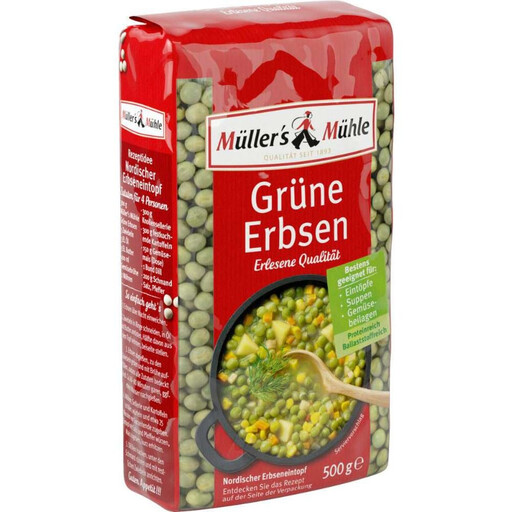
Why this product suits this profile: The 500 g pack is handy to keep in the cupboard for vegan, vegetarian and lactose-free dishes such as soups and stews.
The preparation instructions are clear: one part peas to three parts water. Soaking can shorten the cooking time, making it easier to plan ahead.
Dried green peas; according to the product information, they provide 8.7 g of protein and 7.0 g of fibre per 100 g when cooked.
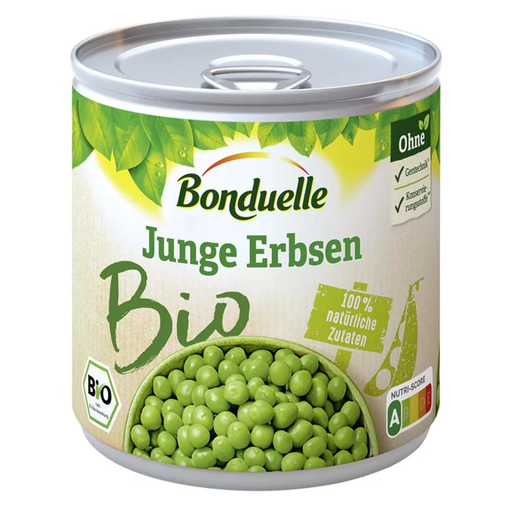
Why this product suits this profile: An organic tinned option for shoppers looking for a short ingredients list and a smaller household-sized portion.
The product information specifies peas from certified organic farming, along with water and salt. Once opened, the peas should be refrigerated and used soon.
Organic peas, ready to eat, with 6.6 g of fibre and 5.3 g of protein per 100 g according to the product information.
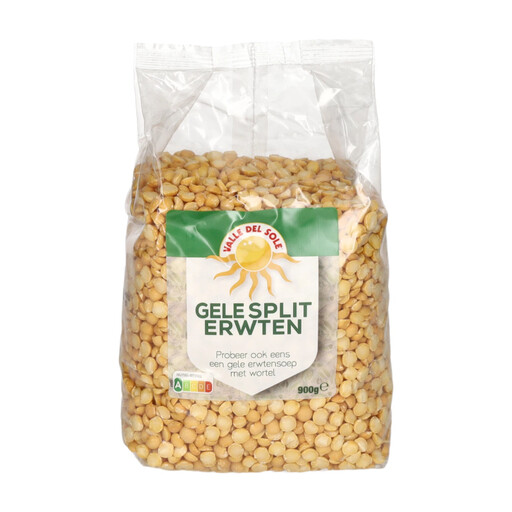
Why this product suits this profile: The 900 g pack is aimed at households that regularly make soups, stews, purées or vegetarian dishes.
The ingredients list states that it contains 100% peeled yellow peas. That means there’s no risk of confusing it with seasoned or pre-salted ready-to-eat products.
According to the product information, it provides 21 g of protein and 23 g of fibre per 100 g, with no added ingredients.
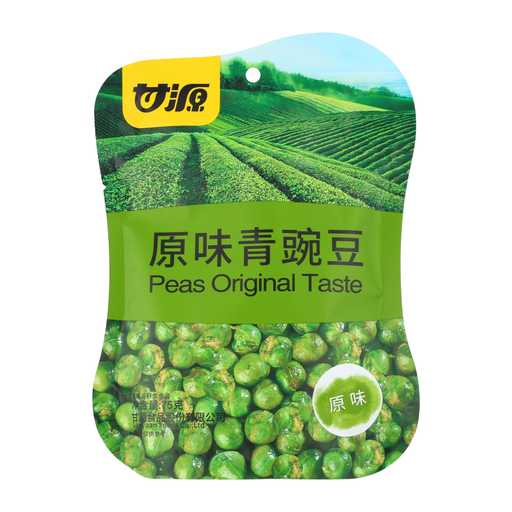
Why this product suits this profile: The 75 g pack is ready to eat and handy for breaks, travelling or adding to an Asian-inspired snack selection.
The product information clearly lists oil and seasoning, as well as 1.9 g of salt per 100 g. This makes it easy to tell the snack apart from unseasoned peas for cooking.
Crunchy texture, original flavour and ready to eat straight from the pack; the nutrition information lists 14.8 g of protein per 100 g.
We’ve put together a complete, regularly updated list of products that meet these strict selection criteria and the safety regulations in force across the EU.
Green or yellow split peas are a good choice for a creamy pea soup, as they break down easily during cooking. Whole dried green peas work well if you want the pieces to retain more bite. In either case, follow the preparation instructions on the pack.
Both options are quick to use. Frozen peas need to be kept frozen and are usually heated briefly. Unopened tins can be stored at room temperature. Once opened, keep the contents in the fridge and use them soon.
Unopened dried peas usually keep for a long time when stored in a cool, dry, dark place. Check the best-before date and the manufacturer’s instructions. After opening, an airtight container will protect them from moisture and pests.