
Lieferung heute & morgen

Qualitätsgarantie

Willkommens-Angebote freischalten: KOSTENLOSE Lieferung | Bis zu 80 % RABATT | Kostenlose 30-Tage-JoyPlus-Testphase
App herunterladen
A new dresser should bring order to a room and look great at the same time. But the search for the perfect piece of furniture can quickly become complicated. Many models look promising online, only to prove disappointing after purchase. To help you with your selection, we'll highlight the most common pitfalls and show you which features truly matter.
Often, it's the subtle details that determine the longevity and functionality of a storage cabinet. Pay close attention to these three points to avoid a bad purchase:
To make an informed decision, you should examine three core aspects: the material, the functionality of the storage space, and the safety features.
The choice of material has a direct impact on the stability and lifespan of your dresser.
Think carefully about what you want to store. The internal layout is just as important as the external appearance.
An often overlooked but critical point is the stability of the unit.
Here are some recommendations tailored to specific needs and living situations.
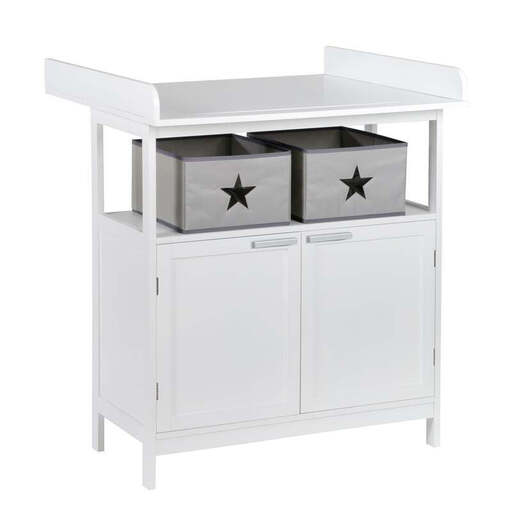
Why this model is a great fit: This changing table dresser is designed for longevity. With an ergonomic changing height of 92 cm and a removable topper, it transforms into a neutral, standard dresser after the baby years, growing with the family.
The problem of instability is addressed by the included wall mount (anti-tip kit), which ensures it stands securely.
Its convertible design eliminates the need for a new purchase, offering sustainable use for many years.
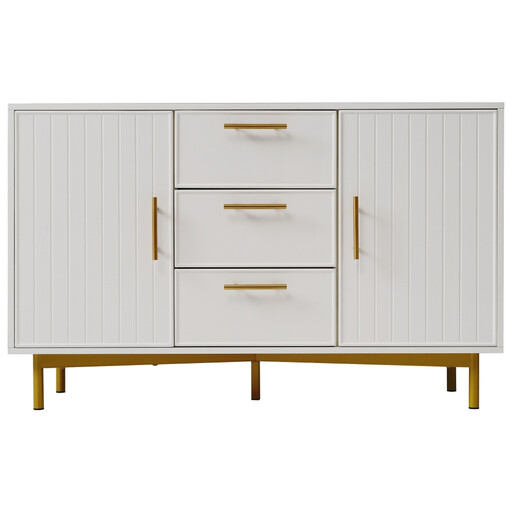
Why this model is a great fit: This sideboard combines minimalist elegance with practical storage. The decorative ribbed fronts and gold handles make it a focal point in the living room or bedroom.
An adjustable central foot compensates for uneven floors and prevents wobbling. The construction of engineered wood and a metal frame ensures stability.
The combination of three drawers and two doors with height-adjustable shelves offers extremely flexible organisation for items of various sizes.
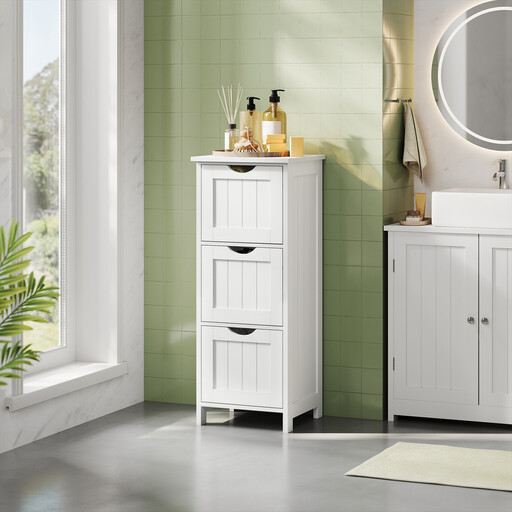
Why this model is a great fit: As a narrow dresser with a width of just 32 cm, this model is ideal for nooks in the bathroom, hallway, or bedroom. It creates storage where standard furniture would be too large.
Its compact, low-profile design ensures a stable footing in a small space. The risk of wobbling, common with larger, poorly constructed furniture, is minimised here.
Despite its small footprint, three full-sized drawers provide well-organised storage for cosmetics, towels, or accessories.
We have compiled a complete, up-to-date list of products that fully meet these strict selection criteria and safety standards.
Most dressers come with an anti-tip kit. Installation is usually straightforward: one bracket is attached to the top or back of the furniture, and a second is mounted on the wall. The two are then connected with a sturdy strap or tether. Always use wall plugs and screws that are appropriate for your wall type (e.g., concrete, drywall).
Although the terms are often used interchangeably, there are traditional differences:
The load capacity varies greatly depending on the construction and materials. Checking the manufacturer's specifications is crucial. As a rule of thumb: smaller drawers often hold 3 to 5 kg (approx. 7-11 lbs). Larger, more stable drawers with metal glides and a solid bottom can hold 10 kg (22 lbs) or more. Drawers with a simple fabric bottom are only intended for very light items like socks or scarves.