
Lieferung heute & morgen

Qualitätsgarantie

Willkommens-Angebote freischalten: KOSTENLOSE Lieferung | Bis zu 80 % RABATT | Kostenlose 30-Tage-JoyPlus-Testphase
App herunterladen
A reliable gas stove is the centerpiece of any outdoor kitchen. But the market is flooded with models whose marketing promises often don't hold up in practice. Instead of relying on exaggerated advertising claims, it's wiser to base your purchase decision on objective criteria and your intended use. This guide will help you navigate the typical pitfalls and find the right gas stove for your camping and hiking trips.
As a Joybuy Product Recommendation Officer, my job is to filter market information and give you practical advice to help you make an informed decision.
Many outdoor enthusiasts invest in gear that later proves to be impractical or unreliable. Pay close attention to these three points to avoid making a bad buy:
Instead of being swayed by marketing terms, focus on these verifiable features to find the right gas stove for hiking or camping trips.
The true performance of a gas stove is revealed in real-world conditions. A crucial factor here is efficiency—how much of the generated heat actually reaches the pot.
For trekking and backpacking trips, every gram counts. This is where a lightweight gas stove has a clear advantage.
Here are some recommendations tailored to different use cases that avoid the pitfalls mentioned earlier.
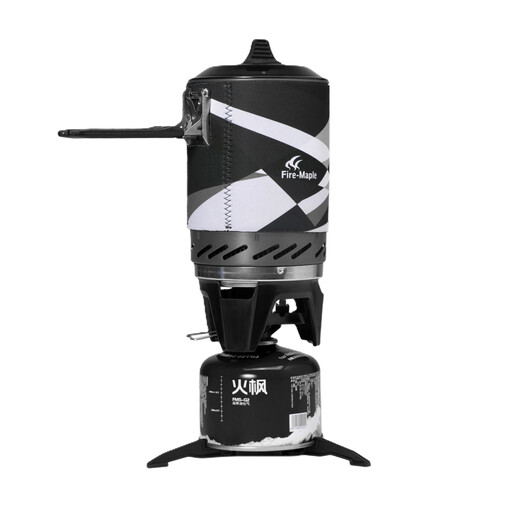
Why This Fits Their Persona: Ideal for solo travelers who value efficiency and a minimal pack size. The integrated system combines the burner, pot, and windshield into one compact unit that takes up hardly any space in a backpack.
The heat-exchange technology and integrated windshield ensure high efficiency, bypassing the trap of relying solely on wattage. The system is stable, and all parts are designed to work together.
High fuel efficiency thanks to the heat exchanger. All components (except the gas canister) can be stored inside the 1-liter pot. Compatible with standard screw-on canisters.
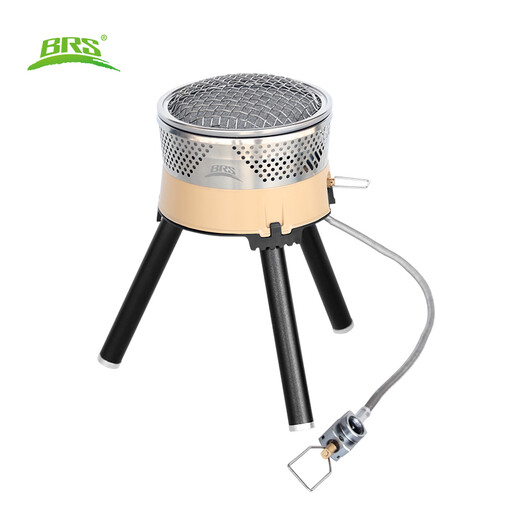
Why This Fits Their Persona: Suitable for campers who want to boil water quickly but also want the flexibility to use their own cookware. The high power is ideal for small groups or when time is of the essence.
The product description clearly states that an external ignition source is required and which fuels are compatible. The high power isn't an empty promise here but delivers an objectively fast boil time.
High power of 1900W for rapid boiling (1L of water in approx. 3 minutes, according to the manufacturer). Compact pack size (?105 x 85 mm) and low weight (0.425 kg).
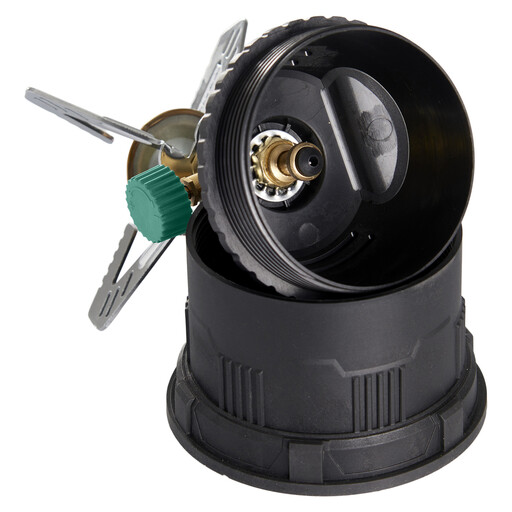
Why This Fits Their Persona: Perfect for occasional outings, picnics, or as a straightforward stove for a first camping adventure. Its simple operation and stable base make it very beginner-friendly.
This model bypasses the stability trap with its wide, flat design. It's an honest, simple device without exaggerated performance claims that does exactly what it's supposed to do: cook reliably.
Very stable base on flat surfaces. Simple, continuously variable flame control. Low weight of 0.495 kg and compact dimensions.
We have compiled a complete, up-to-date list of products that fully meet these strict selection criteria and all relevant safety regulations.
No, a gas camping stove must never be operated in an enclosed space such as a tent, awning, or vehicle. The combustion of gas produces carbon monoxide (CO), an odorless and colorless gas that can lead to fatal poisoning in enclosed spaces. Always operate your stove outdoors or in a very well-ventilated area.
The burn time depends on the size of the canister (e.g., 230g or 450g), the stove's power output, and the flame setting. As a rough guide, a 230g canister can run a stove at full power for about 60 to 90 minutes. With an efficient cooking system that boils water quickly, this is often sufficient for one person on a multi-day trip.
Standard butane/propane gas mixtures can lose performance at temperatures below freezing because the pressure inside the canister drops. For use in winter or at high altitudes, there are special winter gas blends (e.g., with a higher isobutane content) that function reliably even in the cold. Some stove systems also feature a pressure regulator that ensures consistent performance regardless of the fuel level and outside temperature.