
Lieferung heute & morgen

Qualitätsgarantie

Willkommens-Angebote freischalten: KOSTENLOSE Lieferung | Bis zu 80 % RABATT | Kostenlose 30-Tage-JoyPlus-Testphase
App herunterladen
A dead car battery is more than just an annoyance—it means lost time, missed appointments, and potential uncertainty, especially in bad weather or remote locations. A portable jump starter, often called a car booster, promises a quick and straightforward solution. However, the market is saturated and full of products whose advertised performance specs often fail to deliver in practice. Before you make a decision, it's crucial to know the most common pitfalls to avoid a bad investment.
As your Joybuy Product Recommendation Officer, I have summarised the essential points to help you distinguish a reliable jump starter from an unsuitable one.
To make the right choice, you should focus on objective, technical metrics rather than marketing promises.
The peak current is the most important indicator of a jump starter's performance. It specifies how much energy the device can briefly output to crank the engine.
Ensure that it is a 12V jump starter, the standard for cars, SUVs, and most light commercial vehicles.
The installed battery determines not only the starting power but also the longevity and functionality as a jump starter power bank.
Many devices offer useful additional features. A jump starter with an air compressor is ideal for being prepared not only for a dead battery but also for a flat tyre. An integrated LED flashlight with an SOS function is another sensible safety feature for a portable jump starter.
Based on these objective criteria, we have identified some models that represent a well-considered choice for different user profiles.
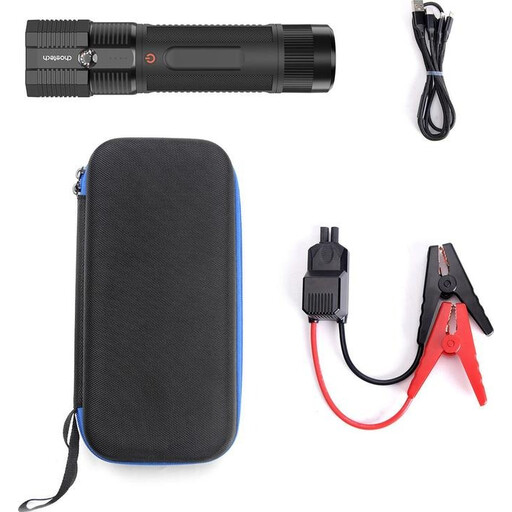
Why This Fits Their Persona: Ideal for drivers of small and compact cars who are looking for a solid and affordable safeguard for emergencies. The compact, flashlight-style design is easy to store in the glove compartment.
Despite its affordable price, it doesn't compromise on safety. The included clamps offer basic protection features and prevent damage from incorrect use.
600A Peak Current: Sufficient for most petrol engines. Multifunctional: Also serves as an 8000 mAh power bank and a powerful LED flashlight.
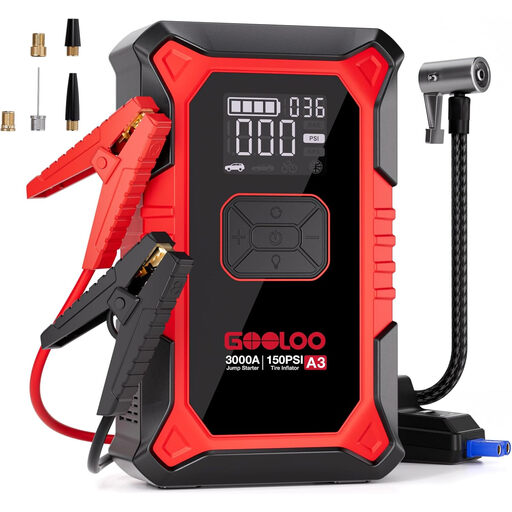
Why This Fits Their Persona: An all-in-one device for drivers of SUVs, vans, or family minivans. The combination of high starting power and an integrated air compressor provides comprehensive roadside emergency preparedness for daily use and long trips.
The stated peak current of 3000 A is designed for large engines (up to 9.0L petrol/6.5L diesel) and is backed by a high-quality battery management system with 10 protection functions, sidestepping the pitfall of exaggerated performance claims.
7-in-1 Functionality: Jump starter, compressor (150 PSI), power bank, LED light, and more. Boost Function: According to the manufacturer, it enables starting even with a very low battery voltage.
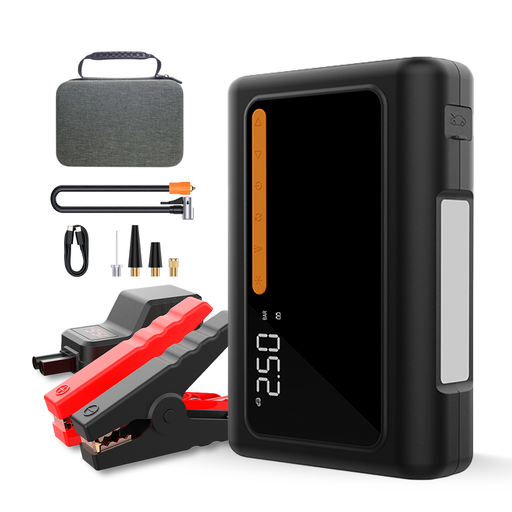
Why This Fits Their Persona: Perfect for users who prioritise maximum reliability and longevity. Ideal for anyone who operates their vehicle in extreme temperature conditions or wants to leave the device in their car for years without constant recharging.
The sodium-ion technology directly addresses the pitfall of rapid self-discharge. According to the manufacturer, the device has a standby time of up to 5 years and a cycle life of over 6,000 charges, surpassing the lifespan of conventional lithium devices many times over.
Extreme Temperature Range: Works reliably from -40°C to +80°C. High Safety: According to the manufacturer, the battery technology does not release oxygen when damaged, which minimises the risk of fire.
We have compiled a complete, up-to-date list of products that fully meet these strict selection criteria and UK safety regulations.
Most manufacturers of devices with lithium-ion batteries recommend charging the jump starter every 3 to 6 months to ensure it is ready for use. Models with sodium-ion technology have a significantly lower self-discharge rate and, according to manufacturers, often only need to be checked every few years. In any case, read the specific recommendations in your device's manual.
Yes, this is possible, provided the device has a sufficiently high peak current. Diesel engines, especially in cold temperatures, require significantly more starting power than petrol engines. When making your selection, pay close attention to the manufacturer's specifications regarding compatibility with diesel engines and their maximum displacement. A model designed for a 6.0-litre petrol engine may already be too weak for a 3.0-litre diesel.
Modern, high-quality jump starters are safe for vehicle electronics when used correctly. The key is the "smart clamps." These have integrated protection circuits that prevent damage from reverse polarity, short circuits, overvoltage, or overheating. An audible or visual signal warns the user in case of an incorrect connection. Avoid models without these certified safety features.