
当日/次日达

品质保障

开启新人专享福利: 全场免邮 | 低至 2 折 | 免费试用 30 天 JoyPlus 会员
下载 Joybuy
A cast iron Dutch oven is more than just a pot—it's a lifelong kitchen staple and the centerpiece for countless successful dishes, from juicy Sunday roasts and flavorful braises to bread with a perfect crust. However, the market is vast, and choosing the right model can be a challenge.
This guide is here to help. We'll present objective criteria to assist you in finding a cast iron Dutch oven that is perfectly tailored to your cooking habits and needs.
To make an informed decision, several functional features should be considered. These characteristics determine how well the Dutch oven will suit your purposes.
The choice between a round and an oval Dutch oven primarily depends on the food you plan to cook.
A modern enamelled Dutch oven offers significant advantages: it doesn't require seasoning, is rust-resistant, and is easier to clean. The colour of the interior enamel is more than just an aesthetic choice.
Nearly all high-quality models today are designed to be induction-compatible cast iron pots and work on all types of hobs.
A heavy, tight-fitting lid is the hallmark of a good Dutch oven. It prevents steam and flavour from escaping, ensuring that food braises in its own juices. Some manufacturers, such as Staub, have developed special lid interiors (so-called "aroma rain" features). Condensation collects on nubs or ridges and drips evenly back onto the food, keeping it exceptionally moist.
Based on material properties, functionality, and use cases, we have compiled a few models for you.
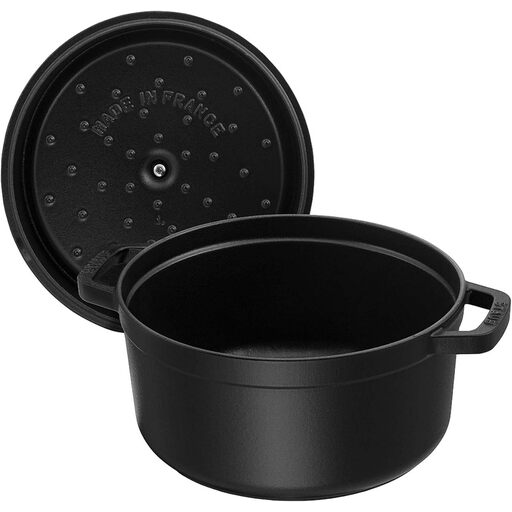
Why it stands out: The Staub Cocotte is distinguished by its matte black interior enamel, designed for high-heat searing and developing rich flavours. Its most distinctive feature is the "Aroma Rain" structure on the lid, which provides continuous, self-basting moisture.
Advantages:
Who it's for: Cooks who frequently sear meat and value an automatic self-basting feature for exceptionally juicy braises.
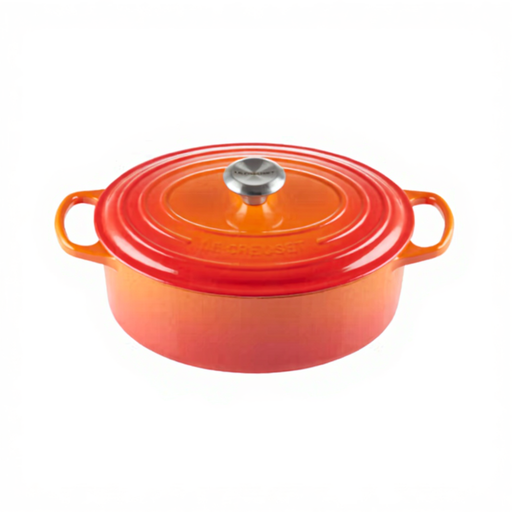
Why it stands out: The oval Le Creuset Casserole in the iconic Volcanic colour is a classic for preparing whole roasts or poultry. The light-coloured interior enamel allows for precise control over the cooking process, while the large handles provide a secure grip, even with oven mitts.
Advantages:
Who it's for: Households that regularly cook larger roasts or whole poultry and appreciate the visual control offered by a light-coloured enamel.
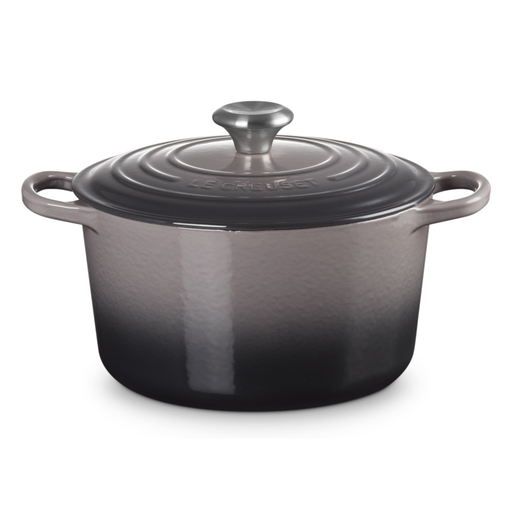
Why it stands out: This round model from Le Creuset is a versatile all-rounder with a generous 5-litre capacity in a standard 24 cm diameter. Its high sides make it perfect for soups, stews, or baking larger round loaves of bread.
Advantages:
Who it's for: Cooks looking for a universal, high-capacity round casserole for a wide range of dishes, from stews to homemade bread.
The models presented here cover common use cases. If you haven't found the right product for your specific needs—whether it's a different size, colour, or shape—you can find more options in our full category.
Discover our entire range of Enamelled Cast Iron Cookware.
Both brands are renowned French manufacturers of high-quality cast iron cookware. The main differences are in the details: Staub typically uses a matte black interior enamel and a lid with a special drip structure for self-basting. Le Creuset is known for its light-coloured interior enamel, which allows for easy monitoring of browning, and its wide range of colours. The choice is often a matter of personal preference regarding cooking performance and aesthetics.
Yes, a cast iron Dutch oven is excellent for baking bread. The heavy material stores and distributes heat extremely evenly, while the tight-fitting lid traps steam inside. This simulates the conditions of a professional steam oven, resulting in an airy crumb and an exceptionally crispy crust. Both round and oval shapes work well.