
Lieferung heute & morgen

Qualitätsgarantie

Willkommens-Angebote freischalten: KOSTENLOSE Lieferung | Bis zu 80 % RABATT | Kostenlose 30-Tage-JoyPlus-Testphase
App herunterladen
Ceramic bowls are among the most versatile pieces of tableware. They can be used as cereal bowls, soup bowls, rice bowls, pasta bowls or dessert bowls. Depending on their shape, they work just as well on the family dining table as they do in restaurants, cafés and hotels. But design isn’t the only thing to consider when buying. Unclear size information, delicate glazes and a lack of guidance on how to use them can mean that a seemingly practical bowl set doesn’t work well in everyday life.
This buying guide explains which details matter when choosing ceramic, stoneware and porcelain bowls, and which options suit different uses.
A bowl with a diameter of 11.4 cm is better suited to rice, cereal, side dishes or desserts. For pasta, ramen or a large serving of soup, models measuring around 20 cm or more across, with a higher rim, are more practical. The external dimensions also don’t tell you exactly how much a bowl will hold. Its internal shape, rim height and base area all affect its usable capacity.
Ceramic, stoneware and porcelain are hard materials, but they can still break if knocked or dropped. A durable glaze won’t prevent damage from hard objects or careless stacking, either. Before first use, check each bowl for cracks, chips and sharp edges.
The product details should explicitly state whether bowls are microwave-safe and dishwasher-safe. Metallic decoration may make a bowl unsuitable for microwave use. Sudden changes in temperature – for example, moving a bowl straight from the fridge into a hot microwave – can also put the material under stress. Even when a bowl is labelled microwave-safe, avoid heating it when empty or using high-power settings for too long.
If a product includes information about food contact, it’s worth checking its compliance details. Some models are stated to comply with EU Regulation (EC) No 1935/2004 on materials intended to come into contact with food. Check this information for each product rather than assuming it applies to an entire range.
Also check how much room you have in your kitchen cupboard. Stackable bowls save space, but handle them carefully to stop their rims knocking against one another when you stack or remove them.
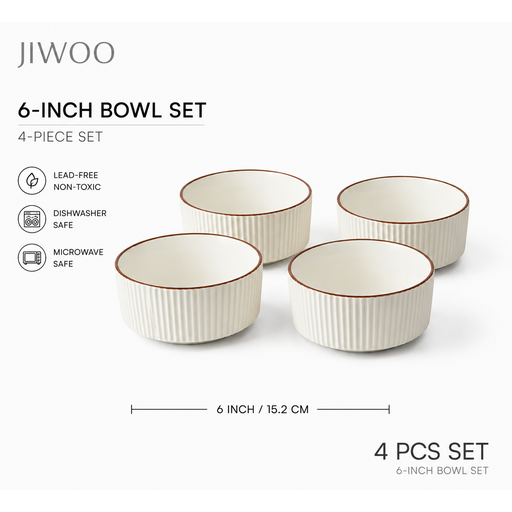
Why this product suits this shopper: This set of four meets the everyday needs of several people. According to the product description, the 6-inch bowls are suitable for rice, soup, salads, cereal, fruit and desserts.
The set size and bowl dimensions are clearly stated. This makes it easier to check whether there are enough bowls for your household and whether they’ll fit in your cupboard.
Set of 4, with a cream-coloured finish and vertical texture. The product details state that the bowls are suitable for microwave and dishwasher use.
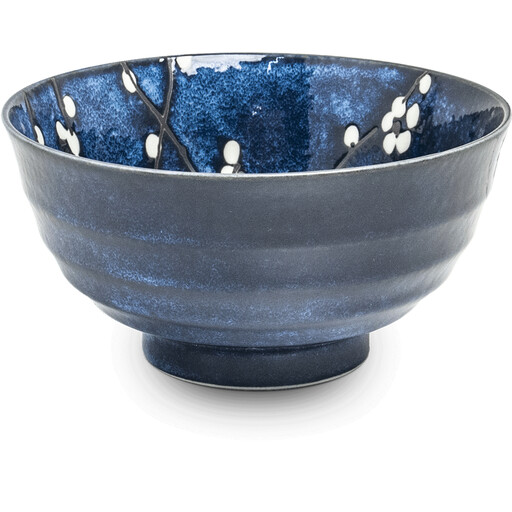
Why this product suits this shopper: With its blue-and-white floral design and dimensions of 17 cm across and 8.7 cm high, this bowl is a good choice for anyone looking for decorative Japanese-style tableware.
The product details specify the material, diameter and height. This makes it easier to compare the bowl with the plates and bowls you already own before buying.
Made from porcelain, with a deep shape. The product description says it’s suitable for rice, noodles, salads and soups.
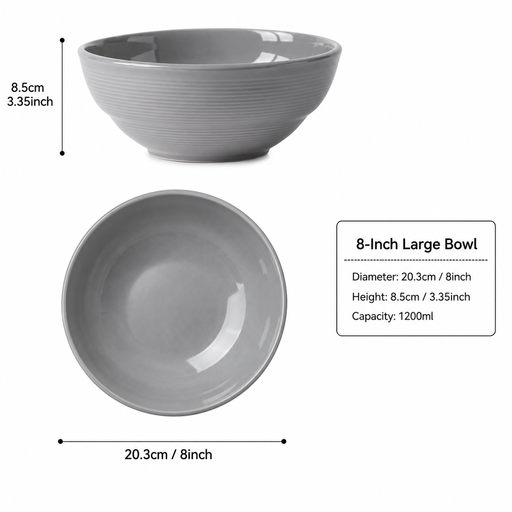
Why this product suits this shopper: Measuring around 20.3 cm across and 8.5 cm high, with a capacity of approximately 1,200 ml, this bowl is designed for larger portions of ramen, udon, pasta, salads and soup.
Its generous capacity reduces the risk of choosing a bowl that’s too small for main courses. The product details state that it’s suitable for use in the fridge, microwave and dishwasher.
Generous capacity, smooth glaze and horizontal texture. According to the product details, it’s suitable for home use and restaurant table settings.
Wash new ceramic bowls with warm water and mild washing-up liquid before first use. Use soft sponges to clean them. Avoid steel wool and harsh scouring products, especially on matt glazes. When stacking bowls, thin protective layers can help reduce scratches to the surfaces and rims.
Don’t serve hot food in bowls that are extremely cold. Check for damage before each use, and stop using bowls with cracks or chips. For restaurants and other food service businesses, it’s also worth considering whether replacement pieces are available, the size of each set, storage space and the manufacturer’s documented usage guidance.
We’ve put together a complete, regularly updated list of products that meet these strict selection criteria and fully comply with the safety regulations in force in the EU.
Bowls around 11 to 16 cm across are often big enough for cereal, yoghurt and fruit. If you serve larger portions or add extra ingredients, compare the internal capacity and rim height rather than looking at the external diameter alone.
It depends on the product. Only use a bowl in the microwave if the manufacturer explicitly says it’s suitable. Bowls with metal decoration are generally not suitable. They may be hot after heating, so use oven gloves if needed.
There’s no reliable way to give a fixed lifespan. It depends on the material, glaze, how the bowls are used and cleaned, and whether they’re subjected to knocks. Careful stacking, mild cleaning products and avoiding sudden temperature changes can help them last longer.