
Lieferung heute & morgen

Qualitätsgarantie

Willkommens-Angebote freischalten: KOSTENLOSE Lieferung | Bis zu 80 % RABATT | Kostenlose 30-Tage-JoyPlus-Testphase
App herunterladen
A new cereal bowl set can significantly upgrade your breakfast routine or evening meal. But the joy of new dinnerware can quickly fade when the first flaws appear after just a few weeks. Many buyers invest in sets that look great at first glance but disappoint in daily use. Scratches in the glaze, wobbly stacks in the cupboard, or a size barely large enough for a decent portion of cereal are common annoyances.
As your Joybuy Product Recommendation Officer, I filter out the marketing noise to bring you the essential information. In this guide, I'll show you the three most common pitfalls when buying bowl sets and what you need to look for to make a durable and functional choice.
When choosing dinnerware, there are pitfalls that often only become apparent in daily use after the purchase. Knowing them can help you avoid a bad buy.
To avoid these problems, you should check two key aspects before buying: the material and its actual functionality.
The material's name provides crucial clues about its durability and performance characteristics.
Don't rely on diameter alone. The capacity, specified in millilitres (ml), is the more reliable metric.
Here are a few recommendations tailored to different needs and households, all of which meet the criteria mentioned above.
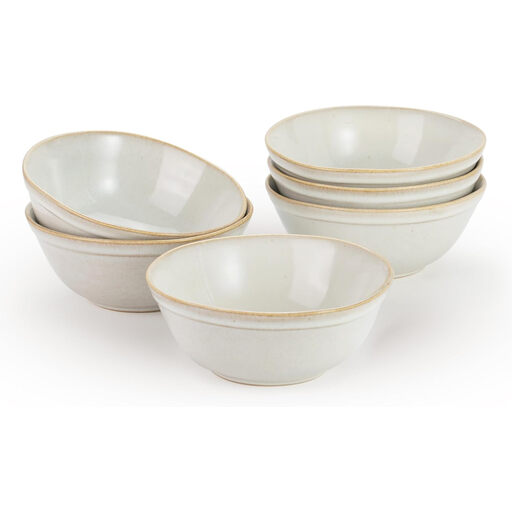
Why This Fits Their Persona: Ideal for starting a new home or for families looking for a solid starter set. This 6-piece set offers great value for money, and the 600 ml size is versatile enough for cereal, soups, or desserts.
The high-fired stoneware is scratch-resistant and robust, avoiding the trap of poor durability. Its uniform shape ensures good stackability.
Comprehensive 6-piece set; durable stoneware for daily use; microwave and dishwasher safe.
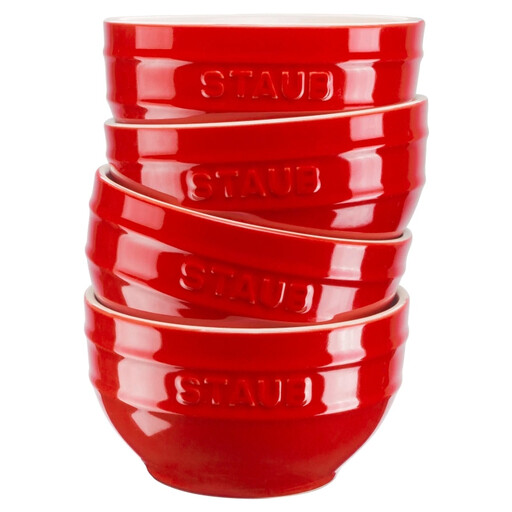
Why This Fits Their Persona: For those who value brand quality, durability, and timeless design. The vibrant colour and high-quality finish make this set a centrepiece on any table.
According to the manufacturer, the high-quality enamel finish is exceptionally scratch- and impact-resistant. It resists fading and cracking, thereby solving the "false dishwasher-safe" problem.
Excellent material quality; generous 700 ml capacity for versatile use; stackable and easy to clean.
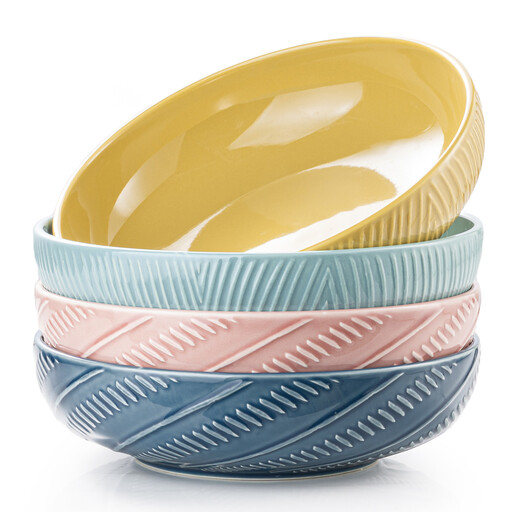
Why This Fits Their Persona: Perfect for anyone who uses their bowls not just for cereal, but as all-purpose dishes for pasta, large salads, or stews. The large format makes them extremely versatile in the kitchen.
With a capacity of approx. 1065 ml (36 oz) and a wide, shallow design, this set solves the problem of deceptively small bowls. It's guaranteed to fit a full main course.
Very large capacity; ideal as pasta and salad bowls; oven-safe and stackable for maximum functionality.
We've compiled a full, up-to-date list of products that fully meet these strict selection criteria and safety standards.
Porcelain bowls are typically lighter, finer, and have a smooth, non-porous surface, often giving them a more elegant look. Stoneware is thicker, heavier, and has more of a rustic feel. It insulates heat better, making it a great choice for hot foods like soup. Both materials are very durable when of good quality.
Look for product images that show the bowls in a stack. A sure sign of good stackability is a uniform, flat base and a slightly conical shape. Product descriptions often explicitly mention the "stackable" feature. Bowls with irregular rims or heavily decorated bases are usually less space-efficient.
Yes, absolutely. Their wide and often relatively shallow shape makes them ideal salad bowls, as ingredients can be mixed easily. They are also suitable for soups, although bowls with slightly higher rims can be more practical to prevent spills. Their versatility makes them a sensible addition to any household.