
Lieferung heute & morgen

Qualitätsgarantie

Willkommens-Angebote freischalten: KOSTENLOSE Lieferung | Bis zu 80 % RABATT | Kostenlose 30-Tage-JoyPlus-Testphase
App herunterladen
A well-placed chalkboard easel sign can capture the attention of passersby, advertise daily specials, or welcome guests to an event. However, the market is vast, and not every model lives up to its promises. Before you make a decision, it's crucial to understand the common pitfalls that can quickly turn a useful advertising tool into a source of frustration.
Many buyers focus on appearance but overlook critical functional details. These oversights often lead to disappointment and unnecessary expenses.
To avoid buyer's remorse, you should check three core aspects before purchasing. These largely determine the durability and functionality of your sign.
The choice of material is fundamental. Solid wood is significantly more robust and durable than fiberboard (MDF). It offers greater inherent stability and, with the right treatment, is more resistant to weathering. Look for details like sturdy hinges and clean joints. A vintage-style advertising stand made of real wood develops an appealing patina over time, while models made from particleboard often depreciate quickly.
The quality of the board's surface determines how well it can be written on and cleaned.
For flexible applications, such as a restaurant menu board that is updated daily, a non-porous surface is generally the more practical choice.
Stability is determined by the construction, weight, and footprint. A classic A-frame provides a good base level of stability. Additional cross-braces or a bottom shelf can further enhance its sturdiness. Consider where the sign will be placed: a tall, narrow sign is well-suited for sidewalks, while a smaller tabletop model is ideal for counters or as a decorative element for a wedding chalkboard.
Based on the quality criteria mentioned, we have identified products that are well-suited for specific use cases.
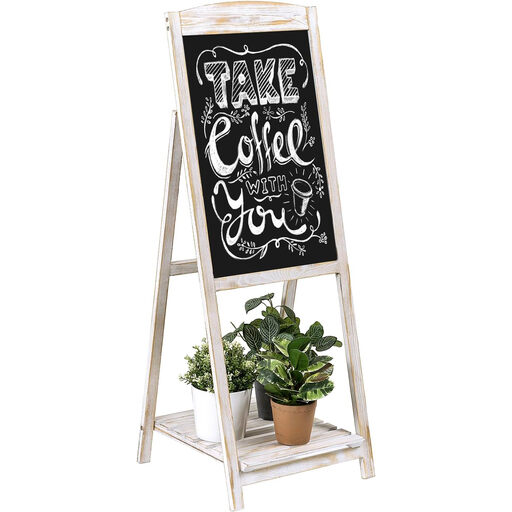
Why This Fits Their Persona: At over a meter tall, this sign ensures maximum visibility in front of a café or shop. The additional shelf can be used for decoration, herb pots, or small products, while also increasing the A-frame's stability.
The solid wood construction and reinforced cross-braces provide excellent stability, avoiding the problem of wobbly, low-quality frames. The surface is designed for repeated use with standard chalk.
Integrated shelf for added utility and increased stability. Large writing surface for highly legible messages.
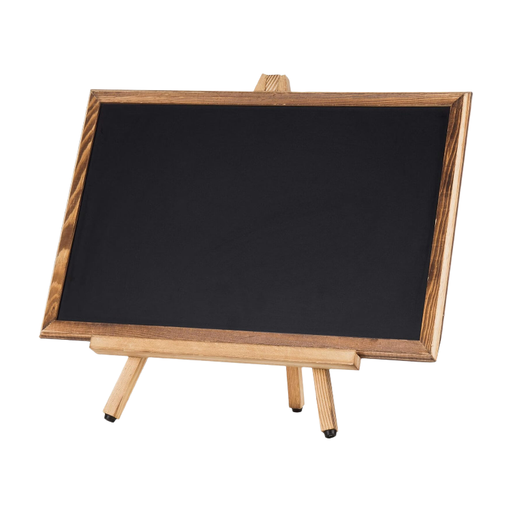
Why This Fits Their Persona: This compact tabletop model is perfect for counters, buffets, or as table numbering for weddings and events. Its folding stand makes it easy to transport and store compactly.
The board surface is explicitly designed for use with dry or liquid chalk markers and cleans up well, preventing the 'ghosting' issue when used correctly.
Versatile for use as a tabletop display. The stand is detachable, allowing for compact storage and easy transport.
We've compiled a complete, up-to-date list of products that fully meet these strict selection criteria and all applicable safety standards.
For traditional chalk, a dry or slightly damp microfiber cloth is usually sufficient. When using liquid chalk markers on a suitable, non-porous surface, a damp cloth is typically enough. Avoid aggressive cleaning agents, as they can damage the surface. Always follow the manufacturer's recommendations.
No. Only models made from solid, weather-treated wooden chalkboards or metal are recommended for long-term outdoor use. Untreated wood or MDF can be damaged by rain and moisture. For windy locations, a high dead weight or a way to additionally secure the wooden pavement sign is also advantageous.
No, this is a common user error. Liquid chalk should only be used on smooth, non-porous surfaces. On porous boards, the ink can seep into the material and leave permanent stains. If you are unsure, test the marker on a small, inconspicuous area first.