
Lieferung heute & morgen

Qualitätsgarantie

Willkommens-Angebote freischalten: KOSTENLOSE Lieferung | Bis zu 80 % RABATT | Kostenlose 30-Tage-JoyPlus-Testphase
App herunterladen
A chocolate muesli can be a delicious start to the day, but the selection on supermarket shelves is vast, and the packaging makes big promises. All too often, a supposedly nutritious purchase turns out to be a sugary disappointment, or the promised crunchy experience falls flat. This guide will help you avoid the typical pitfalls and find a product that meets your expectations for taste and composition.
Before you choose a product, you should critically examine the common marketing claims. Many mueslis are not what they appear to be at first glance.
To make an informed decision, it's worth taking a close look at the product packaging. Three key figures are particularly revealing.
The nutrition facts table is your most important tool. Pay attention to the "of which sugars" line under "Carbohydrates". A value over 20 grams per 100 grams indicates a very sweet product. Those looking to make a more conscious choice can specifically look for reduced-sugar muesli. These products often explicitly state their reduced sugar content. Some manufacturers avoid added granulated sugar altogether, sweetening instead with alternatives like rice syrup or oligofructose, a type of dietary fibre.
A high-quality oat muesli should list whole grain oat flakes as the first ingredient. The whole grain content, often given as a percentage, indicates how substantial the muesli is. A short, understandable ingredients list is usually a good sign. If you value organic farming, look for products with an organic muesli certification. This guarantees that no chemical-synthetic pesticides and fertilisers have been used, in accordance with EU organic farming regulations.
The ingredients list reveals whether real chocolate is used. Look for terms like cocoa mass, cocoa butter, and whole milk powder. The percentage of chocolate provides a clue to the intensity of the flavour. A high proportion of dark chocolate creates a richer, less sweet cocoa taste, while milk chocolate provides a creamier note.
Based on these objective criteria, we have compiled a selection of products suitable for different needs and taste profiles.
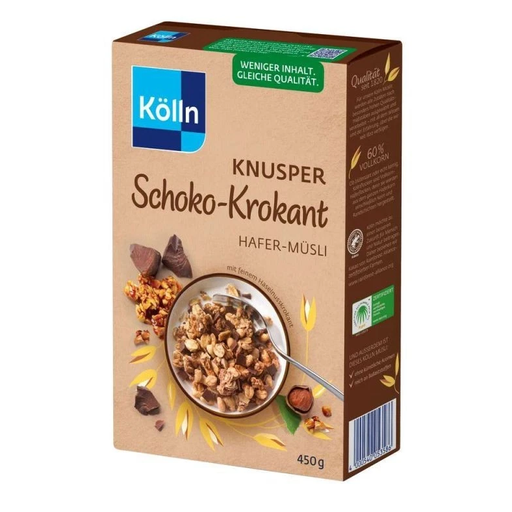
Why This Fits Their Persona: Ideal for anyone looking for a classic crunchy muesli with a full, sweet flavour profile. The combination of chocolate and hazelnut brittle offers a rich breakfast experience for an indulgent start to the day.
This muesli avoids the "chocolate bluff" by using real chocolate components (cocoa mass, cocoa butter). The sugar content is clearly declared at 22g per 100g, so no false expectations are set.
High whole grain oat content of 54% as its base. The baked clusters ensure a long-lasting crunchy experience.
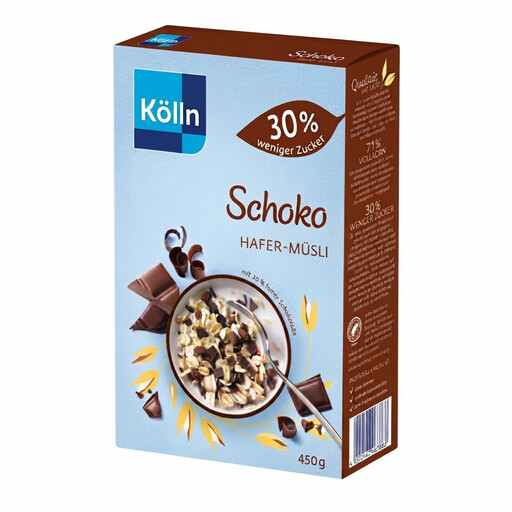
Why This Fits Their Persona: Perfect for chocolate lovers who want to reduce their sugar intake without sacrificing flavour. It offers a great balance for a nutritious breakfast.
This muesli directly addresses the "sugar trap". According to the manufacturer, it contains 30% less sugar than conventional chocolate mueslis. The sugar content of 13g per 100g is transparently stated and significantly lower than many competing products.
Very high whole grain oat content of 66%. Despite the reduced sugar, it contains a total chocolate content of 20% (dark and milk chocolate).
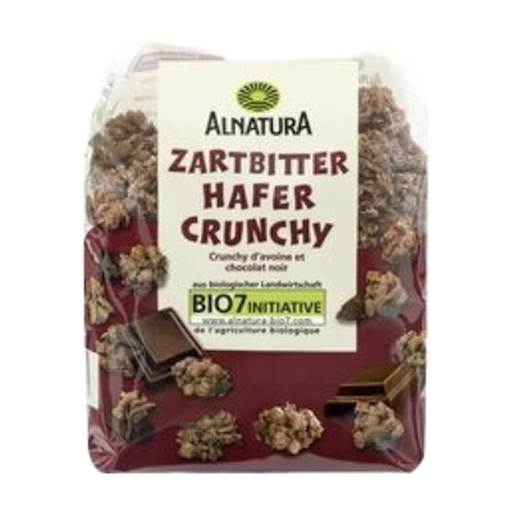
Why This Fits Their Persona: For consumers who consistently opt for organic quality and prefer an intense, less sweet chocolate flavour. The vegan recipe makes it accessible to a wide audience.
The Alnatura organic seal ensures that all agricultural ingredients come from organic farming. It uses dark chocolate and raw cane sugar instead of refined sugar or fat coatings.
High whole grain oat content of 66% from organic farming. The combination with coconut flakes and dark chocolate creates a complex flavour profile.
We have compiled a complete, up-to-date list of products that meet these strict selection criteria.
1. What is the difference between crunchy muesli and regular oat muesli? The main difference lies in the manufacturing process. For a crunchy muesli (also known as granola), the oat flakes are mixed with other ingredients like sugar or oil and baked in an oven to form crispy clusters. A classic oat muesli, or Bircher muesli, on the other hand, consists of raw, unprocessed grain flakes mixed with dried fruits and nuts. An alternative for a warm meal is porridge, and you can also buy porridge online.
2. How do I recognise a reduced-sugar muesli? Look for explicit claims on the packaging like "30% less sugar" or "no added sugar". A reliable indicator is the nutrition facts table: compare the "of which sugars" value. Products with values around or below 10-13g per 100g are often considered reduced-sugar compared to the market average. For a quick meal on the go, muesli bars with no added sugar can also be a good option.
3. Can chocolate muesli be part of a healthy breakfast? Whether chocolate muesli fits into a balanced lifestyle depends on its composition and portion size. A product with a high whole grain content, a moderate amount of sugar, and high-quality ingredients can certainly be part of a nutritious breakfast, especially when combined with fresh fruit, yoghurt, or quark. It provides fibre and complex carbohydrates for an energetic start to the day.