
Lieferung heute & morgen

Qualitätsgarantie

Willkommens-Angebote freischalten: KOSTENLOSE Lieferung | Bis zu 80 % RABATT | Kostenlose 30-Tage-JoyPlus-Testphase
App herunterladen
A clothes rack can help keep hallways, bedrooms and guest rooms tidy. However, an eye-catching design does not automatically mean it is the right solution. Products are often chosen based on their height or number of hooks, while important details such as floor space, load capacity and tip resistance are overlooked.
A clothes rack with hooks seems practical when jackets, bags and scarves can all be hung up at once. However, the permitted overall load is what really matters. Some models also specify a maximum load per hook. If heavy winter coats, rucksacks and shopping bags are all placed on a narrow frame, the centre of gravity can shift unfavourably.
So pay attention to two figures:
A narrow freestanding coat rack may fit into small hallways, but it still needs a sufficiently wide and stable base. Before buying, check the actual floor space required, including any protruding hooks. There should be enough room between the coat rack and doors, radiators or walkways.
With tall models, a level surface is also important. In households with children or busy entrance areas, additional wall mounting may be advisable, provided this is permitted and practical in a rented property.
A clothes rail is suitable for shirts, jackets and dresses, but it does not replace a shoe rack or enclosed storage. Open compartments are quick to access, but they do not fully protect items from dust. A fabric cover can improve this protection, although it reduces direct visibility.
Before choosing a model, decide whether you mainly need:
For a hallway coat rack, depth and width are often more important than maximum height. A slim freestanding model with hooks takes up very little floor space. An open wardrobe with several levels, on the other hand, offers more storage but usually requires more room.
Measure:
Models with shelves or shoe compartments should be positioned so that the lower sections can be reached without awkward stretching or bending.
A wood and metal coat rack combines the load-bearing strength of a metal frame with a more homely finish. Coated steel or carbon steel can be easy to maintain under normal use; scratches should nevertheless be avoided and damp areas wiped dry promptly. Wood-based materials such as MDF or chipboard vary depending on their construction, edge finishing and load limits.
Specific details are more useful than general claims about stability. Look for information about:
A mobile clothes rail or fabric wardrobe can be useful for students, guest rooms and temporary storage. Tool-free push-fit systems are quick to assemble, but they should still be put together correctly using the connectors provided. Before moving the unit, remove clothing if the manufacturer specifies this.
With a coat rack with shelf, it is worth placing heavy shoes and boxes as low down as possible. This lowers the centre of gravity and can improve stability. Castors are convenient, but they do not automatically make a unit more stable.
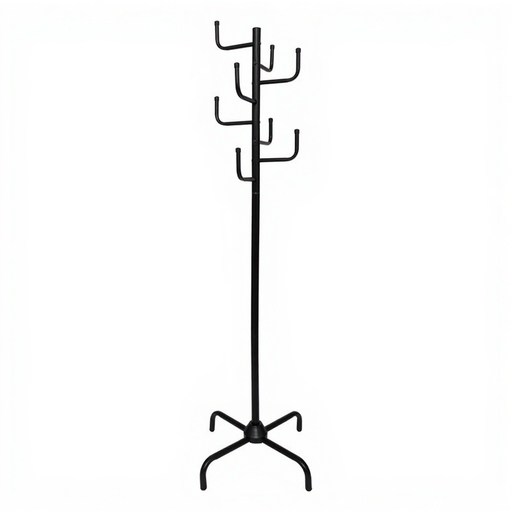
Why this product suits this profile: This vertical coat rack is 170 cm high, has eight hooks and a base diameter of 43 cm. It is therefore suitable for hallways or bedrooms with limited floor space.
The specifications state an overall load capacity of 15 kg and a maximum of 2 kg per hook. This makes it easier to assess the load than when only the number of hooks is given.
Powder-coated metal, a net weight of 1.91 kg and several hooks at different heights.
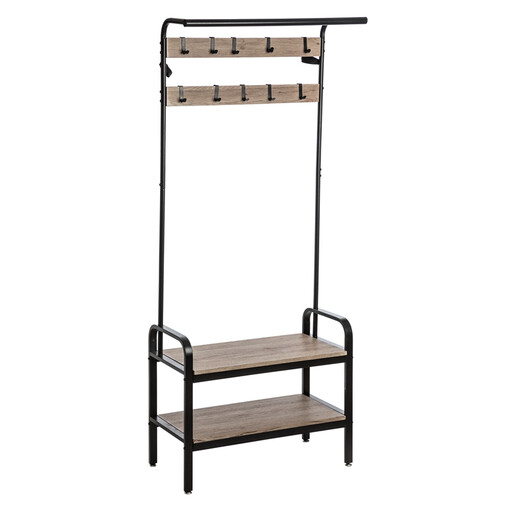
Why this product suits this profile: The combination of powder-coated steel and wood-based material provides a well-organised solution for bedrooms, hallways or student accommodation with lots of separate items.
The construction is rated for a maximum overall load of 50 kg and 5 kg per shelf. Wall mounting is also recommended to reduce the risk of tipping.
Ten tiers, six integrated hooks and a reinforced clothes section; the E1 formaldehyde emission class is also specified.
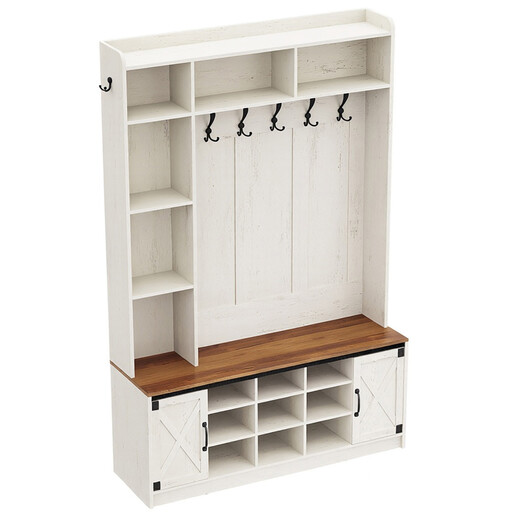
Why this product suits this profile: This 6-in-1 design combines a coat rack, bench, hooks, open compartments, cupboard sections and an upper shelf. Measuring approximately 40.8 × 120.5 × 191.5 cm, it is suitable for a larger entrance area.
The open compartments, seven hooks and adjustable or removable lower shelves make the storage space easy to plan. The lighting is specified as a 25-colour RGB function with six brightness levels and three modes.
15 open compartments, seven hooks, a bench with a specified load capacity of 150 kg and a dismantlable design.
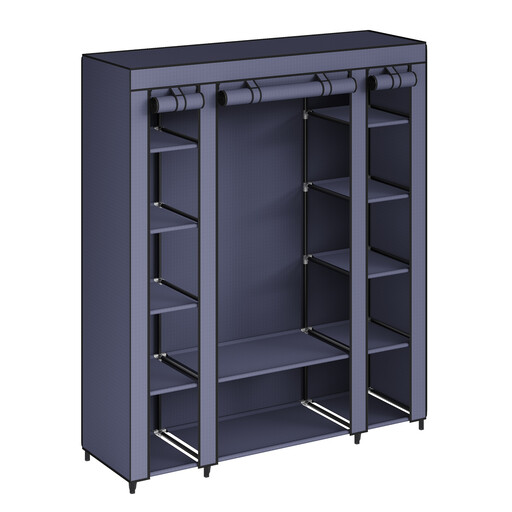
Why this product suits this profile: Measuring 150 × 45 × 175 cm, this mobile fabric wardrobe features a clothes rail and twelve shelves. It can be used in bedrooms, guest rooms or for seasonal clothing.
The product data specifies 15 kg for the clothes rail and 5 kg per shelf. The included anti-tip kit should be fitted; the wardrobe must be emptied before it is moved.
Tool-free assembly, twelve shelves and a roll-up or closable fabric cover to protect against dust.
We have put together a complete, regularly updated list of products that fully meet these strict selection criteria and the safety regulations applicable in the EU.
Place the clothes rack on a level surface and distribute heavy garments evenly. Tall or deep models should be fitted with the specified anti-tip protection. After assembly, check all screws and push-fit connections and tighten them if necessary.
For care, a soft, slightly damp cloth is usually sufficient for coated metal surfaces. Wood-based materials should not be exposed to moisture for prolonged periods. A model intended for indoor use should not be left unprotected on a balcony or patio.
That depends on how you intend to use it. A lower load capacity may be sufficient for a few jackets and accessories. For winter coats, bags and shoe boxes, you should add up the overall load as well as the individual limits for hooks and shelves. The manufacturer’s specifications are what matter, not simply the number of hanging points.
Position it on a level floor, distribute the load evenly and place heavy items as low down as possible. In households with children or in a busy hallway, wall mounting or anti-tip protection is advisable, provided the model is designed for it.
A mobile clothes rail often takes less time to assemble and can be repositioned flexibly. An open wardrobe usually makes better use of the available height and provides additional shelves, but it requires more floor space. For small rooms, the deciding factors are the measured depth, your preferred storage layout and whether you need protection from dust.