
Lieferung heute & morgen

Qualitätsgarantie

Willkommens-Angebote freischalten: KOSTENLOSE Lieferung | Bis zu 80 % RABATT | Kostenlose 30-Tage-JoyPlus-Testphase
App herunterladen
A cluttered entryway is a common problem in many households. Jackets, bags, and scarves quickly pile up, creating a mess. A well-chosen coat rack can solve this, but the selection is vast, and not every model delivers on its promise. Many buyers invest in products that soon prove to be impractical or unstable. This guide will help you navigate the typical pitfalls and find a functional and durable solution for your hallway.
The three most common problems when buying a coat rack are:
To avoid a bad purchase, you should check three core parameters before making a decision. These will determine whether a coat rack will meet your long-term needs.
The material is the foundation for durability and stability. For a coat rack made of wood, it's important to distinguish between solid wood and engineered wood (MDF). Solid wood is generally more robust and long-lasting. For a coat rack made of metal in black or other colours, the thickness of the steel is crucial. Thin-walled tubes can bend under load. Look for solid workmanship and, for a freestanding clothes stand, a weighted or sufficiently wide base that ensures stability.
The specified maximum load capacity is a critical value. Check whether this figure applies to the entire coat rack or per hook. A family of four needs a significantly higher capacity than a single-person household. A good coat stand should be able to support at least 10–15 kg of total weight. Equally important is the spacing of the wall-mounted coat hooks or those on the stand. If they are too close together, thick jackets are difficult to hang, and air cannot circulate.
The type of coat rack must match your available space and needs.
Instead of making a one-size-fits-all recommendation, we have compiled models for different living situations and needs.

Why This Fits Their Persona: Ideal for renters in small apartments or anyone who wants to keep the floor clear. The minimalist design blends discreetly into modern interiors and makes optimal use of wall space.
The secure wall mounting eliminates any risk of wobbling or tipping. The robust metal construction is designed for durability and prevents material fatigue.
High load capacity of up to 50 kg according to the manufacturer. Keeps the entire floor clear, which makes cleaning easier and makes the room appear larger.
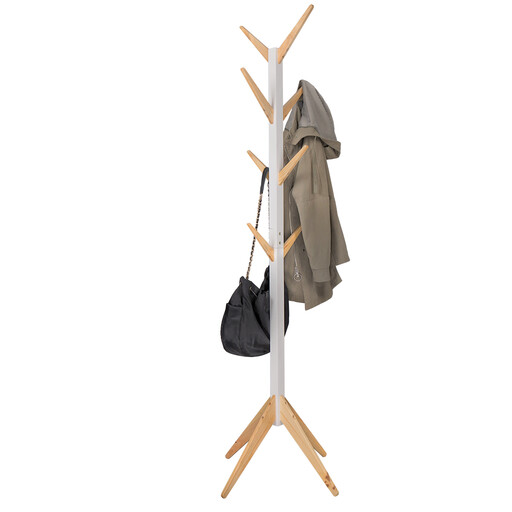
Why This Fits Their Persona: Suits those who prefer a traditional, flexible solution that requires no drilling. The timeless design complements many interior styles, from classic to modern.
The solid wood construction and stable tripod base counteract the problem of wobbly, low-quality materials and ensure a secure footing.
Solid wood offers high value and durability. The 8 hooks are placed at different heights, making it easy to hang long coats and short jackets.
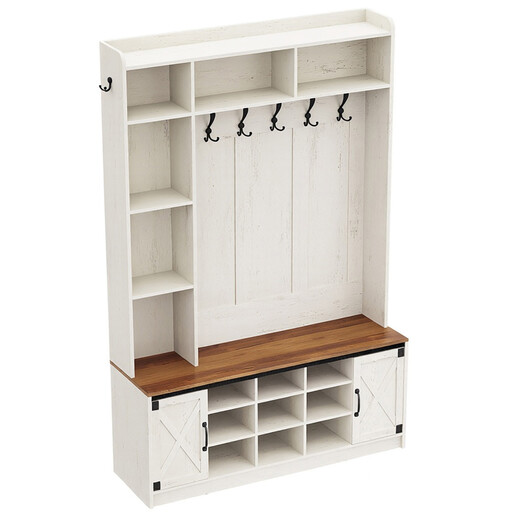
Why This Fits Their Persona: Perfect for families or anyone looking for an all-in-one solution for a busy entryway. It offers space for jackets, shoes, bags, and a place to sit while putting on shoes.
As a complete hall tree set, it replaces multiple individual pieces of furniture and provides structured, stable storage. The high load capacity of the bench (up to 150 kg according to the manufacturer) is a testament to its solid construction.
Combines coat hooks, a shoe rack, and a bench in one piece of furniture. The 15 open compartments and 7 hooks offer versatile storage space for the whole family.
We have compiled a complete, up-to-date list of products that fully meet these strict selection criteria and German safety regulations.
1. How much weight can a coat rack hold?
The load capacity varies greatly depending on the model and design. Simple wall-mounted coat hooks often only hold a few kilograms, whereas a sturdy coat stand can support 15 kg or more. Wall-mounted racks or hall tree sets can have a load capacity of over 50 kg, depending on the model and installation. Always check the maximum load capacity in the manufacturer's product details.
2. How do I stabilise a wobbly coat stand?
First, ensure all screws are tightened and the stand is on a level surface. The most important step is to distribute the weight evenly across the hooks. Hang heavy coats and bags as close to the central post as possible and distribute them on opposite sides. If the stand is unstable from the start, there may be a design flaw.
3. Wall-mounted rack or freestanding stand – what is better for a small hallway?
For a very narrow hallway, a wall-mounted coat rack or a rail with wall-mounted coat hooks is often the better choice as it doesn't take up any floor space. This creates an open, tidy look. A freestanding coat stand offers more flexibility as it can be moved at any time, but it requires a free corner or niche. The decision ultimately depends on the condition of your walls and your personal preference.