
Lieferung heute & morgen

Qualitätsgarantie

Willkommens-Angebote freischalten: KOSTENLOSE Lieferung | Bis zu 80 % RABATT | Kostenlose 30-Tage-JoyPlus-Testphase
App herunterladen
Coconut water has long been more than a niche tropical drink in Germany. Whether you enjoy it after exercise, at the office, in smoothies or as a base for mocktails, there is a wide choice available – from individual 250-ml portions to bulk packs of coconut water containing several litres. However, products can differ considerably in their ingredients, sugar content, electrolyte profile and packaging.
If you only look for terms such as “natural”, “isotonic” or “no added sugar”, you may overlook important details. The following points will help you compare coconut water objectively and choose a product that suits your own consumption habits.
Coconut water naturally contains sugar. A product can therefore be coconut water with no added sugar and still contain several grams of sugar per 100 ml. The ingredients list and nutritional information are what matter.
For comparison:
The term “naturally sweet” therefore does not automatically describe a low-sugar recipe.
Depending on the product, coconut water contains potassium, salt and other minerals. The amounts may vary from one product to another. If you want to compare coconut water with electrolytes specifically, look at the precise values per 100 ml rather than focusing only on the front of the packaging.
For example, according to the product information, Maaza contains 212 mg of potassium per 100 ml. King Island lists 290 mg of potassium and 12.5 mg of calcium per 100 ml. These are product details and do not constitute a statement about any medical or therapeutic effect.
A one-litre carton of coconut water may initially sound practical. However, once opened, it must be refrigerated and consumed within the period stated on the label. For individuals, a 500-ml pack may be more suitable, while families, offices and regular users may benefit from a bulk pack of coconut water.
For 100% coconut water, the ingredients list should contain coconut water only. Depending on how it is made, it may be coconut water obtained directly or coconut water from concentrate. The two versions will not necessarily taste the same.
A coconut drink, on the other hand, may contain additional ingredients such as sugar, coconut purée, stabilisers or flavourings. For example, Vita Coco Extra lists water, coconut water from concentrate, coconut purée and gellan gum. The product is described as having no added sugar, but it should not be equated with a product whose only ingredient is coconut water.
Information per 100 ml makes it easier to compare 1-litre coconut water, 500-ml packs and multipacks. Pay particular attention to:
The information normally refers to the unopened, ready-to-drink product. Products containing pulp or natural sediment may need to be shaken.
Coconut water in a Tetra Pak can usually be stored at room temperature while unopened. The pack should be protected from direct sunlight and excessive heat. Once opened, it should be refrigerated.
The recommended consumption period varies by product:
Do not consume products in damaged, swollen or leaking packaging.
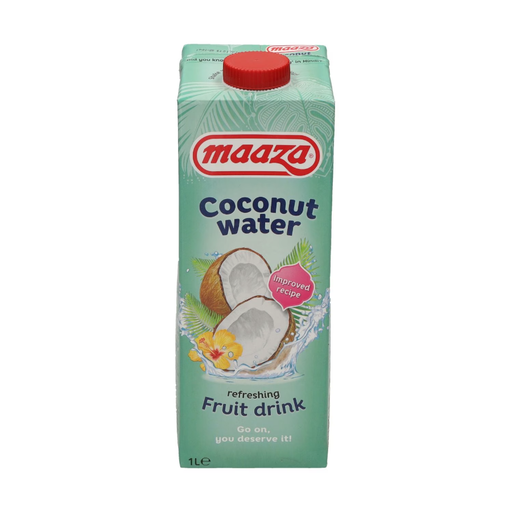
Why this product suits the profile: The one-litre pack is suitable for occasional consumption at home or in the office, or as an ingredient in drinks. According to the product information, the drink is vegan and gluten-free.
The ingredients list names coconut water. At the same time, the stated sugar content of 4 g per 100 ml is clearly shown, avoiding any false expectation of a sugar-free drink.
One-litre format, FSC-certified Tetra Pak packaging and 212 mg of potassium per 100 ml according to the product information.
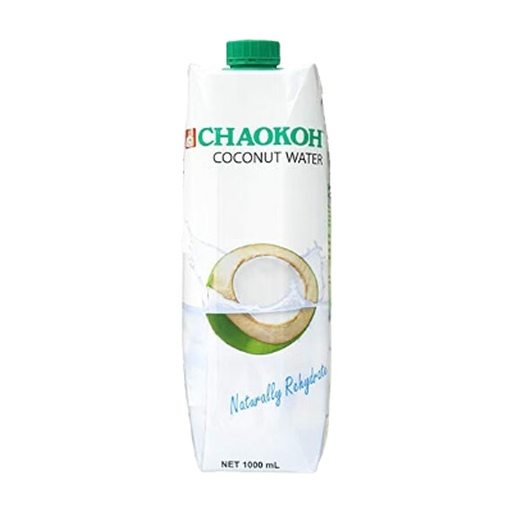
Why this product suits the profile: For buyers who prefer a short ingredients list and specific nutritional information. According to the data, the product is described as vegan, vegetarian, Halal and kosher.
The ingredients list specifies 100% coconut water. The sugar content of 4.2 g per 100 ml is listed separately and is not presented as “sugar-free”.
One-litre Tetra Pak, UHT-treated and, according to the product information, containing 149 mg of potassium per 100 ml, with an unopened shelf life of 18 months.
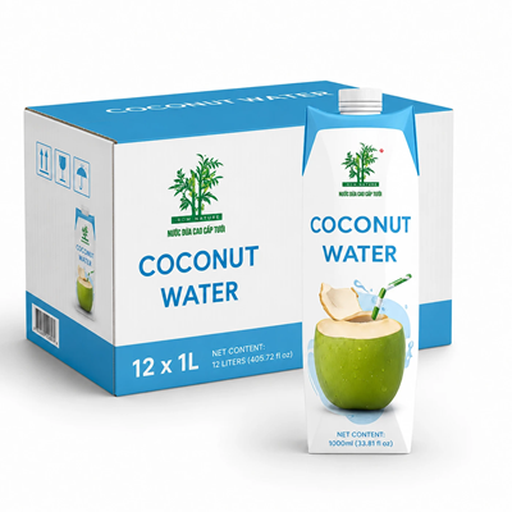
Why this product suits the profile: The pack of twelve one-litre units is designed for regular use in households, offices or at events.
The product information lists coconut water as the only ingredient and confirms that no sugar has been added. This clearly distinguishes the recipe from sweetened coconut drinks.
100% coconut water according to the ingredients information, one-litre Tetra Pak and unopened storage at room temperature.
We have put together a complete, regularly updated list of products that fully meet these strict selection criteria and the safety regulations applicable in the EU.
Depending on the manufacturer’s instructions, unopened Tetra Pak cartons can be stored outside the fridge. A cool, dry place away from direct sunlight is suitable. Once opened, the coconut water should be refrigerated immediately.
For everyday use, choose a pack that can be consumed within a few days. Coconut water can be used directly as the liquid base in smoothies and mocktails. If the label mentions natural sediment, gently shaking the pack before pouring is advisable.
If you are planning to use it for sport or longer activities, you should also consider the portion size. 500 ml is easier to carry, while one litre is generally better suited to storing in the fridge at home. A bulk pack often reduces the number of individual orders, but takes up more storage space and should only be chosen if you consume coconut water regularly.
No. Coconut water contains natural sugar. “No added sugar” means that no additional sugar has been included. The nutritional values per 100 ml determine the actual sugar content.
This depends on the product. Two to three days in the fridge is often stated, while some products specify a longer period. The storage and consumption instructions on the packaging in question should always be followed.
For one person or occasional use, 500 ml or one litre is usually manageable. Households, offices and frequent users can choose a multipack containing several one-litre units, provided there is enough storage space and the rate of consumption matches the product’s shelf life after opening.