
Lieferung heute & morgen

Qualitätsgarantie

Willkommens-Angebote freischalten: KOSTENLOSE Lieferung | Bis zu 80 % RABATT | Kostenlose 30-Tage-JoyPlus-Testphase
App herunterladen
A DAB radio can be a practical alternative to a traditional FM radio in your living room, kitchen or bedroom, or when you’re out and about. However, radios can vary considerably in their reception, power supply and controls. If you focus only on the number of features, it’s easy to overlook important details.
DAB+ uses digital transmission. In areas with adequate coverage, station names and additional information are displayed clearly. However, if the signal is weak, reception can cut out rather than simply becoming fuzzy, as it would with an analogue FM radio.
So it’s worth looking for:
Before you buy, check reception in your local area. A combination of DAB+ and FM can be useful, particularly in buildings with thick walls, basements or remote campsites.
Claims such as ‘up to 12 or 15 hours’ depend on factors including volume, display brightness, reception and Bluetooth use. You should also check whether a radio has a built-in battery, takes AA batteries or only works from the mains.
If you’re looking for a battery-powered radio for travelling or the garden, also check:
Many compact models aren’t waterproof. So don’t leave a portable radio unprotected by the bath or out in the rain.
Bluetooth, internet radio, a CD player, an alarm clock and lots of station presets are useful if they suit your needs. But for a simple kitchen radio, DAB+, FM, a volume control and an easy-to-read display are often all you need.
Look for logically arranged buttons, clear symbols and quick access to your saved stations. With a clock radio, separate alarm times, a snooze function and a dimmable display are also worth considering.
A DAB+ radio is ideal for digital stations and often displays the station name and programme information. FM is useful as a backup if a local station isn’t available on DAB+ or digital reception varies where you’re listening.
An internet radio, on the other hand, needs Wi-Fi. It can access a wide range of stations and podcasts from around the world, but relies on a network connection and a power supply. For emergencies or remote areas, a conventional DAB+/FM radio is usually more straightforward.
A mains adaptor is handy in the kitchen or living room. A radio that also runs on batteries can be taken to another room when needed. A built-in battery with a USB-C connection is a better fit for travelling, the office, camping and everyday use on the go.
A pocket radio should be lightweight and compact. For sport, a button lock, headphone socket and secure fit matter more than a large speaker.
A mono speaker takes up less space and uses less power. A stereo radio with two speakers can offer better separation between channels when playing music, but usually needs a larger casing.
You should also check:
A USB port isn’t necessarily a USB-C charging port. The specifications should state this clearly.
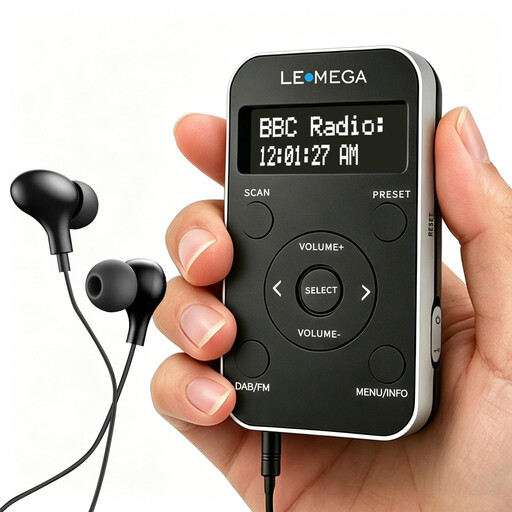
Why this product suits this profile: This compact pocket radio weighs 65 g and offers DAB/DAB+ and FM, plus a built-in battery for up to 12 hours of playback, according to the product specifications.
Battery life and reception specifications are clearly stated. The antenna headphones, auto-scan and button lock make it easy to use on the go.
65 g weight, USB-C charging, 40 station presets and adjustable display brightness.
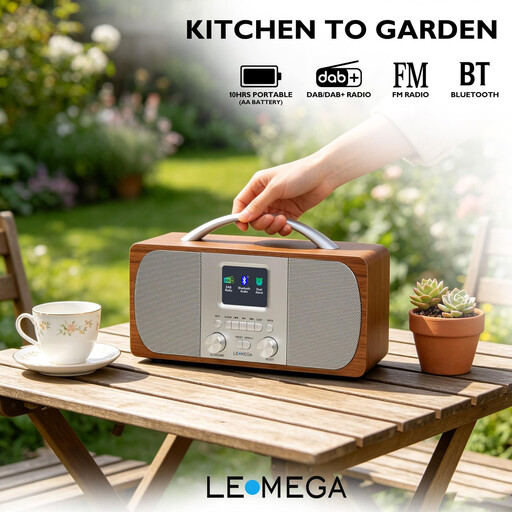
Why this product suits this profile: Ideal for the living room, bedroom or kitchen, this model combines DAB/DAB+, FM and Bluetooth with two 2.5-inch speakers in a wooden casing.
Mains and battery power give you added flexibility. The 40 presets and straightforward controls help you avoid unnecessary menu steps.
2.0 stereo setup, 6-watt speaker output, Bluetooth, headphone socket and two alarm times.
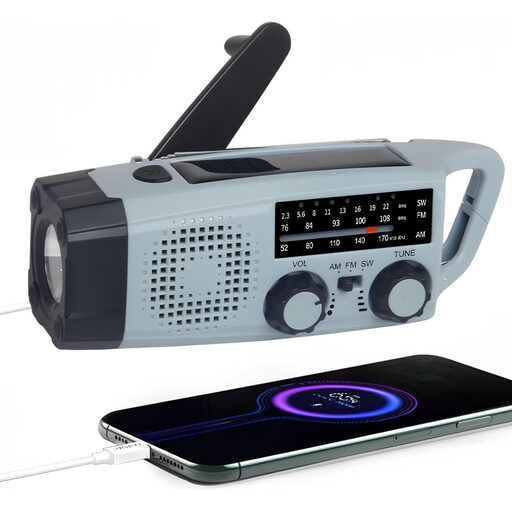
Why this product suits this profile: This emergency radio receives AM, FM and shortwave, and offers several power options for camping, your vehicle or home.
As well as the battery, you can use USB-C, the solar panel or the hand crank. That means you’re not reliant on a mains socket.
2,000 mAh battery, power bank function, LED light, magnetic base and SOS signal.
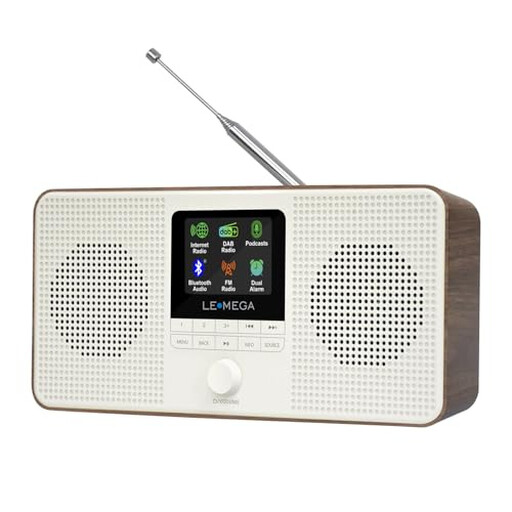
Why this product suits this profile: This stereo radio combines internet radio, podcasts, FM, Bluetooth and Spotify Connect for use at home or in the office.
The reception options are clearly defined: you can listen to internet radio and FM, while Bluetooth lets you connect external devices.
Wi-Fi, more than 30,000 internet radio stations according to the product specifications, 2.0 stereo speakers and alarm functions.
We’ve put together a complete, regularly updated list of products that meet these strict selection criteria and fully comply with the safety regulations in force in the EU.
Fully extend the antenna, switch on the radio and start the automatic station scan. First, place the radio near a window. If it finds only a few stations, try moving it to improve reception. You can then save the stations you listen to most in the presets.
It depends on the battery capacity, volume, display and reception. Product claims of around 12 to 15 hours should be treated as a guide. If you use the radio regularly, keep the charger or USB-C cable somewhere easy to reach. A model with replaceable AA batteries gives you another option when there’s no mains socket available.
Mains-powered radios use very little electricity, with costs depending on their power consumption and how long you use them. A battery-powered radio also uses a modest amount of energy when charging. Radios that take batteries have the added cost of AA or AAA batteries. If you use your radio on the go regularly, a rechargeable model may be more practical.