
Lieferung heute & morgen

Qualitätsgarantie

Willkommens-Angebote freischalten: KOSTENLOSE Lieferung | Bis zu 80 % RABATT | Kostenlose 30-Tage-JoyPlus-Testphase
App herunterladen
A DAB radio can serve as a kitchen radio, clock radio, portable radio or digital radio for use on the go, depending on its features. However, product descriptions often sound very similar: terms such as “portable”, “long battery life” and “clear reception” alone say little about how practical a radio is in everyday use. What matters is whether the power supply, aerial, controls and connections suit where you intend to use it.
Claims such as “up to 20 hours” are maximum figures measured under specific conditions. Actual battery life depends on factors including volume, display brightness, Bluetooth use and battery condition. So check whether the radio uses a built-in battery or replaceable batteries, and whether it can also be powered from the mains.
A battery-powered radio is practical for the garden, balcony or camping. For a permanently positioned kitchen radio, a mains adapter may be sufficient. If you choose a model that uses AA batteries, remember to budget for these separately, as they are not always included.
A DAB+ radio receives digital programmes, but it needs a suitable aerial and a sufficiently strong signal at its location. Reception can vary in buildings with thick walls, in basements or in rural areas. FM radio is therefore a useful additional reception option.
With some small pocket radios, the connected headphone cable acts as the aerial. If it is not connected, reception may be limited. This design feature should be taken into account when buying a radio with a headphone socket.
Bluetooth, an alarm clock, sleep timer, equaliser and numerous station presets are useful when the buttons and menus are clearly laid out. A large display with easy-to-read characters can be helpful in the bedroom or kitchen. Also check whether the display brightness can be adjusted and whether favourite stations can be accessed directly.
Look for a combination of DAB, DAB+ and FM. An automatic station scan makes set-up easier. The number of presets is particularly important if you regularly listen to several local, regional and national stations. 20 to 40 presets are enough for many households; some models in this selection offer up to 60 presets.
For mobile use, weight, dimensions and the charging connection are important. The LEMEGA PR1 Pocket is particularly compact at 90 × 51 × 16 mm and 65 g. According to the product specifications, its built-in 1,000-mAh lithium-ion battery provides up to 12 hours of playback. The device charges via USB-C and features a key lock.
Larger devices generally offer more powerful speakers and greater operating comfort. The LEMEGA DAB Go measures 160 × 95 × 54 mm, weighs 375 g and has a built-in 2,200-mAh battery. According to the product specifications, it can run for up to 15 hours on battery power. A mains adapter is included, so the radio can be left connected to a socket at home for continuous use.
A Bluetooth radio is ideal for playing content wirelessly from a smartphone, tablet or laptop. A 3.5-mm headphone socket lets you listen privately without disturbing anyone else in the room. For the bedroom, dual alarm, snooze and sleep timer are also useful features to look for.
Pay attention to the protection information: the models listed are not specified as waterproof. A DAB radio should therefore not be used where it is exposed to direct splashes or high humidity. Devices with built-in batteries must not be opened, damaged or exposed to excessive heat. Local disposal requirements apply to batteries and electrical devices, including those covered by WEEE regulations.
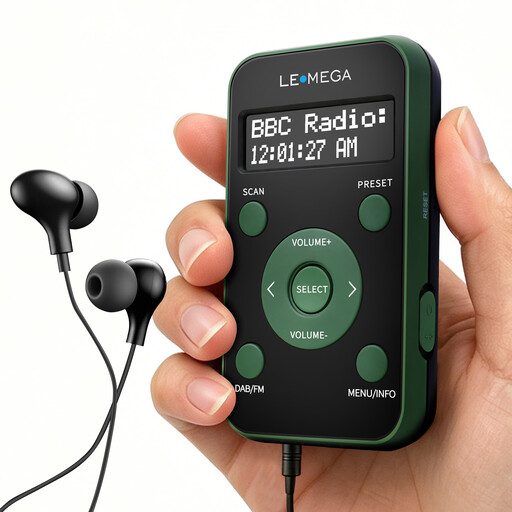
Why this product suits this profile: This pocket radio is designed for compact portability, making it suitable for walks, commuting or sports activities.
Battery life is stated as up to 12 hours, while FM, DAB/DAB+, USB-C and a headphone socket are also included.
65 g weight, 40 station presets, LCD display with adjustable brightness and key lock.
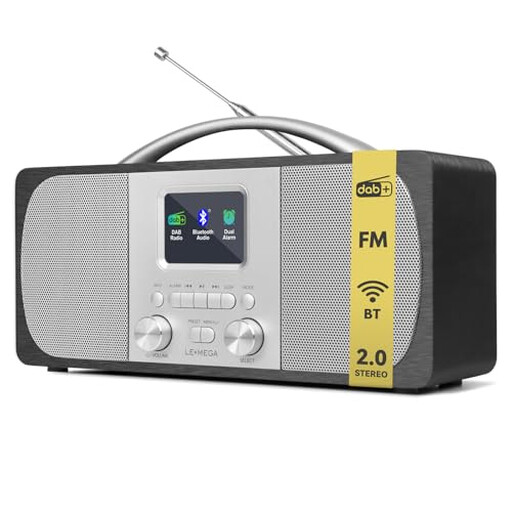
Why this product suits this profile: This model is intended for the living room, kitchen or bedroom when stereo speakers and several connection options are important.
The device combines DAB/DAB+, FM and Bluetooth, so it is not dependent on just one reception method.
Two 2.5-inch drivers, 6 watts output according to the product data, 40 presets, plus mains and battery operation.
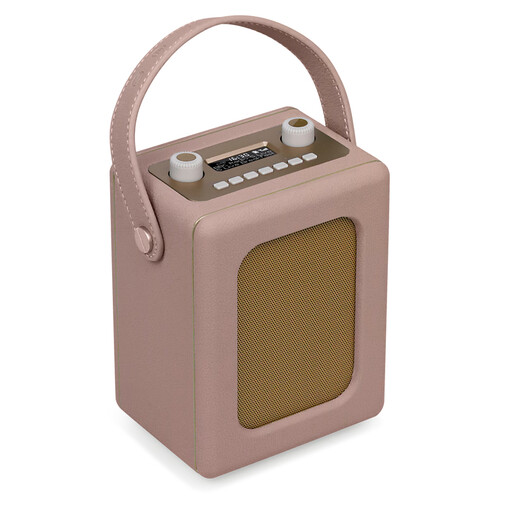
Why this product suits this profile: This retro radio combines kitchen and bedroom use with alarm functions, Bluetooth and portable operation.
FM is available alongside DAB+. Power comes either from the mains adapter or four AA batteries; these are not included.
Up to 20 hours according to the product specifications, 60 presets, large LED display, dual alarm, snooze and sleep timer.
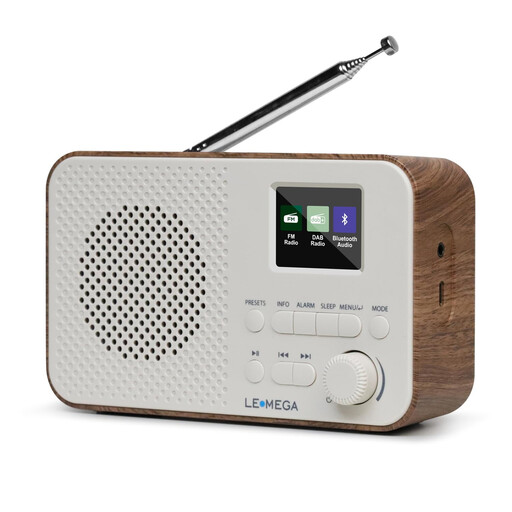
Why this product suits this profile: This portable radio is aimed at users who want to combine battery power, mains operation, a colour display and smartphone playback.
The product data states 15 hours of battery life, as well as a mains connection. This means use is not limited to a single operating mode.
2,200-mAh battery, 40 presets, 1.77-inch colour display, Bluetooth, headphone socket and dual alarm.
We have put together a complete, regularly updated list of products that fully meet these strict selection criteria and the safety regulations applicable in the EU.
Connect the radio to the mains adapter or charge the battery. Then start the automatic station scan. Next, select your preferred DAB+ and FM stations and save them as presets. With pocket radios that use the headphone cable as an aerial, the cable should be connected during the scan.
Battery life depends on the volume, display and type of connection. For the models mentioned, the manufacturers’ stated figures range from up to 12 hours for the LEMEGA PR1 and up to 15 hours for the DAB Go, through to up to 20 hours for the Class series. These figures should be treated as guides and may vary in practical use.
When running on battery power, the radio does not draw power directly from the mains during playback; however, the battery must be charged regularly. For continuous use at home, a mains-powered radio or a model with a mains adapter may be a sensible choice. Bluetooth can increase energy consumption. To save power, switch off Bluetooth when it is not in use and reduce the display brightness if the device offers this setting.