
Lieferung heute & morgen

Qualitätsgarantie

Willkommens-Angebote freischalten: KOSTENLOSE Lieferung | Bis zu 80 % RABATT | Kostenlose 30-Tage-JoyPlus-Testphase
App herunterladen
An electric height-adjustable desk has become a cornerstone of the modern, health-conscious workspace for many people, whether in a home office or a corporate setting. The ability to easily switch between sitting and standing can boost concentration and contribute to a more dynamic workday. However, the market is crowded, and not every model delivers on its promises.
As a Joybuy Product Recommendation Officer, I analyse product information daily to provide you with clear, objective guidance. In this article, I'll reveal the three most common pitfalls to avoid when buying a standing desk and explain what you need to look for to make an informed decision on your new ergonomic desk.
Marketing claims can often distract from a product's actual weaknesses. Pay close attention to these three points to avoid a bad purchase:
To find the right sit-stand desk, you should focus on the core technical specifications. These three parameters are decisive for quality and durability.
The heart of any electric desk is its motor. Look for information on the noise level, which should ideally be below 50 decibels (dB)—roughly equivalent to a quiet conversation. Equally important is the lifting speed. A good range is about 25 to 40 mm per second. This ensures the transition from sitting to standing is completed in just a few seconds and doesn't interrupt your workflow.
Stability is directly linked to the quality of the frame. A robust steel frame is the standard here. A key indicator of stability is the maximum static load capacity. A rating of 70 kg or more ensures that the desk won't be overloaded, even with multiple monitors, a laptop, and other documents, and will remain stable even at its highest position. Adjustable feet are also an important detail for levelling the desk on uneven floors.
The size of the tabletop must suit your available space and your needs. Common dimensions are 120 x 60 cm for compact setups, 140 x 60 cm as an all-rounder, or 180 x 80 cm for users who need a lot of space. A desk with a memory function is also highly recommended. This allows you to save your preferred sitting and standing heights and recall them at the touch of a button, making the daily switch much more convenient.
Based on these objective criteria, we have identified several models that offer a suitable solution for different user profiles.
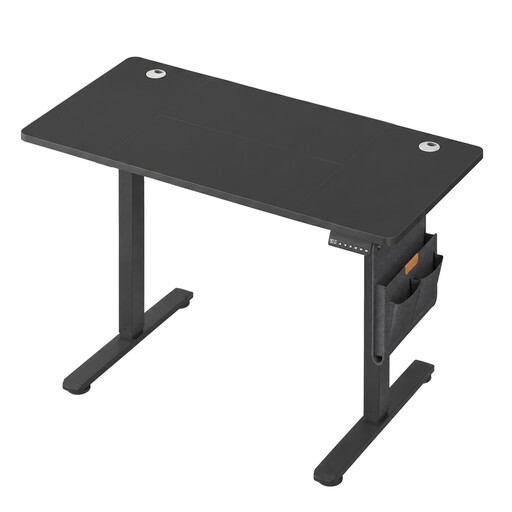
Why this model is a good fit: Ideal for smaller home offices or student rooms. It offers essential ergonomic features like electric height adjustment and memory presets without breaking the bank. Its compact size fits into almost any space.
The model focuses on a solid foundation: a stable steel frame and a quiet motor address the core issues of stability and noise, rather than distracting with unnecessary extras.
Four memory height presets for quick switching and easy assembly thanks to clearly labelled parts.
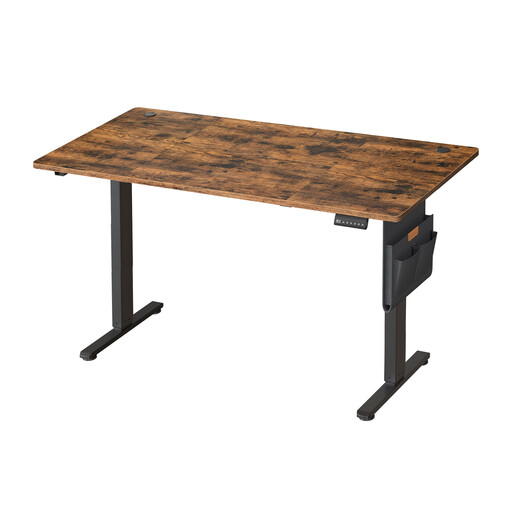
Why this model is a good fit: Perfect for professionals who need a versatile workspace with more surface area. The 140 x 60 cm size offers enough room for two monitors, and the integrated USB-C port simplifies device charging.
This model offers useful extra features like the USB-C port without compromising on the fundamentals. The steel frame ensures a 70 kg load capacity, providing the necessary stability.
Integrated USB-C port with fast-charging and thoughtful cable management, including two grommets and hooks.
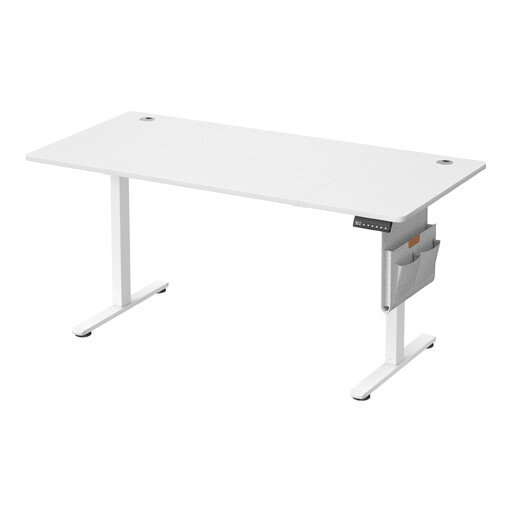
Why this model is a good fit: The generous 180 x 80 cm tabletop provides maximum space for complex setups, creative work, or multiple large monitors. Ideal for developers, designers, or anyone who needs an expansive work surface.
Despite its considerable size, stability is ensured by a robust steel frame. The focus is clearly on a large, usable surface and reliable height adjustment.
Extra-large tabletop (180 x 80 cm) and a memory function with four presets for maximum comfort and space.
An ergonomic workspace is a personal choice. If the models presented here don't exactly match your requirements, you can find more options in our collection.
Stability depends on the quality of the frame (material thickness, welds), the design of the legs, and the overall construction. A solid steel frame with a specified load capacity of at least 70 kg is a good benchmark. Adjustable feet help to stabilise the desk on uneven floors. A minimal amount of wobble can be physically unavoidable at full height, but it should not interfere with your work.
A desk with a memory function allows you to save multiple height positions (e.g., your ideal sitting and standing heights). Instead of having to manually adjust the height with the up and down buttons each time, a single press of a button moves the desk to the saved position. This feature is highly recommended as it lowers the barrier to changing your posture, thus encouraging regular use of the standing desk.
The electricity costs are generally negligible. The motor only actively consumes power during the adjustment process, which lasts just a few seconds. In standby mode, the consumption is extremely low, often under 0.5 watts according to manufacturer specifications. Over a year, the costs typically amount to only a few pounds.