
Lieferung heute & morgen

Qualitätsgarantie

Willkommens-Angebote freischalten: KOSTENLOSE Lieferung | Bis zu 80 % RABATT | Kostenlose 30-Tage-JoyPlus-Testphase
App herunterladen
By Joybuy Product Recommendation Officer, August 30, 2026
Installing a towel rack in the bathroom can be a challenge, especially in rental properties or homes with high-end tiles. Drilling leaves permanent damage and is often prohibited by landlords. Fortunately, the market offers a wide range of solutions that don't require a drill. However, the selection is vast, and not every product lives up to its promise. This guide will help you avoid common purchasing mistakes and find a suitable, long-lasting solution for your bathroom.
Before deciding on a model, it's important to understand the typical weaknesses that often only become apparent after a few weeks of use.
To make an informed decision, you should check three core aspects. These determine the functionality and longevity of your new towel rack.
An adhesive towel holder is only as good as its mounting system. Look for products that use specialised mounting adhesives instead of simple double-sided tape pads. These systems are often based on polymer technology and require a curing time of 12 to 24 hours to reach their full strength. Always check the manufacturer's specified maximum load capacity in kilograms. A clean, dry, and grease-free surface is essential for a lasting bond.
Only a few materials are truly suitable for bathroom use. A stainless steel towel holder (look for designations like SUS 304) is a safe bet, as it is naturally rust-resistant. Aluminium is also a great option, as it is lightweight and corrosion-free. With coated metals, there is always a risk that the protective layer will be damaged by scratches, allowing the underlying material to rust.
The choice of type depends on your available space and needs.
Here are some recommendations tailored to different needs and living situations.
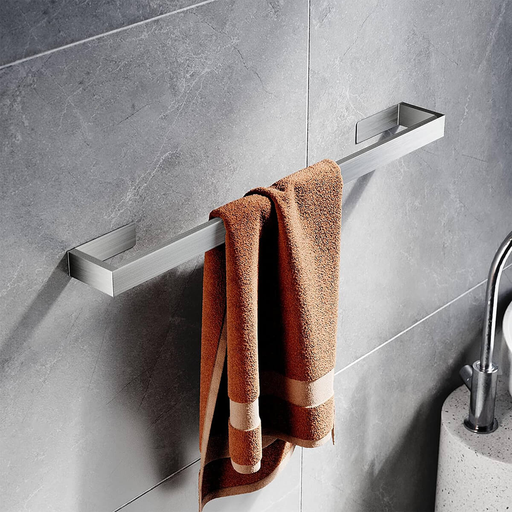
Why it's a great fit: This classic, self-adhesive towel bar is the ideal solution for rental properties. It mounts directly onto smooth surfaces like tile or glass without leaving permanent marks and, at 60 cm, offers ample space for a standard bath towel.
The model uses a large-surface adhesive mount designed for humid environments, ensuring a stable bond. The brushed stainless steel material prevents the problem of corrosion.
The tool-free installation and minimalist design blend seamlessly into modern bathrooms. The 60 cm length is practical for everyday use.
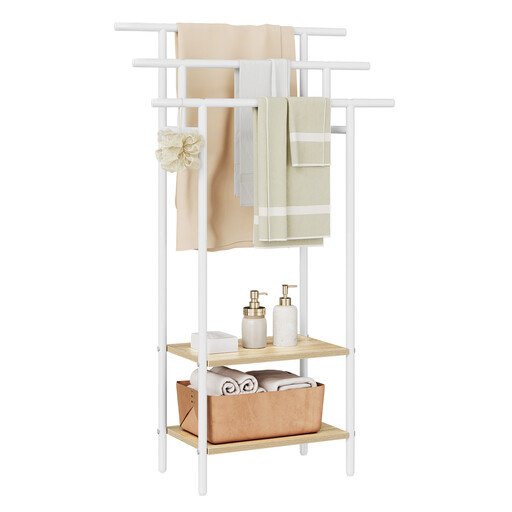
Why it's a great fit: For those who value flexibility or have more space. This stand can be placed anywhere in the room and moved as needed. The additional shelves offer practical storage for fresh towels, toiletries, or decorative items.
As a freestanding model, it completely bypasses the issues of wall mounting and potential surface damage. The construction of metal and engineered wood ensures a stable base.
Offers high mobility and multifunctional storage. The three staggered bars promote air circulation, speeding up towel drying time.
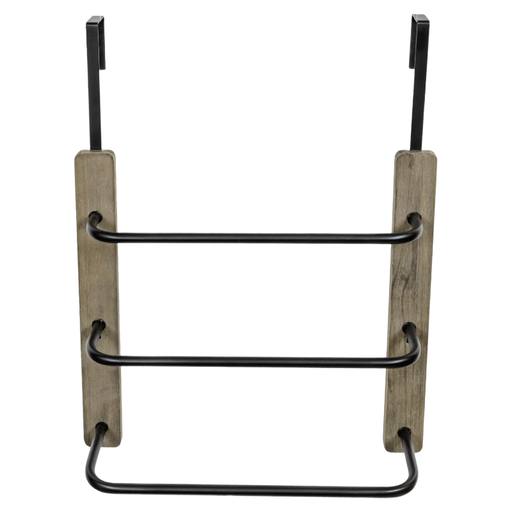
Why it's a great fit: This solution is perfect for very small bathrooms, guest toilets, or when no wall space is available. It utilises the often-unused space on the bathroom door without taking up any floor or wall area.
Since the rack simply hangs over the door, it completely eliminates the need for adhesives or drilling. There is no risk of surface damage. The construction of solid wood and metal is robust.
Maximum space-saving and an installation that literally takes seconds. The three bars provide space for multiple towels and ensure good ventilation.
We have compiled a complete, up-to-date list of products that fully meet these strict selection criteria and rigorous safety standards.
1. How long does an adhesive towel holder really last? Durability depends on three factors: the quality of the adhesive, proper surface preparation (clean, dry, and grease-free), and adherence to the maximum load capacity. High-quality systems with specialised mounting glue can last for many years when applied correctly, even in the humid environment of a bathroom.
2. Can I install a self-adhesive towel holder on textured wallpaper? No, this is not recommended. Self-adhesive mounts require a smooth, solid, and non-porous surface like tile, glass, metal, or smoothly painted walls. On textured wallpaper, plaster, or other structured surfaces, the adhesive cannot achieve a sufficient bond and would likely damage the wallpaper if a load is applied.
3. How do I remove a glued towel holder without leaving residue? With most high-quality adhesive systems, the holder can be removed without residue. A common method is to heat the adhesive area with a hairdryer to soften the glue. Then, you can carefully slide a thin wire or dental floss between the mount and the wall to cut through the bond. Any remaining residue can often be removed with a glass-ceramic scraper or a special adhesive remover. Always check the manufacturer's instructions.