
Lieferung heute & morgen

Qualitätsgarantie

Willkommens-Angebote freischalten: KOSTENLOSE Lieferung | Bis zu 80 % RABATT | Kostenlose 30-Tage-JoyPlus-Testphase
App herunterladen
Whether it’s for your morning coffee, an evening tea, entertaining guests at the dinner table, or serving drinks in a café: drinking glasses and mugs need to match the drink, the way you use them, and how much care you’re willing to put in. Many poor purchases happen not because of the design, but because of unclear information about capacity, material and temperature resistance.
A mug with a 380 ml capacity can’t always be filled right to the brim. For coffee with milk or tea, what really matters is how much room you have left when pouring. 300 ml mugs are often suitable for smaller servings, while 380 ml or 390 ml give you more space for milky coffee, hot chocolate and large teas.
The same goes for drinking glasses: a 750 ml glass is designed for large cold drinks, but it isn’t automatically practical for everyday use. For water and juice, 300 ml drinking glasses or glasses around 380 ml are often easier to handle.
Glass and ceramic can generally be dishwasher-safe. However, harsh detergents, high temperatures and frequent cycles can affect the surface, glaze or clarity. For delicate decorations and wooden parts, hand washing is usually the better choice.
So always look for specific care instructions. With ceramic mugs, you should also check whether microwave suitability is explicitly stated. A product description that simply assumes it is not a reliable guarantee.
Not every glass is heat-resistant. Soda-lime glass can crack if there’s a sudden change in temperature. A glass that’s fine for water or iced tea shouldn’t automatically be filled with boiling water.
Glasses with lids and straws are also often designed for cold drinks. Wooden lids, seals and glass straws need different care from a classic water glass. Whether a product is suitable for hot liquids should always be stated in the product details.
For materials that come into contact with food, EU requirements include those of Regulation (EC) No 1935/2004. Such a statement should refer to the specific product and not be applied generically to all items in a category.
The most common sizes can be roughly grouped as follows:
A handle improves grip on mugs, while a lid can help prevent splashes with cold drinks. With a glass straw, you should also consider the risk of breakage.
Check before you buy:
Damaged mugs and glasses with cracks, chips or deep scratches should not be used. With glassware, there is also a risk of injury from sharp-edged broken pieces.
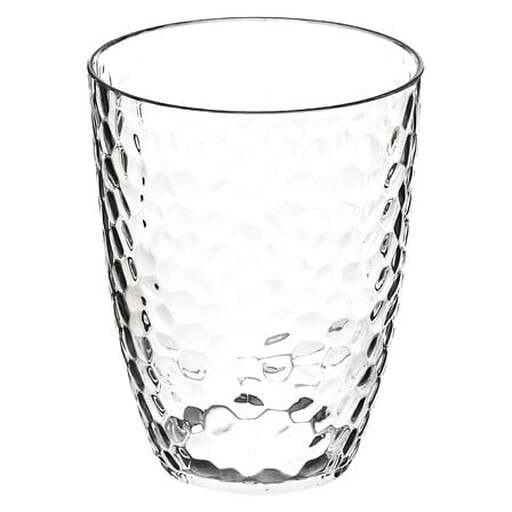
Why this product fits the profile: The transparent plastic tumbler with a 380 ml capacity is lightweight and designed for daily use indoors and outdoors.
The material is clearly stated as PS. This avoids any expectation of real glass, while keeping the weight low at 0.055 kg.
380 ml capacity, transparent appearance and low weight.
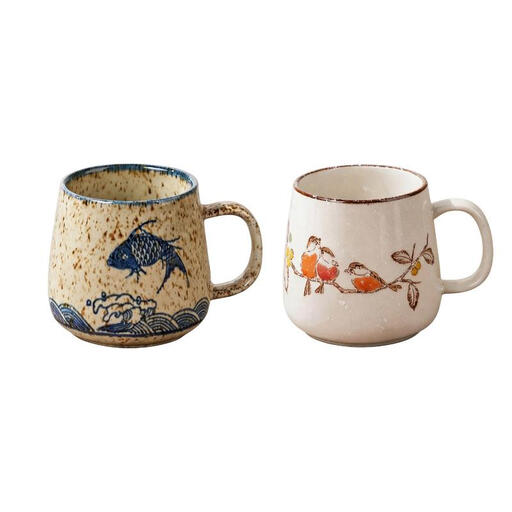
Why this product fits the profile: The set includes two ceramic mugs, each with 380 ml capacity and a simple Japanese-inspired design, suitable for home, café or restaurant.
The set size and individual capacity are clearly stated. Check the product page for dishwasher and microwave suitability before buying.
Two reusable ceramic mugs with 380 ml capacity and a smooth glazed surface.
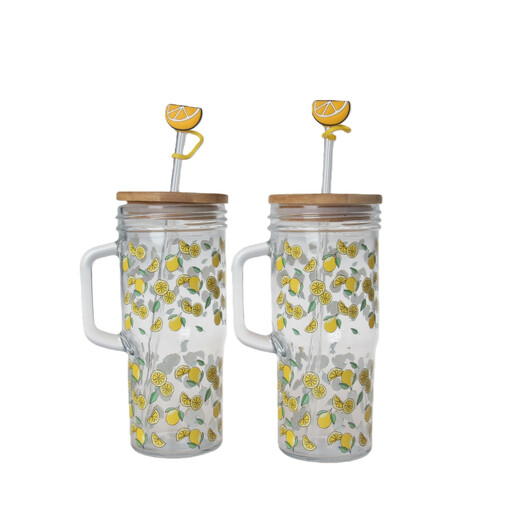
Why this product fits the profile: Two glasses, each with 750 ml capacity, wooden lid, seal, handle and glass straw – designed for lemonade, iced coffee, smoothies and other cold drinks.
The use for cold drinks is explicitly described. Wooden lids should not be soaked, and the set is not microwave-safe.
Large volume, handle and accessories for cold drinks; two glasses in a set.
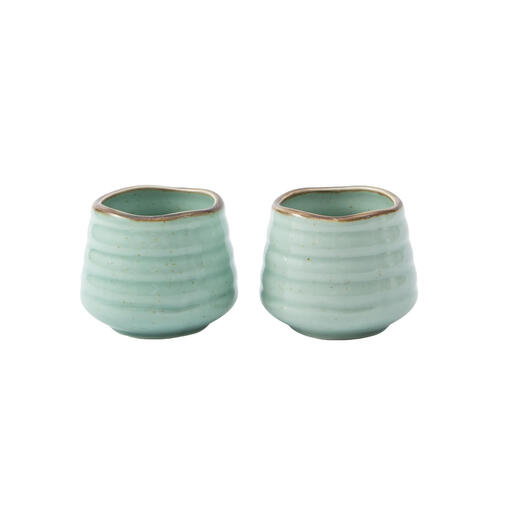
Why this product fits the profile: The two green-glazed, handleless ceramic cups, each with 160 ml capacity, are ideal for matcha latte, tea, hot chocolate and small coffee servings.
The small capacity is clearly stated, preventing a small tea cup from being mistaken for a large coffee mug.
Set of two cups, stackable design and 160 ml volume each.
We’ve put together a full, regularly updated list of products that fully meet these strict selection criteria and the safety regulations in force in the EU.
For classic coffee, tea or hot chocolate, around 280 to 330 ml is often enough. If you prefer milky coffee, large teas or hot drinks with foam, you can go for 380 ml or 390 ml. What matters most is your usual serving size and the space available in your cupboard and dishwasher.
No. Microwave suitability must be stated for each product. Even with suitable glasses, liquids should be heated carefully. Soda-lime glass is not automatically heat-resistant; boiling water and sudden temperature changes can cause breakage.
How long they last depends on the material, glaze, dishwasher cycle and how you handle them. Ceramic mugs can last a long time with careful care. Glass and ceramic items should be thrown away if they have cracks, chips or obvious damage. Disposable cups, on the other hand, are intended for single use only.