
Lieferung heute & morgen

Qualitätsgarantie

Willkommens-Angebote freischalten: KOSTENLOSE Lieferung | Bis zu 80 % RABATT | Kostenlose 30-Tage-JoyPlus-Testphase
App herunterladen
An electric hot plate can provide an additional cooking option in small kitchens, student flats, offices or when camping. At the same time, unclear power ratings, unsuitable pan sizes and inappropriate installation often lead to disappointing purchases. The key consideration is therefore not just the price, but whether the electric hot plate is suitable for the space available, your cookware and the way you intend to use it.
A high rated power does not automatically mean that every dish will be prepared more quickly. With a 1,500-watt portable hot plate, the diameter of the heating area, heat distribution and level of control also matter. With a double hot plate or two-zone hob, the total power is also divided between the two cooking zones.
For a single pan, a single hot plate with 1,500 watts is often sufficient. If you want to heat water and use a frying pan at the same time, check the power of both zones and the maximum total power.
Before buying, three measurements are relevant:
A portable appliance also needs a stable, heat-resistant and adequately ventilated surface. With a built-in appliance, the worktop cut-out specified in the product description must match the existing kitchen worktop exactly. A 29 cm hob with a 26 × 49 cm cut-out is not suitable for every worktop without modification.
A timer is only useful if it supports automatic switch-off or clearly indicates when the set time ends. With a touch-control hot plate, you should also consider a residual heat indicator, child lock and overheating protection.
With a traditional thermostat-controlled hot plate, an indicator light, continuously variable temperature control and excellent stability are important, easy-to-assess criteria. A portable hot plate should also be designed so that you do not need to hold hot parts of the housing when moving it.
A conventional electric hot plate initially heats the heating surface and then the pan. It is usually straightforward to use and compatible with many types of cookware. However, cleaning can be more difficult if food dries onto the hot metal surface.
A ceramic hob has a smooth glass surface. This can generally be cleaned with a soft, damp cloth. The surface remains hot after switching off, so a residual heat indicator is useful on suitable models.
An induction hot plate generates heat directly in the base of a suitable pan. The cookware must therefore be magnetic and, ideally, have a flat base. A simple magnet test can confirm before purchase whether your existing pans are suitable. Models such as a portable double induction hot plate often offer pan detection and automatic switch-off if no suitable pan is detected.
The product specifications should include at least the following information:
A 3,000-watt electric hot plate uses significantly more electricity at full power than a 1,500-watt single hot plate. Approximate running costs can be calculated as follows:
Power in kilowatts × operating time in hours × electricity price per kilowatt-hour
The actual cost depends on how long you cook and which setting you use. A lower setting reduces consumption but may increase cooking time.
Thermostat-controlled dials are easy to understand even if you do not want a digital display. Touch-control panels, on the other hand, provide a flat surface and, on many appliances, several power settings. Particularly useful features include:
A permanently installed hob should be fitted according to the instructions and in line with local electrical requirements. Models with a higher rated power, such as a four-zone hob with 6,600 watts and a 32 A specification, are not necessarily compatible with every existing power supply. If necessary, installation should be carried out by a qualified electrician.
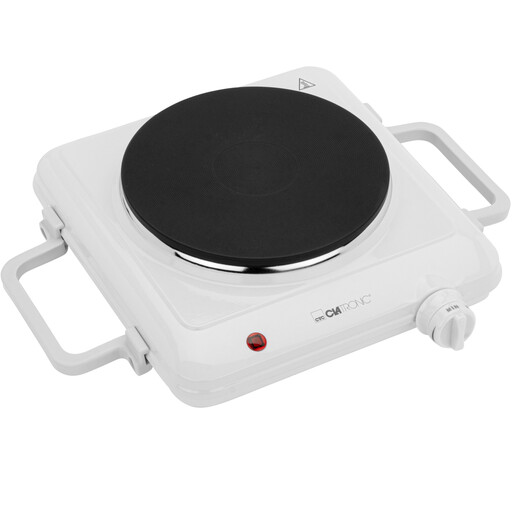
Why this product suits the profile: This portable single hot plate is designed for simple meals, small kitchens, offices or occasional camping trips. It has a cooking surface approximately 180 mm in diameter and a power rating of 1,500 watts.
The continuously adjustable thermostat makes temperature control easy to understand. An indicator light, overheating protection and excellent stability complete the essential features.
1,500 watts, 180 mm cooking surface, continuously adjustable thermostat and attachable cool-touch handles.
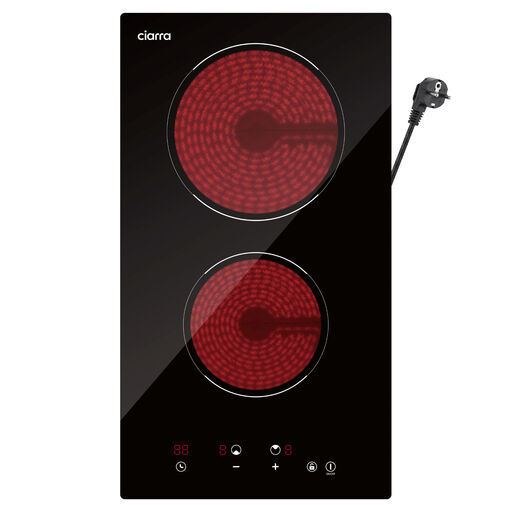
Why this product suits the profile: This built-in two-zone hob is designed for kitchens with limited worktop space and users who want to prepare two dishes at the same time.
The specified cut-out dimensions of 260 × 490 mm make installation planning easier. Nine power levels, a timer, child lock and residual heat indicator are clearly specified.
Two cooking zones, 3,000 watts total power, touch controls and a smooth glass-ceramic surface.
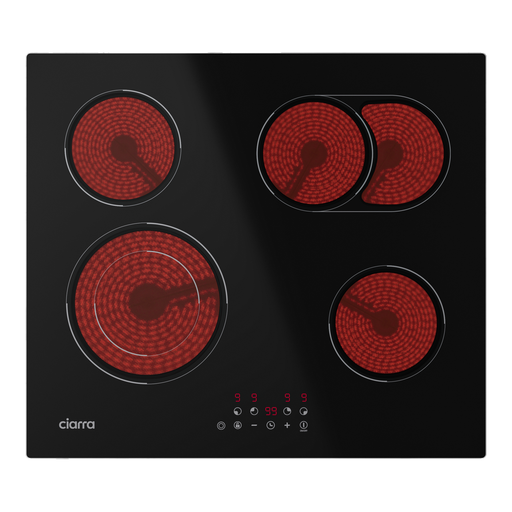
Why this product suits the profile: This four-zone hob is intended for households that cook regularly and have a suitably prepared kitchen installation.
The four zones, dimensions of 590 × 520 × 50 mm and worktop cut-out of 560 × 490 mm are clearly specified. The 32 A requirement should be checked before purchase.
Four cooking zones, 6,600 watts, nine power levels, a timer, plus oval and extendable cooking areas.
We have put together a complete, regularly updated list of products that fully meet these strict selection criteria and the safety regulations applicable in the EU.
With a portable hot plate, the surface it stands on should be dry, level and heat-resistant. Ventilation openings must not be covered. The appliance should be connected directly to a suitable socket; multi-socket adaptors and extension leads should only be used if they are rated for the required power.
With a built-in hob, the cut-out, ventilation clearances and connection ratings must match the installation instructions. Cookware should sit flat and be suitable for the size of the cooking zone. A pan that is too small will not make full use of the heating surface, while an oversized pan may affect heat distribution.
For simple individual portions and occasional use, 1,000 to 1,500 watts is often sufficient. For two cooking zones or several pans at the same time, 3,000 watts or more is usual. However, the actual cooking time, pan size and available power supply remain decisive factors.
It is not possible to give a reliable, general lifespan. This depends on frequency of use, cleaning, storage and build quality. Hot surfaces should not be cooled suddenly with water. With a ceramic hob, scratches and cracks should be avoided; if there is visible damage, the appliance must not be used.
No. Induction appliances require a magnetic, flat pan base. Stainless steel, cast iron or enamelled iron may be suitable provided that the base is magnetic. Aluminium, copper and pure glass will generally only work with a suitable induction adaptor, or not at all.