
Lieferung heute & morgen

Qualitätsgarantie

Willkommens-Angebote freischalten: KOSTENLOSE Lieferung | Bis zu 80 % RABATT | Kostenlose 30-Tage-JoyPlus-Testphase
App herunterladen
A fatbike E-bike with a 48V battery combines wide tyres with electric assistance, making it suitable in principle for commuting, leisure rides and gravel, sand or snow-covered paths. However, its distinctive design alone says little about everyday practicality, range or legal use.
Before buying, you should therefore look beyond motor power and an impressive range figure. What really matters is the combination of battery capacity, tyre size, braking system, suspension, weight and intended use in Germany.
Figures such as 750 W or an especially high peak output may initially seem convincing. For buyers in Germany, however, it is more important to know how the E-bike is classified. As a rule, a conventional pedelec may only be treated as a bicycle if motor assistance cuts out by 25 km/h at the latest and the statutory technical requirements are met. Motors above the usual continuous output of 250 W may be subject to additional requirements.
You should therefore check before buying:
An E-bike capable of 25 km/h is not automatically a pedelec exempt from approval requirements in every configuration.
Range figures depend, among other things, on rider weight, tyre pressure, gradients, temperature, assistance level, surface and wind. An E-bike 48V 18Ah has a calculated battery capacity of around 864 Wh. This is a useful basis for comparison, but it does not guarantee a specific mileage.
Wide fatbike tyres increase rolling resistance on tarmac. In return, they provide a larger contact patch on loose or uneven surfaces. If you mainly ride in town, you should follow the tyre pressure recommended by the manufacturer. If you regularly ride on sand or snow, you will need a different pressure setting from the one used on paved paths.
A full-suspension E-bike can absorb bumps more comfortably. Even so, frame weight, riding position, suspension travel, tyre tread and maximum gross weight remain crucial. Suspension does not automatically make a heavy fatbike more manoeuvrable, nor does it solve problems caused by the wrong frame size.
Look for a clear specification of the payload, check the suspension adjustment options and make sure the brake levers and display can be reached easily while riding.
48 V describes the electrical voltage, while Ah indicates capacity. A 48V battery with 18 Ah therefore has a different calculated energy capacity from a 10 Ah battery, even though both have the same voltage. An E-bike with a removable battery makes charging at home or at work easier.
Before placing your order, you should clarify:
Lithium-ion batteries should be stored in a dry place, protected from excessive heat and not left completely discharged after a long period of non-use.
An E-bike with fat tyres usually has tyres at least four inches wide. Larger tyres can provide greater flotation and traction on soft ground, but they also increase weight and rolling resistance. For both urban and off-road riding, a balanced tread is sensible if you regularly plan to use the bike in both environments.
The tyre size must also suit your height, frame design and access to spare parts. Check whether inner tubes, tyres and rims are available in a commonly used size.
An electric fatbike with hydraulic disc brakes offers precise braking control through a sealed hydraulic system. The braking system is particularly important for heavy bicycles and changing surfaces. Nevertheless, buyers should check the disc diameter, availability of replacement pads and access to servicing.
With a suspension fork or dual suspension, it is not just the number of suspension elements that matters, but also adjustability, maintenance and actual suspension travel. Check the brakes, tyre pressure and any visible damage before every ride.
The following models have been assigned to different usage scenarios based on the available manufacturer and product information. Range figures depend on several factors under real-world conditions.
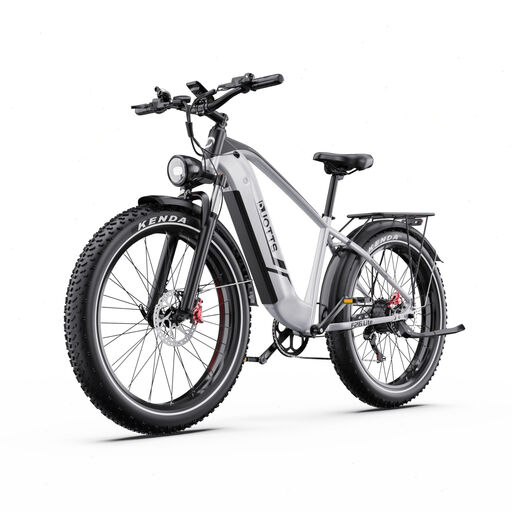
Why this product suits the profile: The combination of 26 × 4.0-inch fatbike tyres and a 48V battery makes this an appealing option for buyers looking for a versatile electric fatbike for commuting and occasional outings.
The product details specify both the battery capacity and tyre size, as well as hydraulic brakes. This makes it possible to compare key buying criteria before placing an order.
48V battery with 18 Ah, 26 × 4.0-inch tyres, hydraulic disc brakes and an LCD display; according to the product details, up to 90 km in assistance mode.

Why this product suits the profile: This model is aimed at riders who value dual suspension, a removable 48V battery and hydraulic brakes, and want to combine urban riding with unpaved routes.
The specifications state 250 W, 25 km/h and a maximum load of 120 kg. These figures are more relevant to legal and practical classification than claims based solely on peak output.
48 V and 18.2 Ah, 20 × 4.5-inch tyres, dual suspension and hydraulic disc brakes. The product description states a range of up to 75 km and a charging time of 6–7 hours.
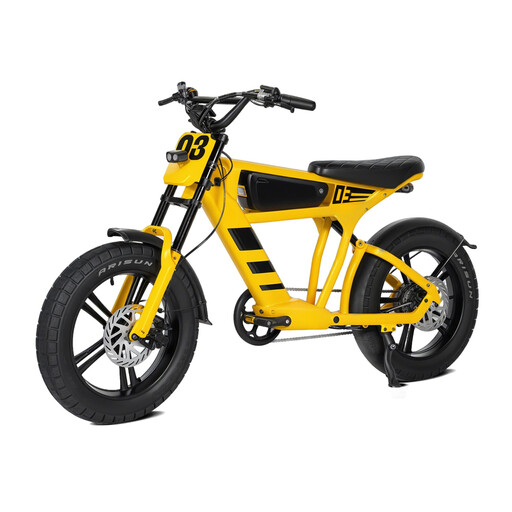
Why this product suits the profile: For private rides on suitable routes, the specified motor variant may appeal to users looking for greater assistance on hills and changing surfaces.
The higher motor output is clearly stated. Buyers should therefore check the classification, insurance requirements and local regulations before using it on public roads.
750W motor specification, 48V battery with 18.2 Ah, 20 × 4.5-inch fat tyres, dual suspension and hydraulic disc brakes; according to the product details, up to 75 km range.
We have put together a complete, regularly updated list of products that fully meet these strict selection criteria and the safety regulations applicable in the EU.
This depends on the battery capacity, assistance level, rider weight, tyre pressure, temperature and route. Models with 18 to 18.2 Ah offer a solid calculated energy reserve. Manufacturer figures such as 75 or 90 km should be treated as indicative values, not as a fixed promise for every ride.
Not automatically. Depending on its configuration, a 750W model may be classified differently from a standard pedelec. Before using it in public traffic, you must check the motor control, maximum speed, pedal assistance and any required approvals. Private routes or routes specifically approved for this purpose are also subject to the relevant operator and landowner rules.
The electricity cost of charging the battery is usually manageable. However, you should also factor in wear parts such as tyres, inner tubes, brake pads and, where applicable, chain or drivetrain components. Wide tyres can wear more quickly on tarmac than those on a conventional city E-bike. Regularly checking the tyre pressure, brakes and battery helps ensure predictable use.