
Lieferung heute & morgen

Qualitätsgarantie

Willkommens-Angebote freischalten: KOSTENLOSE Lieferung | Bis zu 80 % RABATT | Kostenlose 30-Tage-JoyPlus-Testphase
App herunterladen
A filtered shower head can be a useful option for households in areas with hard or chlorinated water. However, filter systems, connections and consumption figures can vary considerably. If you only look for terms such as “20-stage filter”, “high pressure” or “water-saving”, you may overlook important details.
A specification such as a 20-stage filter sounds comprehensive, but initially only describes the design of the filter system. Depending on the model, materials such as KDF, calcium sulphite, activated carbon, vitamin C or mineral beads may be used. According to the product description, these materials may be intended to reduce certain residues.
Important: a shower filter is not automatically a water-softening system. The calcium and magnesium salts dissolved in the water, which are responsible for limescale deposits, are not necessarily removed completely. Check which filter media are actually specified and how often the cartridge needs to be replaced.
A high-pressure shower head often produces a more concentrated spray through smaller nozzle openings or specially designed internal water flow. This can feel practical when mains water pressure is low. However, the term alone says nothing about the actual water flow rate.
Look out for:
A water-saving shower head does not reduce consumption simply because of its name. The crucial factors are the technical flow restriction and your personal showering habits.
Filter cartridges require regular care and replacement. Some products recommend changing the cartridge after three to four months, while others suggest four to six months. Water quality, household size and daily use all affect the actual service life.
If the water pressure drops or the spray changes, a blocked cartridge may be the cause. Limescale on the nozzles should be removed carefully by rubbing with a soft cloth or your fingers. Harsh acids, chlorine-based cleaners and abrasive products can damage surfaces and seals.
For many German bathrooms, a standard G1/2 connection is relevant. This connection is widely used for handheld shower heads and shower hoses. Even so, check whether your existing hose has a compatible thread and whether seals are included.
A handheld shower head with hose is particularly practical if you want to rinse children, pets or specific areas of the shower cubicle. Pay attention to the hose length: 1.5 metres provides sufficient freedom of movement in many showers. A kink-protected hose can make handling easier.
When choosing a shower head for hard water, distinguish between a replaceable filter and a permanently integrated filter screen. A screen catches larger particles but does not replace a filter cartridge designed to reduce specific residues.
Product claims such as “shower head against chlorine” should be understood as statements made by the manufacturer or supplier. According to the product description for the individual model, activated carbon, calcium sulphite or KDF may be intended to reduce chlorine residues and certain contaminants. However, this does not support any general conclusion about water quality or health effects. The filtered water is not intended for drinking.
A shower head with 6 spray modes offers more choice than a basic handheld shower head. Common options include rain, massage, jet, mist or combination modes. More choice is useful when several people in the household have different preferences.
Ease of use is equally important: a side lever or rotary control is usually quicker to adjust than a ring that is difficult to reach. Silicone nozzles that can be rubbed clean with your fingers make regular descaling easier. An anti-limescale shower head still needs to be cleaned, as deposits can also build up on the surface and inside the hose.
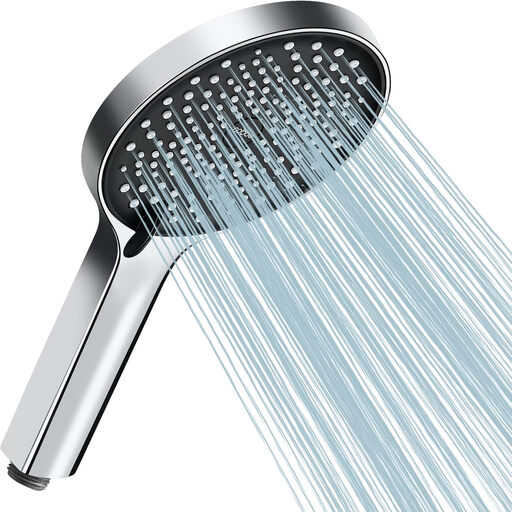
Why this product suits this profile: This model is aimed at households looking for an uncomplicated handheld shower head with a large spray area, a standard connection and a small number of clearly operated functions.
The product description states that it has three modes, a removable and cleanable design, and water-flow savings of up to 30 per cent. This figure comes from the supplier and should not be treated as a guaranteed consumption value.
13.1 cm large shower head, three modes and tool-free installation on a standard hose.
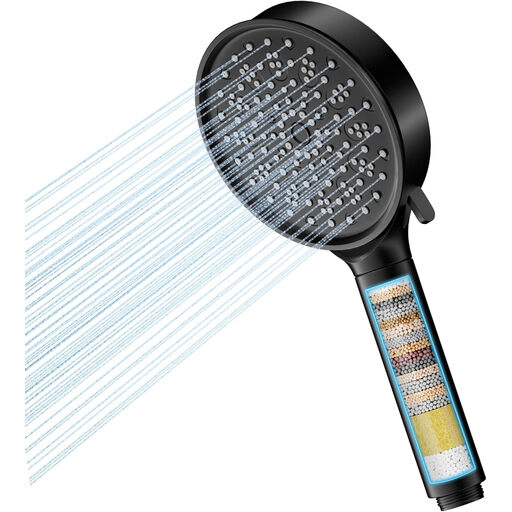
Why this product suits this profile: Suitable for people who want to combine filtration, six spray modes and a black shower head in a compact design.
According to the product description, the filter cartridge is pre-installed; the supplier recommends replacing it after three to four months or when water pressure drops. This makes the maintenance requirements clear.
20-stage filter system, six spray modes, standard G1/2 thread and silicone nozzles for cleaning.
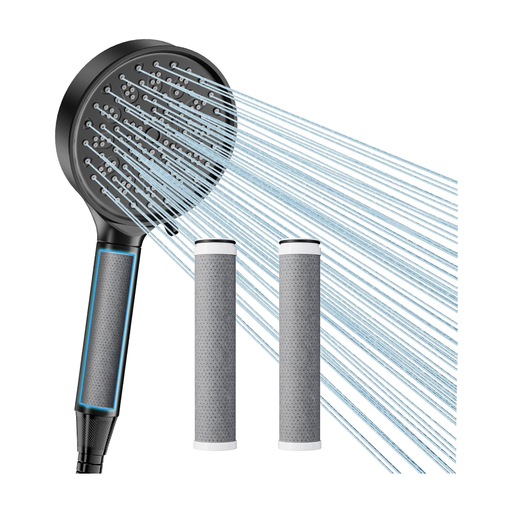
Why this product suits this profile: This set combines a 1.5-metre handheld shower head with six modes and three replaceable activated carbon filters. It is practical for families, frequent hair washing or targeted bathroom cleaning.
The replacement filters are listed as included. The supplier recommends changing them after four to six months and advises checking the cartridge sooner if the pressure drops.
1.5-metre hose, 124 mm panel, six modes and three activated carbon replacement filters according to the product description.
We have put together a complete, regularly updated list of products that fully meet these strict selection criteria and the safety regulations applicable in the EU.
Many models can be installed without tools:
Ongoing costs depend on more than just the purchase price and replacement filters. A lower flow rate can reduce hot-water consumption, provided the shower time remains the same. Check the manufacturer’s consumption figures and do not replace filters according to a fixed timetable. Instead, follow the instructions and take the water quality and condition of the cartridge into account.
Many models use a standard G1/2 connection, making them compatible with numerous shower hoses in German bathrooms. Before buying, compare the thread, hose length and supplied seals. Additional requirements apply to electric showers; according to the supplier, some products are not designed for this use.
This depends on the filter system and water quality. Suppliers often specify intervals of three to four or four to six months. If the water pressure drops significantly, the smell changes or visible deposits appear, the cartridge should be checked and replaced sooner if necessary.
No. A filter system and a water-saving function are separate features. A model mainly saves water through a restricted flow rate or a modified nozzle design. Claims such as “up to 30 per cent” or “up to 99 per cent chlorine reduction” should be understood as statements from the relevant supplier and checked against the product’s technical specifications.